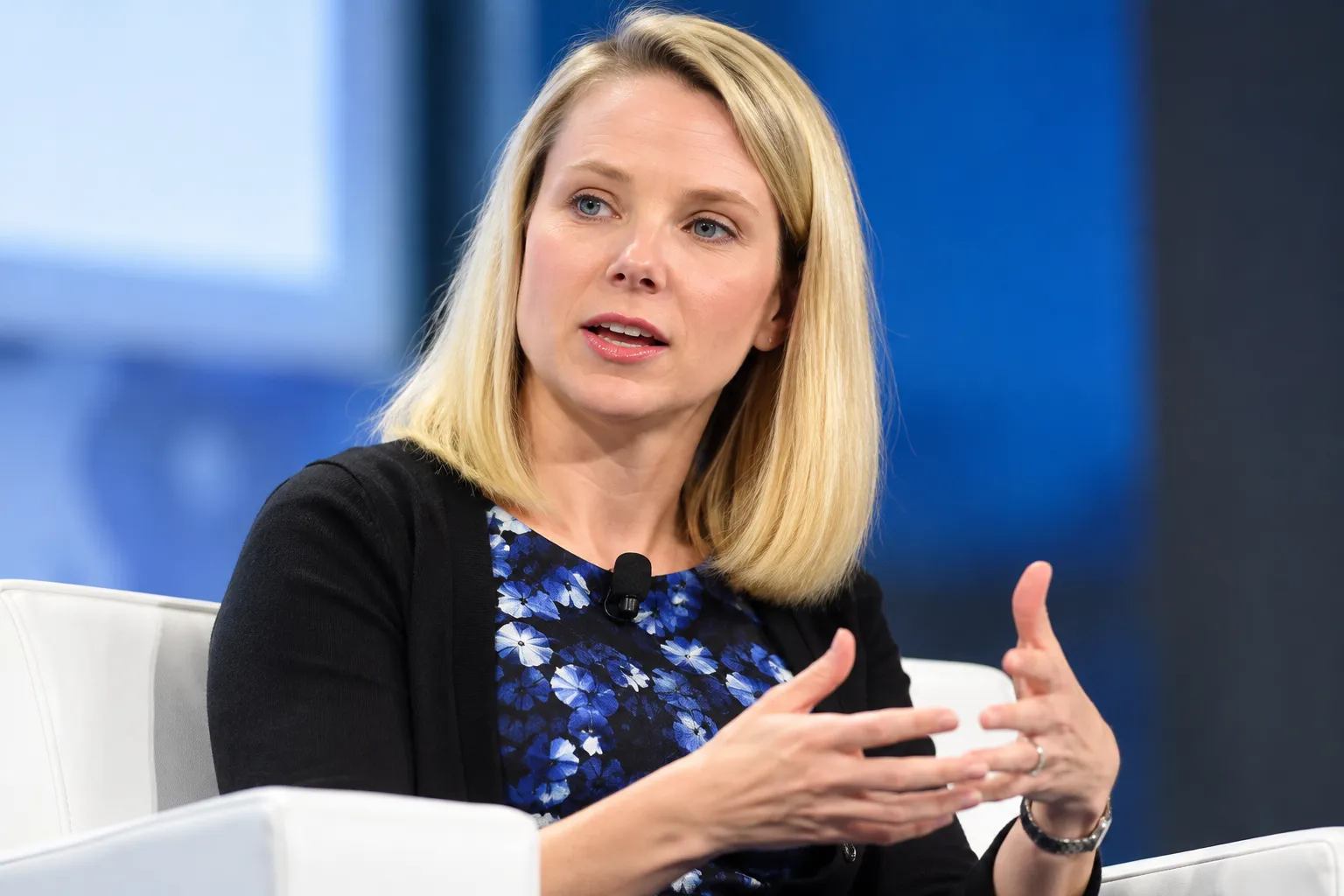
Marissa Mayer’s Dazzle AI has drawn criticism after the former Yahoo CEO said she used the app to help prepare a school birthday presentation for her daughter. The controversy has revived questions about how Silicon Valley executives envision AI’s role in family life and human relationships.
In a New York Times interview, Mayer explained that Dazzle analyzes personal photographs to provide recommendations and organize information. The app described her 10-year-old daughter as empathetic, creative and an animal lover.
Critics questioned whether parents need AI to describe their own children. Activist Leah Greenberg criticized the example, arguing it highlighted a disconnect between Silicon Valley culture and everyday family life.
Marissa Mayer Defends Her Dazzle AI Example
Mayer later responded to the criticism, explaining that she was testing an early prototype rather than outsourcing parenting decisions.
She said Dazzle identified forgotten kindergarten projects from her photographs. Those discoveries helped illustrate her daughter’s creativity and interest in animals. Mayer said she combined the suggestions with her own observations.
The former Google executive previously secured $8 million in funding for Dazzle, which aims to simplify personal planning. She has also described using the assistant to organize playdates, family vacations and birthday celebrations.
However, Mayer acknowledged in the interview that she had not fully considered whether AI-managed family activities might diminish meaningful personal experiences.
Sam Altman’s Parenting Suggestions Faced Similar Criticism
OpenAI CEO Sam Altman has also faced criticism over his enthusiasm for AI-assisted parenting. During a television appearance with Jimmy Fallon, he described ChatGPT as an important resource for raising his newborn.
Fallon, who previously promoted his Bored Ape NFT on television, hosted the conversation about AI and parenthood.
Altman later suggested another application for ChatGPT. In a July social media post, he proposed using connected family calendars to generate morning podcasts about children’s birthdays, interests, and upcoming activities.
The suggestion attracted criticism from people who questioned why parents would need AI-generated summaries of their children’s lives.
Altman’s post was widely ratioed, a social media term describing unusually strong negative engagement. Animator Alex Hirsch offered a particularly popular response, suggesting that parents talk with their children.
Americans Remain Skeptical About AI Relationships
Public attitudes suggest that concerns about AI replacing human interaction extend beyond social media criticism.
A Pew Research Center study found that 50% of American adults believe AI will weaken people’s ability to form meaningful relationships—only 5% expected improvements.
Meta CEO Mark Zuckerberg has presented a different vision. During a 2025 podcast interview, he suggested AI companions could help address loneliness and unmet social needs.
Zuckerberg estimated that Americans have fewer than three close friends but often want substantially more connections. He also discussed potential uses for AI therapists and virtual romantic companions.
Although Zuckerberg acknowledged the value of physical relationships, he argued that AI could provide additional forms of connection.
The Limits of Silicon Valley’s Efficiency Culture
The debate reflects the technology industry’s broader preference for optimizing everyday activities. That mindset extends from productivity software to health tracking and experimental peptide-based biohacking.
AI assistants can reduce administrative work, organize schedules and retrieve forgotten information. However, critics distinguish those practical tasks from personal interactions that help build relationships.
Mayer’s experience illustrates that tension. Dazzle demonstrated an ability to retrieve meaningful family memories, yet its use in a personal birthday presentation raised concerns about technological dependence.
For AI developers, the challenge extends beyond making assistants more capable. It also involves understanding which everyday responsibilities people want technology to handle and which they prefer to keep personal.