Boston Scientific has secured a co-funding agreement for its Vitalyst heart pump that could provide up to $455 million from Blackstone Life Sciences. The financing will support development of the investigational device for patients who develop cardiogenic shock after a heart attack.
Blackstone announced the collaboration Nov. 2, describing it as the companies’ first agreement to co-fund a Boston Scientific product. The manufacturer signed the arrangement Oct. 2, according to its quarterly securities filing. The deal pairs development funding with potential future payments to Blackstone. It is not an acquisition and does not mean the pump has received U.S. marketing approval.
Funding depends on development costs and regulatory progress
Boston Scientific’s SEC filing says funding is tied to qualifying development expenses incurred through U.S. regulatory approval, unless the agreement ends earlier. The $455 million figure is the maximum available, rather than a disclosed upfront payment.
The arrangement includes several financial conditions:
-
Development funding of up to $455 million against qualifying costs.
-
Potential regulatory and commercial milestone payments totalling up to 2.5 times the amount Blackstone actually funds.
-
Royalties on net sales following U.S. regulatory approval.
-
A commercial milestone tied to a specified cumulative sales target.
The filing also describes possible payment obligations under certain termination circumstances. Boston Scientific said it currently considers those circumstances remote. Funding received under the agreement will reduce reported research and development expense as the related costs are incurred. That treatment reflects the contractual development work and transfer of risk described in the filing.
Vitalyst heart pump program shifts toward cardiogenic shock
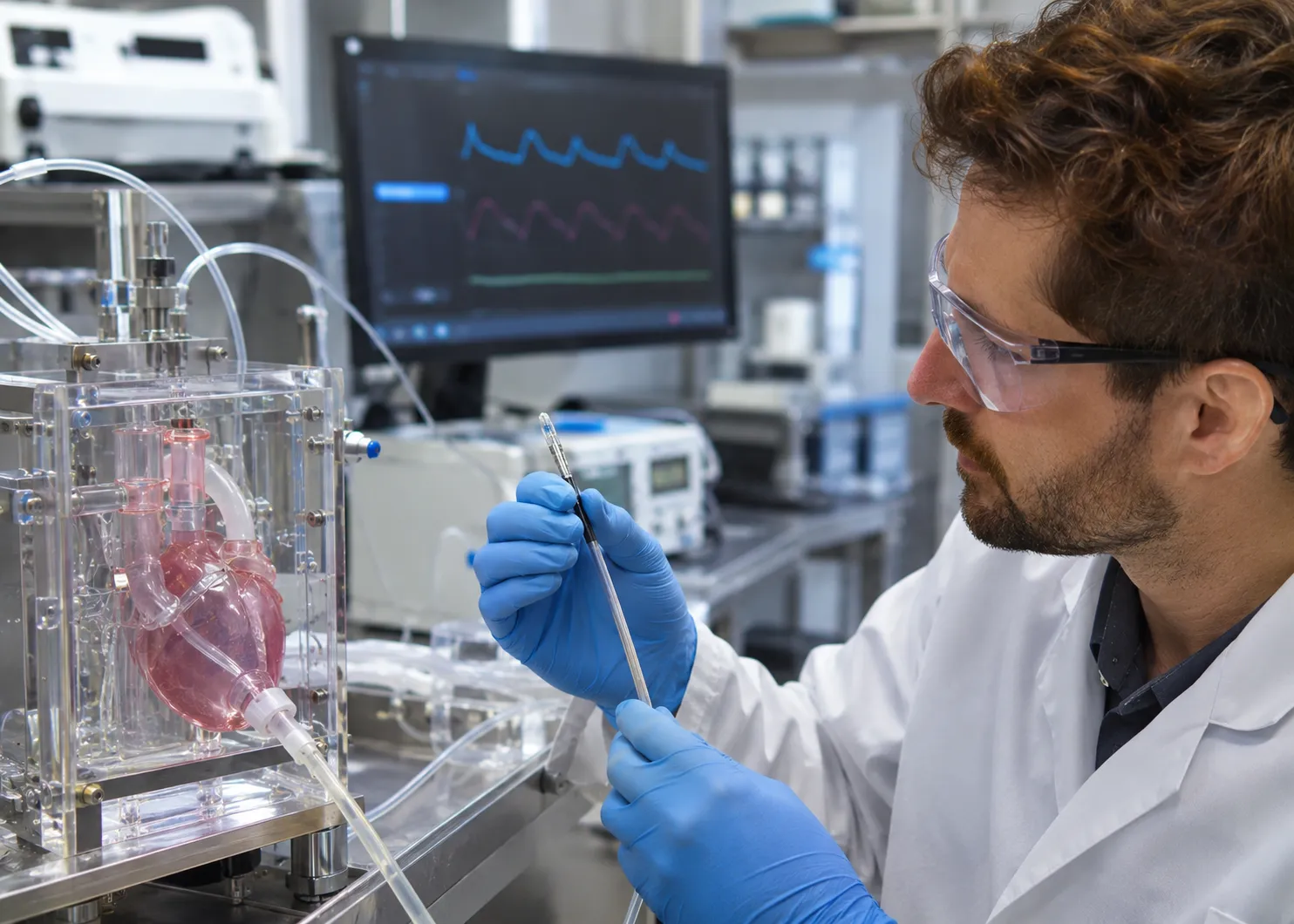
The device is intended to provide temporary mechanical circulatory support when the heart cannot maintain adequate blood flow. In heart-attack-related cardiogenic shock, the resulting shortage of oxygenated blood threatens the brain and other organs. Boston Scientific had previously planned a pivotal study in patients undergoing high-risk percutaneous coronary intervention, or PCI. It has since shifted its initial focus toward acute myocardial infarction complicated by cardiogenic shock.
Executives attributed the change to emerging evidence about mechanical support during high-risk PCI. That procedure opens narrowed coronary arteries, while cardiogenic shock describes a critical failure of the heart’s pumping function. The Vitalyst heart pump uses a magnetically driven impeller. Its design eliminates a separate purge solution, while its catheter configuration is intended to improve stability and reduce blood-cell damage.
Those design goals require clinical testing in the intended patients. The financing announcement does not demonstrate a survival advantage over existing pumps or establish that complications will occur less frequently.
Early study shows technical feasibility, with important limits
A published feasibility study enrolled 15 high-risk PCI patients at five centres in the United States and Sweden. It used a single-arm design and excluded patients who already had cardiogenic shock.
Investigators successfully placed, operated and removed the device in all 15 patients, with no reported device malfunctions. However, technical success was separate from the broader clinical endpoint, which included treatment escalation and survival. The primary clinical success rate was 73% when transient vasopressor use was counted. It rose to 93% when that temporary drug support was excluded. Reported events included three major access-site bleeds and one major vascular complication. One patient died from a cardiac event classified as unrelated to the device, 24 hours after PCI.
The small study supports further investigation but cannot establish comparative safety or effectiveness. Its exclusion of cardiogenic shock also limits what it can show about the population now targeted for development.
Clinical evidence will determine the next stage.
The Vitalyst heart pump falls into a different category than catheter-delivered valve devices such as PASCAL Precision and Amplatzer Paraclose. Those treatments address valve leakage; the investigational pump is intended to provide temporary circulatory support.
Boston Scientific’s next clinical work must evaluate that intended use directly. Results from elective high-risk PCI cannot substitute for evidence in patients experiencing shock after a heart attack. Chief Financial Officer Jonathan Monson said the company expects payments to Blackstone to begin in 2030, MedTech Dive reported. That financial projection is not a confirmed approval date or a guarantee that commercial sales will begin that year.