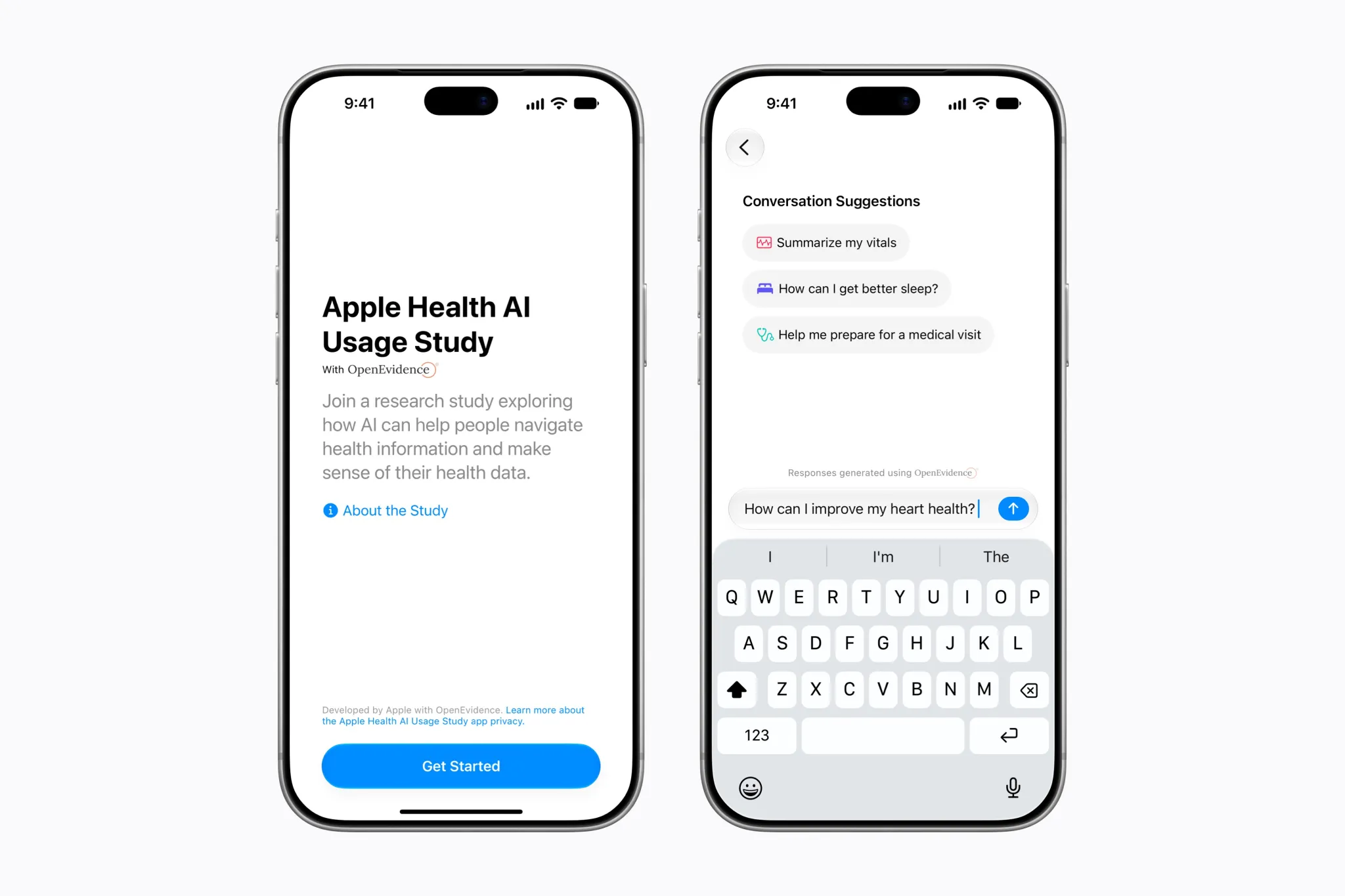
Apple has launched the Apple Health AI Usage Study to examine how people use artificial intelligence for medical information. Developed with OpenEvidence, the research program aims to recruit up to 200,000 U.S. adults.
Announced November 15, 2026, the study will run for more than 12 months. Researchers will examine how users understand AI-generated health answers, evaluate their accuracy and decide whether to trust them.
Apple Health AI Usage Study Offers Research-Based Answers
The study app lets participants ask questions about symptoms, medical conditions, exercise, and nutrition. OpenEvidence provides answers grounded in clinical research and established medical publications.
Sources include The New England Journal of Medicine, JAMA and Nature. Responses include citations so participants can review the supporting research.
Users can rate answers and provide feedback through monthly surveys. Researchers will assess whether AI-generated explanations help people understand health information and prepare for medical appointments.
Optional HealthKit Integration Adds Personalization
Participants can choose to share Apple Health data, including sleep, activity, resting heart rate and laboratory results. The app uses this information to provide more personalized responses.
Apple says study data will not be used to train AI models. The company has introduced privacy protections and safeguards intended to direct users toward medical professionals when appropriate.
The study differs from Apple’s broader Health app improvements, which include AI-powered insights, fitness assessments and personalized wellness information.
Who Can Join Apple’s Health AI Study?
The free Apple Health AI Study App is available through the U.S. App Store.
Participants must be at least 21 years old, live in the United States and use an Apple Intelligence-enabled iPhone 15 Pro or later. The device must run iOS 26 or newer.
Although the App Store lists an 18+ content rating, study enrollment requires participants to be 21 or older.
Apple emphasizes that the app does not provide medical diagnoses or treatment. Participants should consult qualified healthcare professionals about medical concerns.
The company has not announced plans to integrate the study’s conversational medical features into Siri or its standard Health app.