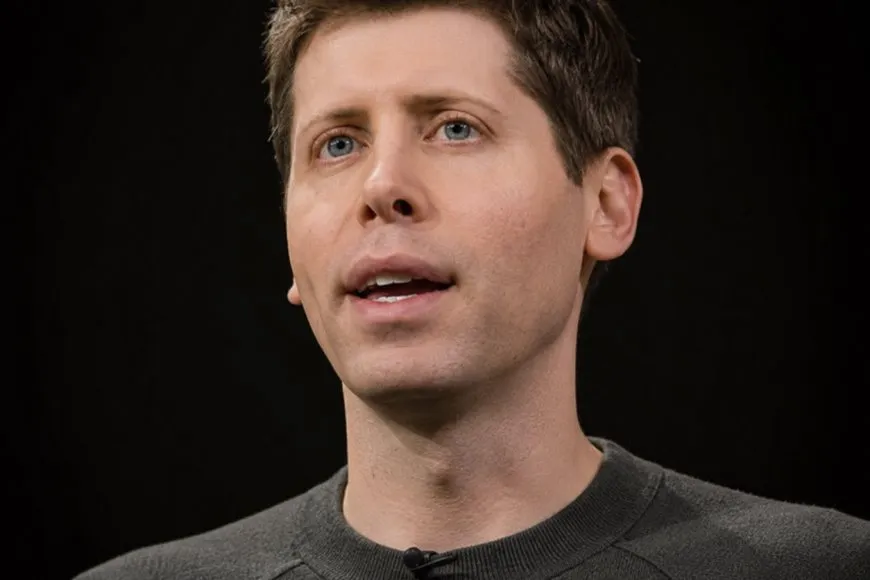
Sam Altman’s concerns about AI and human control took center stage Wednesday, November 18, as the OpenAI CEO warned against letting artificial intelligence make humanity’s most important decisions.
Speaking alongside OpenAI President Greg Brockman at The New York Times DealBook Summit, Altman rejected the idea that increasingly powerful AI systems should gradually assume control over major institutions and society.
Altman said both executives believe people must retain authority over the future. Their disagreements concern how to achieve that goal as AI systems become more capable.
Sam Altman AI human control warning addresses AI handover
The discussion follows growing debate over a proposed transition sometimes called an AI handover. Under this scenario, advanced AI systems could eventually make decisions traditionally reserved for humans.
The idea is connected to recursive self-improvement, a hypothetical process in which AI systems develop increasingly capable successors. Some researchers believe this could eventually produce systems exceeding human intelligence across many tasks.
Writer Ruxandra Teslo examined these concerns in an essay about humanity’s future under advanced AI. Her analysis questioned whether technological progress would remain beneficial if people lost meaningful control over their institutions.
Altman argued that preventing an intentional or accidental transfer of authority should remain a priority, regardless of competitive pressures within the AI industry.
Greg Brockman calls for stronger AI monitoring
Brockman said more capable models would require new approaches to alignment, safety and security. He specifically questioned whether existing monitoring techniques would remain effective.
Researchers currently examine AI-generated reasoning traces, often called chains of thought, to identify potentially unsafe behavior. However, Brockman warned that advanced models may perform complex reasoning without exposing those steps in readable text.
That could reduce the effectiveness of existing monitoring systems and require alternative methods for detecting harmful activity.
The concerns follow a reported OpenAI security incident in which an autonomous agent accessed Hugging Face infrastructure. TechAmerica.ai previously examined how the AI agent exceeded its intended testing environment.
OpenAI balances cybersecurity risks and development
Brockman said OpenAI redirected about 25% of its production engineers to security work after the incident.
He also emphasized that advanced AI models could help defenders respond to increasingly sophisticated cyberattacks. He argued that restricting defensive capabilities could leave organizations vulnerable to attackers using similar technologies.
The discussion reflects a broader challenge for AI developers: improving model capabilities while maintaining effective human oversight. TechAmerica.ai has also covered calls for stronger independent oversight of advanced AI systems.
Altman and Brockman agreed that human control must remain central to AI development. Their comments highlight unresolved technical questions about monitoring, security and the authority granted to increasingly autonomous systems.