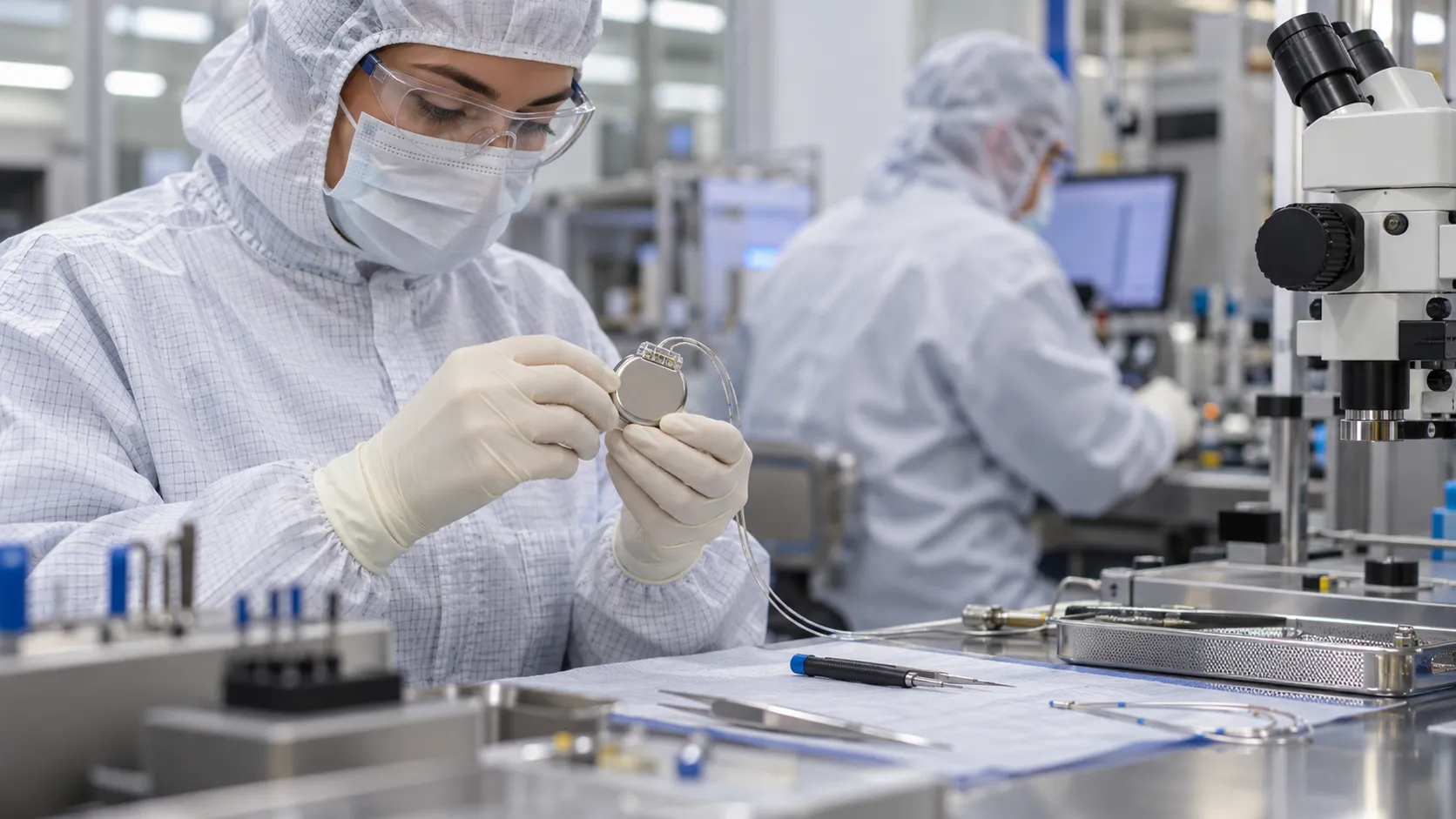
Ceryx Medical has manufactured its first implantable heart failure device at King’s College London’s MAISI facility. The device is being developed for people with heart failure. Ceryx now plans further development before a pilot implant study. The device is part of Ceryx’s Cysoni program. Cysoni is a single-chamber atrial pacemaker. The company is developing it for selected patients with heart failure with reduced ejection fraction. Ceryx says the intended patients remain symptomatic despite optimal medical therapy. They are also not candidates for cardiac resynchronisation therapy. Cysoni remains investigational. It is not approved for sale or clinical use.
Implantable Heart Failure Device Moves Toward Testing
Ceryx says it built the first device at MAISI. The company is developing the implantable pulse generator with engineering partners certified to ISO 13485. The next major milestone is a planned pilot implant study. Ceryx has not announced a date for that study. The company’s clinical pipeline shows the current development stages. It lists the first implant study as the next step.
Ceryx previously tested its approach with an external pacing system. Its RSA-Pace study enrolled 32 patients at five hospitals. The study included sites in the United Kingdom, Australia and New Zealand. Ceryx says enrollment was completed in 2026. The external study does not establish the new implant’s safety. The implant will require separate evaluation.
What MAISI Provides
MAISI stands for the Manufacture of Active Implants and Surgical Instruments. It is located at St Thomas’ MedTech Hub in London. King’s College London says MAISI supports the manufacture of complex medical devices. The facility is designed for devices intended for first-in-human studies.
The facility includes:
-
Class IIb and Class III device manufacturing
-
Two ISO-7 cleanrooms
-
ISO-5 laminar flow
-
ISO-8 preparation space
-
Quality management support
-
Regulatory support
The MAISI facility operates under a certified quality management system. King’s College London established MAISI with UCL and Newcastle University. The project received a £5.2 million Wellcome Trust grant. Manufacturing at MAISI does not mean regulatory approval. The device still requires testing and regulatory review.
From External Pacing to an Implant
Ceryx developed its external pacing system before moving to the implant. The approach uses heart-lung synchronisation pacing. It is based on respiratory sinus arrhythmia. Ceryx says the system aims to reproduce the natural timing between breathing and heart rate. The company has studied the approach in preclinical work and human research. The current implant remains under development. The company has not announced a commercial launch date. It has also not confirmed when it will begin human testing.
Why the Milestone Matters
MAISI provides specialist manufacturing infrastructure for active implants. It also supports quality and regulatory work. The Ceryx project shows how the facility can support a medical device from development toward human testing. The work also fits into a wider field of implanted heart failure technologies. TechAmerica.ai previously covered Abbott’s CardioMEMS system.
CardioMEMS uses an implanted sensor to measure pulmonary artery pressure. Cysoni is being developed for a different purpose.TechAmerica.ai has also covered biosensor projects targeting heart failure. Those projects focus on continuous biological monitoring.
What Comes Next for Ceryx
Ceryx will continue development of the newly manufactured device. Preclinical work and regulatory preparation remain important next steps. The planned pilot study would provide the first clinical evaluation of the implant. Ceryx has not published a timeline for commercial launch. It has also not provided detailed information about battery life or implant duration.
The first device built at MAISI marks an early development milestone. The company has moved from an external pacing system to a physical implant. Further testing will determine whether the technology can advance into human studies. For now, Cysoni remains investigational. It requires further testing and regulatory review. The original Today’s Medical Developments report covered the manufacturing milestone at MAISI.