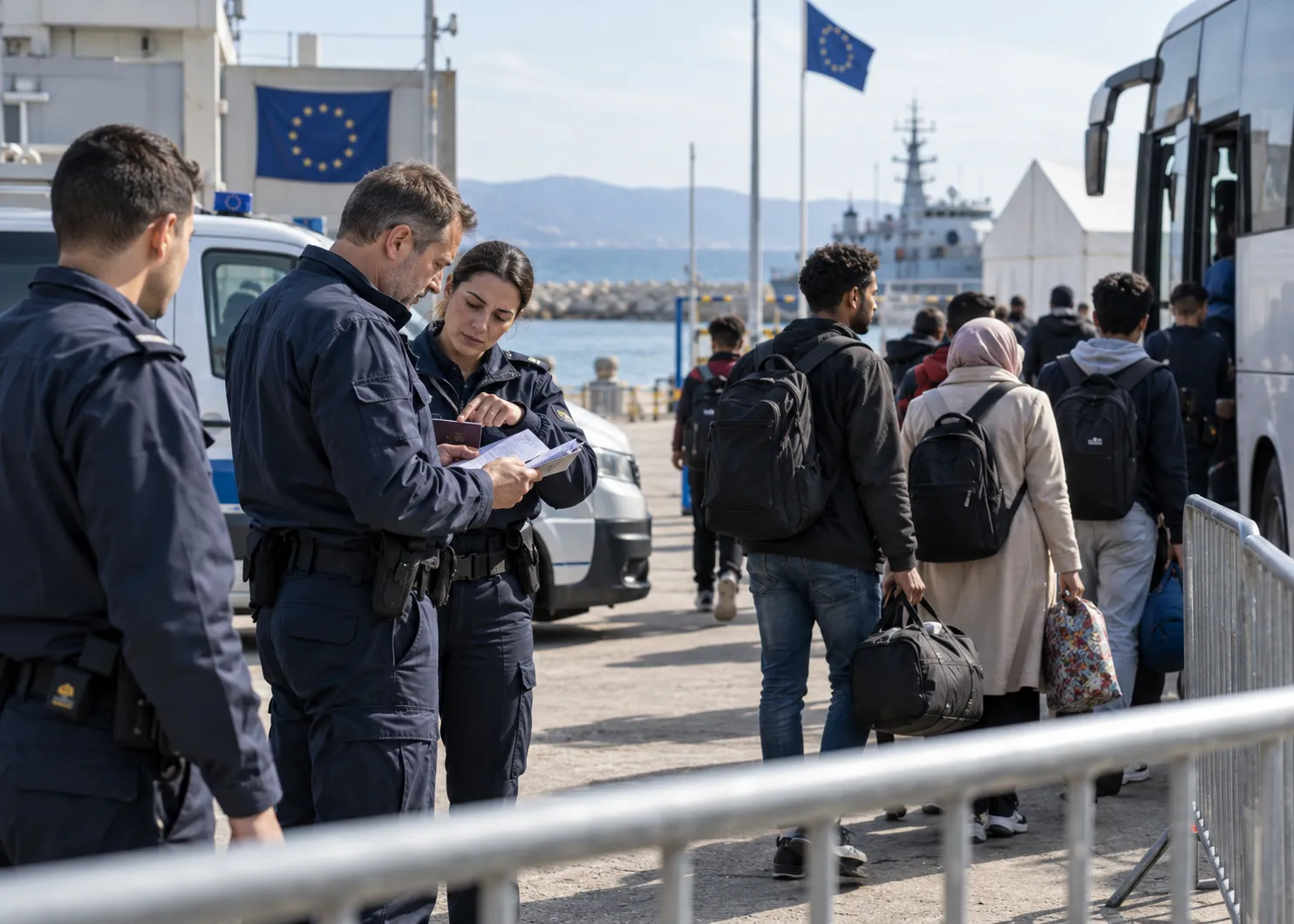
The European Union is preparing to expand Frontex’s deportation powers, allowing its border agency to help return migrants from outside Europe. The proposed reform would extend Frontex’s operations beyond EU territory and give it a larger role in managing migration before people reach European borders.
EU officials cited by Euronews expect the European Commission to present the changes on October 27. The plans would also permit Frontex to assist deportations from overseas return hubs. The expanded authority has not yet been formally adopted.
Frontex Could Carry Out Returns Between Non-EU Countries
Frontex currently helps EU member states organize returns of people without legal permission to remain. It also supports border surveillance, joint operations and cooperation with neighboring countries. Its current mandate does not give it the same authority to conduct returns between two countries outside the EU.
Under the proposed reform, Frontex could help a North African government return migrants to their countries of origin elsewhere in Africa. Such operations could take place before those individuals attempt to enter Europe. The change would extend the agency’s operational reach beyond its traditional border-management responsibilities.
The European Commission has already identified expanded cooperation with non-EU governments as a priority. Its October migration action plan calls for stronger return procedures and greater Frontex involvement.
EU Frontex Deportation Powers Would Extend to Return Hubs
The proposed mandate would also allow Frontex personnel to participate in deportations from return hubs established outside EU territory. These facilities are intended to accommodate certain migrants who have no legal right to remain in the bloc while arrangements are made for their return.
Germany, Austria, Denmark, Greece and the Netherlands are working toward agreements with non-EU countries to establish such facilities. The five governments aim to make the first hub operational in 2027, according to Reuters reporting.
Frontex could eventually help arrange transfers from those facilities to migrants’ countries of origin. However, the practical arrangements would depend on agreements with participating governments. Creating return hubs does not mean every proposed transfer would automatically be legally permissible.
Greater Cooperation With Countries Outside Europe
The expansion would build on existing agreements that allow Frontex to operate alongside authorities in certain non-EU countries. Albania, Serbia and North Macedonia already cooperate with the agency through arrangements covering specified border-management activities.
Further operations would require agreements with the governments concerned. These arrangements would need to establish the legal basis for deployments and define responsibilities between Frontex and national authorities.
The EU is also pursuing closer cooperation with African countries, including negotiations involving Senegal. The proposed mandate would create additional possibilities for coordinating returns across regions rather than focusing exclusively on departures from EU member states.
Reform Includes Rapid Response and Online Surveillance
The planned changes extend beyond deportation operations. They also include a rapid-response capability intended to help manage sudden, large-scale arrivals at European borders. The agency could receive additional operational responsibilities during migration-related emergencies.
Another proposed measure involves monitoring publicly available online activity, including social media, to identify emerging migration movements. The surveillance element could strengthen early-warning capabilities, although its detailed scope and safeguards remain to be established.
The Commission is also planning substantial financial support for Frontex. Euronews reports that the agency is expected to receive €12 billion under the EU’s next seven-year budget framework. The final allocation would remain subject to the EU budget approval process.
Human Rights Groups Question Oversight
The proposed expansion has prompted concerns among civil society organizations about accountability and the treatment of migrants outside EU territory. Their central concern is whether independent supervision and legal safeguards can be maintained during operations involving several governments.
Frontex has previously faced scrutiny over allegations involving migrant pushbacks and cooperation with national border authorities. An Associated Press report published in October described allegations concerning surveillance activities connected to migrant interceptions near Libya. Frontex disputed claims that it shared the alleged information.
Rights organizations argue that overseas deportation operations could create additional challenges for monitoring compliance with fundamental rights. Questions include access to legal remedies, protection against returns to unsafe countries and responsibility when several authorities participate in a transfer.
Supporters of stronger return policies argue that closer cooperation with transit and origin countries could make immigration enforcement more effective. Critics question whether expanding operations abroad will improve return outcomes without creating additional legal and humanitarian risks.
What Happens Next?
European Commission Vice-President Henna Virkkunen and Home Affairs Commissioner Magnus Brunner are expected to present the reform on October 27. The full proposal should clarify the intended powers, operational limits and oversight arrangements.
The changes would still need to pass through the EU legislative process before becoming law. Their implementation would also depend on cooperation agreements with non-EU countries and the practical development of overseas return operations.
For now, the proposal signals a significant planned change in Frontex’s responsibilities. The central question is how far the EU can extend its migration enforcement operations beyond its borders while maintaining legal accountability and fundamental rights protections.