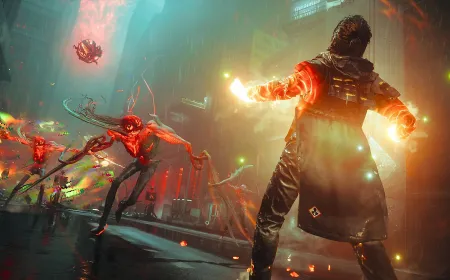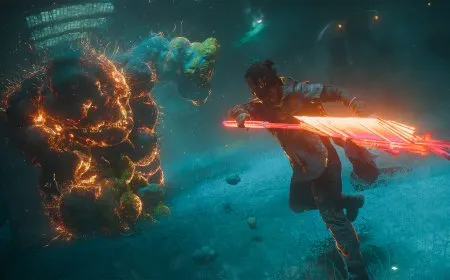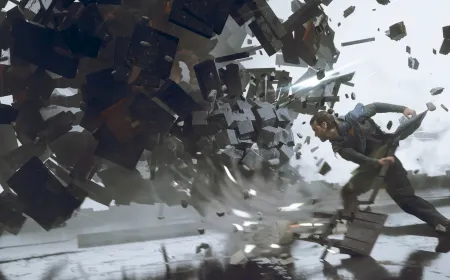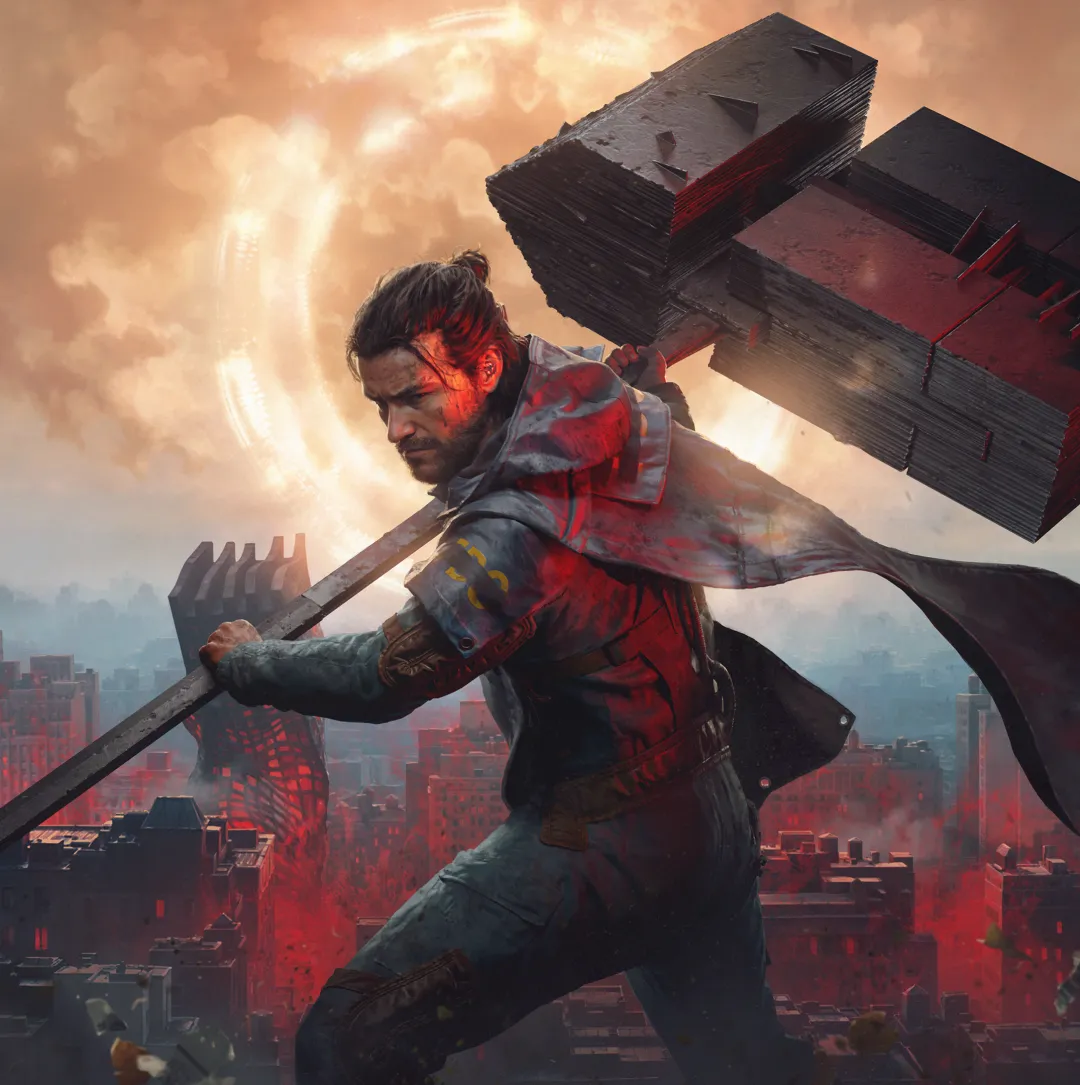
Control Resonant mission design combines overlapping timelines, environmental storytelling and player freedom in one of Remedy Entertainment’s most unusual levels. The studio has explained how it developed “Recursions and Iterations,” a mission that deliberately leaves parts of its time-travel story unresolved.
The mission follows Dylan Faden as he investigates researchers trapped in the Underpass, a sprawling area of floating concrete structures. Players encounter different versions of the same events, including researchers who appear alive in one timeline and dead in another.
Control Resonant Mission Design Uses Overlapping Timelines
Lead level designer Anne-Marie Grönroos and senior level designer Admir Burnic explained the challenges of creating a mission built around conflicting timelines. The team wanted players to feel uncertain about events without becoming confused about where to go.
One central mystery involves the researchers Dylan encounters. They appear to recognize him before their first meeting, while other encounters suggest they have already died.
Even the developers acknowledged uncertainty about the researchers’ ultimate fate. That ambiguity reflects Remedy’s approach to supernatural storytelling, where not every event receives a definitive explanation.
The technique builds on the studio’s established emphasis on unusual environments and fragmented narratives. In its official gameplay announcement, Remedy described a Manhattan transformed by paranormal forces and shifting physical rules.
Research Stations Help Players Understand the Underpass
Although the story embraces uncertainty, navigation required greater clarity. Early playtests revealed that players struggled to distinguish between three research stations in the Underpass.
The stations originally looked almost identical, making it difficult to understand their locations and relationships. Some testers could not determine how many stations they had visited.
Remedy addressed the problem by giving each location a different level of deterioration. One station suggests weeks of occupation, another indicates months, and the most damaged reflects years of decay.
These visual differences help communicate the passage of time without explicitly explaining the timeline anomalies. Players can identify locations through environmental details rather than relying entirely on dialogue.
TechAmerica previously examined how Control Resonant uses environmental storytelling and collectible documents to reveal information about its supernatural world.
Dylan’s Reach Ability Changed Level Navigation
The Underpass contains disconnected platforms and floating islands that require careful movement. Remedy eventually made Dylan’s Reach necessary to navigate key sections.
Reach lets Dylan cross long distances with supernatural movement. Requiring this ability helped developers establish clearer routes through the complicated environment.
However, Dylan’s mobility created another problem. Players could bypass locations and encounter narrative events out of order, disrupting the intended sequence.
Rather than restricting movement, the designers reorganized the story into independent pieces. Players can discover these moments in different sequences and gradually reconstruct the larger narrative.
Titanfall 2 Inspired the Mission’s Combat Sequence
One late addition drew inspiration from “Effect and Cause,” the time-travel mission in Titanfall 2. Burnic wanted to adapt that concept to Control Resonant’s supernatural setting.
During a major combat encounter, alternate versions of Dylan briefly appear and attack enemies. Their sudden arrivals reinforce the idea that multiple timelines are intersecting.
The feature was introduced relatively late in development. To make implementation manageable, Burnic reused existing character animations rather than requiring entirely new combat systems.
Remedy’s September release announcement emphasized the studio’s experimentation with the sequel’s mechanics and structure.
The finished mission balances unsettling narrative ambiguity with practical navigation. Its design allows players to explore freely while providing enough environmental guidance to follow the central story.