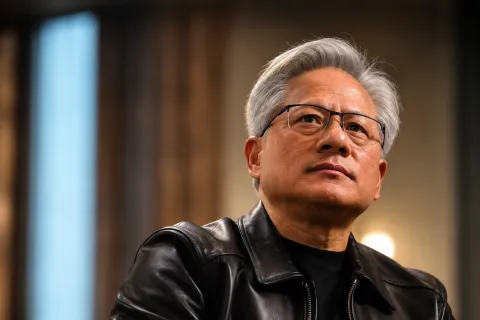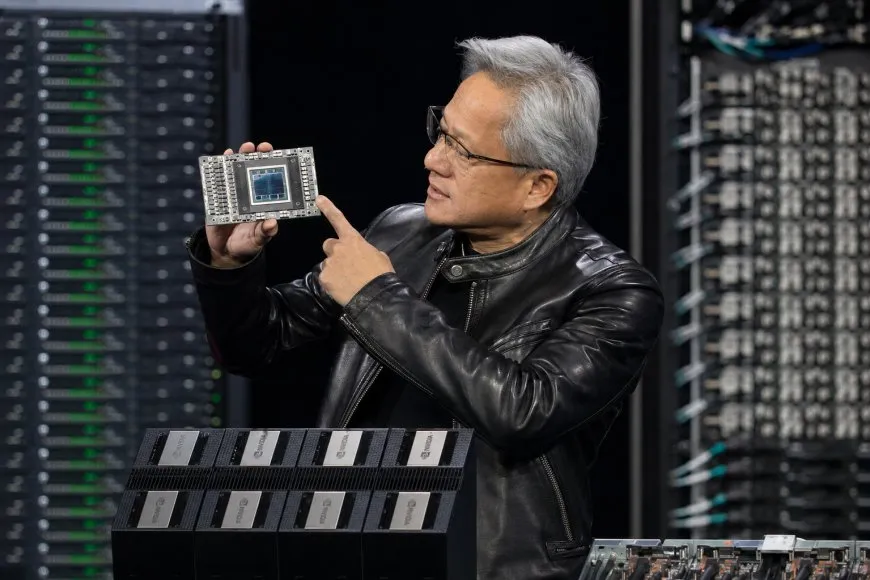
Jensen Huang’s departure from Nvidia could affect several AI initiatives that depended heavily on his leadership. Following his resignation on November 12, 2026, the chipmaker faces questions about open-weight AI, agent security, personal computing and data center financing.
Huang helped establish Nvidia as a leading supplier of AI computing infrastructure. He also championed industry partnerships and new technologies extending beyond the company’s graphics processors.
Nvidia has appointed Chief Financial Officer Colette Kress as interim CEO while its board searches for a permanent replacement. Five areas could face greater uncertainty during the transition.
1. Open-Weight AI Models Could Lose a Major Advocate
Huang strongly supported open-weight AI models, which let developers download, customize, and deploy models on their own infrastructure.
Nvidia has developed its Nemotron family and invested in open AI development tools. The company also agreed to acquire Hugging Face for $12.9 billion, subject to regulatory approval.
In July, Huang organized industry support for open-weight models as policymakers considered restrictions on Chinese AI technology.
His departure could weaken that advocacy, although Nvidia has not announced changes to its model development strategy.
TechAmerica previously examined Nvidia’s Nemotron 3.5 models, including their applications in enterprise automation and local computing.
2. AI Agent Security Faces Leadership Uncertainty
Huang also promoted industry cooperation on AI agent security. Nvidia’s Open Agent Safety Platform attracted support from more than 100 companies seeking common approaches to securing autonomous systems.
The effort addresses risks involving AI agents that access sensitive information, execute commands and interact with external systems.
Other AI researchers have called for stronger safeguards. In a September research essay, OpenAI Chief Scientist Jakub Pachocki discussed the dangers of increasingly capable AI systems and the need for improved monitoring.
Huang favored industry-led technical safeguards over extensive regulation. His absence could change the direction of those discussions, although participating companies can continue developing the security platform.
3. Nvidia’s AI PC Strategy Loses Its Leading Promoter
Huang recently expanded Nvidia’s ambitions beyond graphics processors into CPUs designed for AI-powered personal computers.
The initiative involves partnerships with major PC manufacturers developing systems capable of running AI agents locally. These devices target developers, creators and professionals handling demanding workloads.
Huang personally promoted the technology as an alternative to cloud-dependent AI computing.
TechAmerica previously covered Nvidia’s expansion into the AI PC market, including its plans to compete in a broader processor market.
The products remain in development and distribution, but Nvidia will need other executives to lead their commercial rollout.
4. AI Data Center Financing Faces Greater Scrutiny
Huang played an important role in attracting capital to AI infrastructure. Nvidia has invested in customers and cloud providers that purchase its processors.
Such arrangements have raised concerns about circular financing. Bloomberg examined commitments reportedly totaling $750 billion, including arrangements involving Nvidia and its partners.
In August, Nvidia also reportedly agreed to support financing for an OpenAI data center in Ohio, potentially covering obligations of up to $105 billion.
Meanwhile, investors have become increasingly cautious about debt-backed AI infrastructure. Forbes reported that nearly half of approximately $80 billion in data center bonds issued during 2026 carried speculative-grade ratings.
The financial risks extend beyond individual companies. CNBC examined concerns about Nvidia’s influence on the financial system as AI infrastructure investment grew.
Nvidia’s financing commitments remain in place, but Huang’s departure removes a prominent advocate for these arrangements.
5. Nvidia’s Political Influence Could Face Additional Pressure
Huang maintained relationships with policymakers as Nvidia navigated semiconductor export restrictions and AI infrastructure regulation.
His departure follows allegations that he was a suspected Chinese intelligence asset. Those allegations remain unproven, and no public evidence establishes that Huang knowingly participated in espionage.
Political scrutiny could also extend to Nvidia’s financial relationships. The company reportedly contributed $25 million toward President Donald Trump’s White House ballroom project, which has faced public opposition in polling.
Separately, Democratic lawmakers have outlined plans for congressional investigations into the administration’s financial relationships. Those plans do not establish wrongdoing by Nvidia.
Huang’s departure creates uncertainty around the company’s political relationships, but Nvidia has not announced its future policy positions.
What Comes Next for Nvidia?
Nvidia’s businesses, partnerships and existing technology projects continue under interim CEO Colette Kress.
Huang’s departure does not automatically threaten the five initiatives. However, his personal influence helped build partnerships across technology, finance and government.
The next chief executive will inherit those commitments while addressing investor concerns, regulatory scrutiny and growing competition in AI computing.