





















Apple CEO John Ternus Makes iPhone the Hub of Its AI Strategy
John Ternus is positioning the iPhone as Apple’s AI-era personal hub, echoing Steve Jobs’ 2001 strategy of placing the Mac at the centre of digital life.

Apple CEO John Ternus is putting the iPhone at the centre of the company’s strategy for the AI era, pushing back against predictions that artificial intelligence and new wearable devices could eventually make smartphones less important.
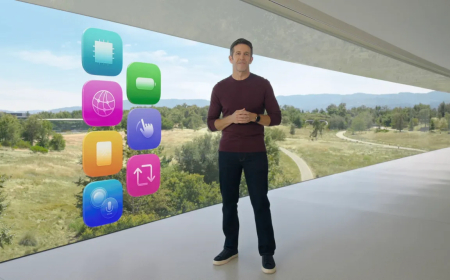
During his first keynote as CEO on Wednesday, Ternus described the iPhone as an “intelligent personal hub” and argued that its combination of computing power, cameras, connectivity and on-device AI makes it well suited to remain Apple’s most important personal device.
“There’s no product in the world better designed to be your intelligent personal hub than iPhone,” Ternus said.
The message comes as some technology executives and industry observers openly question the smartphone’s long-term role. Recent commentary has argued that AI-powered wearable devices could eventually challenge smartphones. At the same time, Apple has faced broader questions about how it will navigate the shift toward AI and what could ultimately follow the iPhone.
That represents a different emphasis from the later years of former CEO Tim Cook, who frequently sought to demonstrate that Apple’s business extended beyond its flagship smartphone. Before Ternus took over, questions about Apple, the iPhone and the transition to AI had become increasingly central to discussion of the company’s future.
Ternus echoes Steve Jobs’ digital hub strategy
Ternus’ approach has a historical parallel inside Apple. In 2001, Steve Jobs confronted predictions that personal computers were becoming obsolete and instead argued that the Mac would remain central to a growing ecosystem of digital devices.
Jobs called the Mac a “digital hub” that could connect products such as digital cameras, camcorders and other emerging consumer electronics. Rather than replacing the PC, Apple’s strategy was to make the computer more valuable by placing it at the centre of those devices.
Later that year, Apple introduced the iPod. The music player became a major commercial success and eventually helped establish the foundation for Apple’s expansion into the iPhone and other mobile products.
Ternus is now applying a similar argument to the iPhone. Instead of presenting AI hardware as a reason consumers will eventually move away from smartphones, he is positioning the phone as the device that can coordinate and power increasingly intelligent personal experiences.
Apple argues the iPhone already has the right AI hardware
Ternus said an ideal personal hub would need a powerful processor, high-resolution cameras, persistent network connectivity and the ability to run AI directly on the device. Those are capabilities already built into modern iPhones.
Apple’s recent chips have also demonstrated substantial computing performance. Early A18 Pro benchmark results, for example, highlighted the processing performance Apple has been building into its mobile hardware.
The iPhone also has an advantage that emerging AI devices have yet to overcome: it is already a product millions of people carry throughout the day. Its combination of portability, cameras, sensors, connectivity, and computing power gives Apple an established platform to add new AI capabilities without requiring consumers to adopt an entirely new category of hardware.
Other companies have introduced AI-focused wearables and companion devices to create new ways of interacting with artificial intelligence. Still, the source notes that none has yet displaced the smartphone as the primary personal computing device.
Ternus’ first major product presentation as CEO therefore offered Apple a clear direction. Rather than treating the iPhone as technology that needs an immediate successor, the company is positioning it as the central device through which its AI strategy will develop.
What's Your Reaction?
 Like
0
Like
0
 Dislike
0
Dislike
0
 Love
0
Love
0
 Funny
0
Funny
0
 Angry
0
Angry
0
 Sad
0
Sad
0
 Wow
0
Wow
0