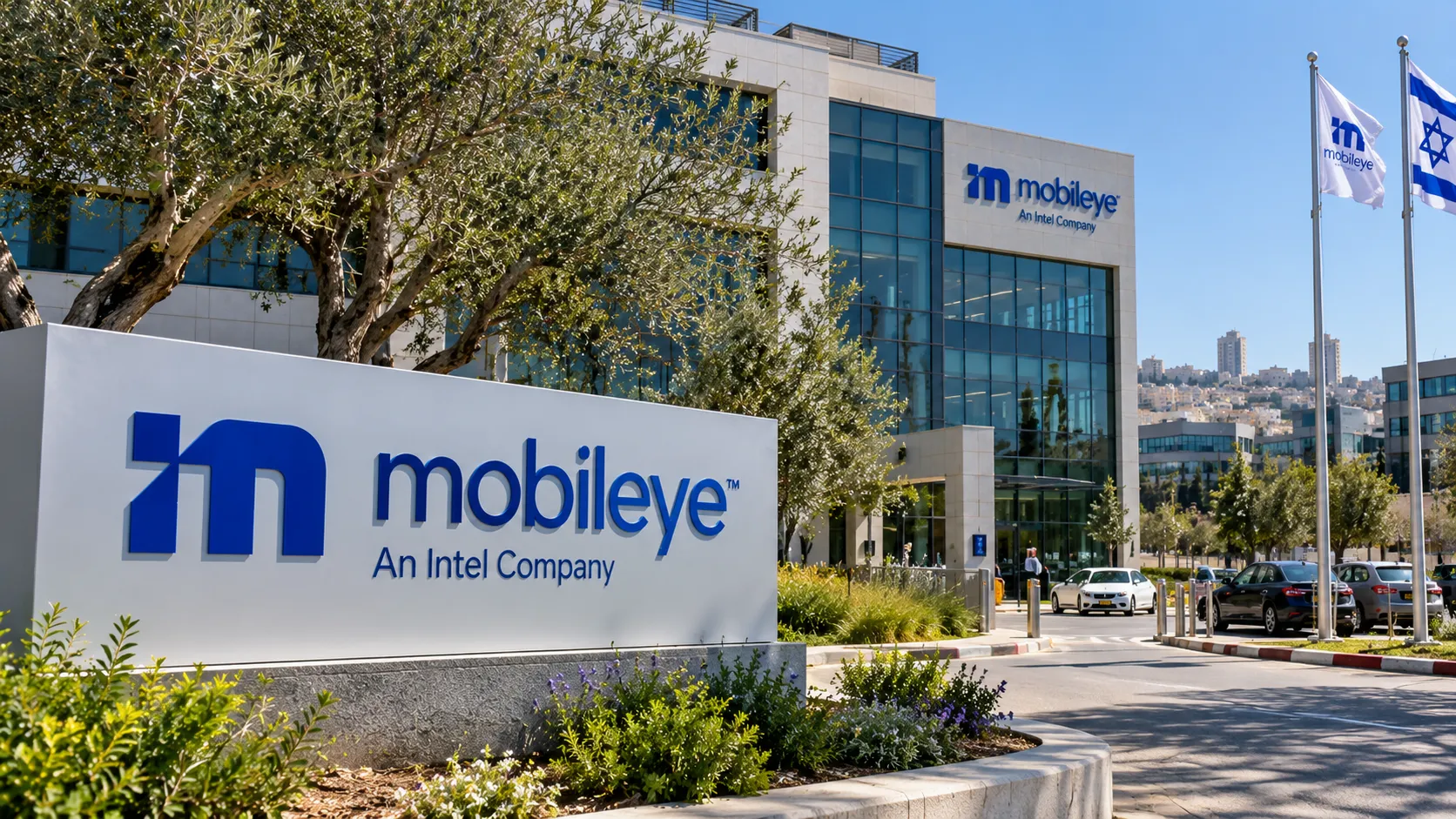
The Mobileye layoffs in 2025 affected approximately 200 employees as the autonomous-driving technology company reorganized its workforce in December. Most reductions occurred in Israel, where Mobileye maintains its main research and engineering operations.
The company implemented the cuts on December 8, 2025, according to its subsequent annual filing with the Securities and Exchange Commission. Mobileye also recorded about $7 million in expenses related to the decision.
The reductions came as Mobileye adjusted its staffing needs while continuing to develop advanced driver-assistance technology and self-driving systems for automakers.
Mobileye Layoffs 2025 Affect About 200 Employees
Mobileye spread its workforce reduction across several departments rather than concentrating it in one business unit.
Israeli technology publications, including CTech, first reported the December announcement and identified about 200 affected employees.
Mobileye subsequently confirmed the figure in its 2025 annual SEC filing.
The filing stated that the company implemented the reduction on December 8 and that most affected employees were based in Israel.
In comments reported by CTech, Mobileye described the decision as an adjustment to changing business requirements.
The company also said it would support affected employees while continuing to hire for selected positions needed to carry out its long-term plans.
Mobileye did not publish a complete departmental breakdown or identify the exact number of employees affected at each office.
How Large Was the Workforce Reduction?
Contemporary reports differed slightly in describing the percentage of Mobileye’s workforce affected.
CTech estimated that the 200 positions represented approximately 4% of employees. Other Israeli news organizations described the reduction as roughly 5%.
Mobileye’s later annual report provided a more authoritative picture of its workforce.
As of December 27, 2025, the company employed approximately 4,200 people across seven countries. Around 3,900 were based in Israel.
The filing also stated that approximately 85% of employees worked in research and development.
Based on the year-end workforce figure, 200 positions would represent about 5% of the company.
That remains an approximation because the published headcount reflects a date after the restructuring was implemented.
The geographic distribution helps explain why the reductions hit Mobileye’s Israeli operations particularly hard.
Mobileye Records $7 Million in Layoff Costs
Mobileye disclosed additional financial details in February 2026 when it published its annual report.
The company recorded about $7 million in expenses related to the December workforce reduction.
It recognized those costs in its fiscal year ending December 27, 2025.
The disclosure confirms the financial impact of the restructuring but does not provide a detailed breakdown of severance payments, employee benefits or other associated expenses.
The company also disclosed that its workforce stood at approximately 4,130 employees on February 3, 2026, following the reduction and its acquisition of Mentee Robotics.
That later number should not be interpreted as the layoff count. Headcount can also change through recruitment, acquisitions and normal employee departures.
Mobileye’s filing provides a more reliable account of the restructuring than estimates based solely on contemporary media reports.
Job Cuts Follow Earlier Changes to Mobileye’s Operations
The December reduction came after Mobileye had already changed parts of its technology portfolio.
During the previous two years, the company discontinued its LiDAR development operation and a separate lane-departure warning systems business.
LiDAR technology uses light-based sensors to measure distances and identify objects. Although it is widely associated with autonomous vehicles, Mobileye has increasingly emphasized other sensing approaches in its product development.
According to CTech’s December reporting, the discontinued LiDAR operation had employed around 60 people. Its lane-departure warning division employed about 130 people, including about 90 in Israel.
Those earlier decisions were separate from the approximately 200 jobs affected in December 2025.
The latest restructuring was broader. It involved adjustments across departments rather than closing another single product division.
Mobileye did not disclose that artificial intelligence directly replaced the affected employees.
Its stated explanation centered on changing business requirements and operational priorities.
Mobileye Revenue Grew Before the Layoffs
The announcement followed a quarter in which Mobileye reported higher revenue.
In its third-quarter 2025 financial results, published October 23, the company reported revenue of $504 million.
That was up 4% from the comparable period in 2024.
Mobileye attributed the growth primarily to stronger demand for its EyeQ processors, which power advanced driver-assistance systems.
The company also reported adjusted earnings of 9 cents per diluted share.
Although revenue increased, the results showed continued pressure on certain margins and product categories.
Mobileye raised the lower end of its full-year revenue outlook, forecasting between $1.845 billion and $1.885 billion.
Its full-year 2025 results showed revenue of about $1.894 billion, up 15% from 2024.
These figures show the company reduced its workforce while annual revenue grew.
However, revenue growth alone does not determine staffing requirements. Product development priorities, operating expenses and expectations for future demand can also influence employment decisions.
Why Autonomous Driving Remains Central to Mobileye
Mobileye develops semiconductor technology and software used in driver-assistance and autonomous-driving systems.
Its EyeQ processors help vehicles interpret information from cameras and other sensors. The technology supports functions such as collision warnings, automatic emergency braking and more advanced automated driving.
The company also develops SuperVision, Chauffeur and Drive systems for higher levels of vehicle automation.
Automakers can integrate these products into vehicles without developing every underlying component internally.
Mobileye has been publicly traded since 2022, when Intel returned the business to the stock market while retaining majority ownership.
Its long-term strategy depends on winning vehicle production programs, supporting existing customers and developing more capable automated-driving technology.
That business requires substantial investment in engineering and research, even when other parts of the organization are being streamlined.
Mobileye Expands Into Robotics and Robotaxis in 2026
Mobileye announced a significant expansion beyond automotive systems after the December layoffs.
On January 6, 2026, the company revealed an agreement to acquire Israeli humanoid robotics developer Mentee Robotics.
The transaction was valued at approximately $900 million, subject to adjustments. Mobileye completed the acquisition on February 3, according to its annual filing.
The deal expanded Mobileye’s activities into physical AI, a field involving intelligent systems that interact with the real world through robots and other machines.
TechAmerica.ai covered the acquisition in its report on Mobileye’s Mentee Robotics deal.
In June 2026, Mobileye also announced plans for its own robotaxi business.
The initiative would move the company beyond supplying autonomous-driving systems to operating a commercial ride-hailing service.
Mobileye said it was targeting an initial U.S. launch in 2027.
The company announced these developments after the December 2025 layoffs. The company did not present them as direct causes of the earlier workforce reduction.
Mobileye Reports Continued Business Activity in 2026
Mobileye’s more recent financial reports show that the company continued investing in its automotive technology business.
In its second-quarter 2026 results, Mobileye reported $508 million in revenue.
The figure was relatively unchanged from the same quarter in 2025.
Management highlighted progress on advanced driver-assistance programs and preparations for future robotaxi deployments.
The company also narrowed its 2026 revenue forecast to between $1.97 billion and $2.02 billion.
On July 23, founder and chief executive Amnon Shashua announced a separate leadership change, saying he intended to step down after a successor was appointed.
Mobileye said Shashua would remain involved in the business, with the board offering him a future chairman role.
TechAmerica.ai reported the development in its Mobileye leadership transition article.
The announcement was a subsequent corporate development, not an explanation for the December layoffs.
What the Mobileye Layoffs Mean for Its Workforce
Mobileye’s December 2025 restructuring affected employees at a company that continued developing new technology and expanding into additional markets.
The reduction was not presented as the shutdown of Mobileye’s principal business. The company continued recruitment for selected roles and maintained its investment in autonomous-driving systems.
Its official filing established the scale of the cuts and their associated expenses.
It is less clear how the reductions were distributed across teams and locations.
Mobileye was one of several technology companies that announced workforce changes in 2025. TechAmerica.ai tracks similar developments in its 2025 technology layoffs report.
The company’s experience illustrates how employment reductions can occur alongside revenue growth and continued investment in new products.
For Mobileye, the facts are straightforward: about 200 positions were affected, most in Israel, and the company recorded about $7 million in associated costs.
Its subsequent expansion into robotics and robotaxis demonstrates that the business continued pursuing new opportunities after reorganizing its workforce.