Amazon-owned Ring has launched Ring Robotics, a new division focused on autonomous security devices. Its first products include an indoor surveillance drone for homes and a mobile patrol robot for businesses. Announced Tuesday, Nov. 10, both devices can inspect properties, respond to security alerts and stream video automatically.
The Ring Drone Cam will cost $270 and become available Jan. 27, 2027. The $1,000 Ring Rover Cam, designed for commercial properties, is scheduled for release Dec. 16, 2026.
Ring Robotics Brings Mobile Cameras Into Homes
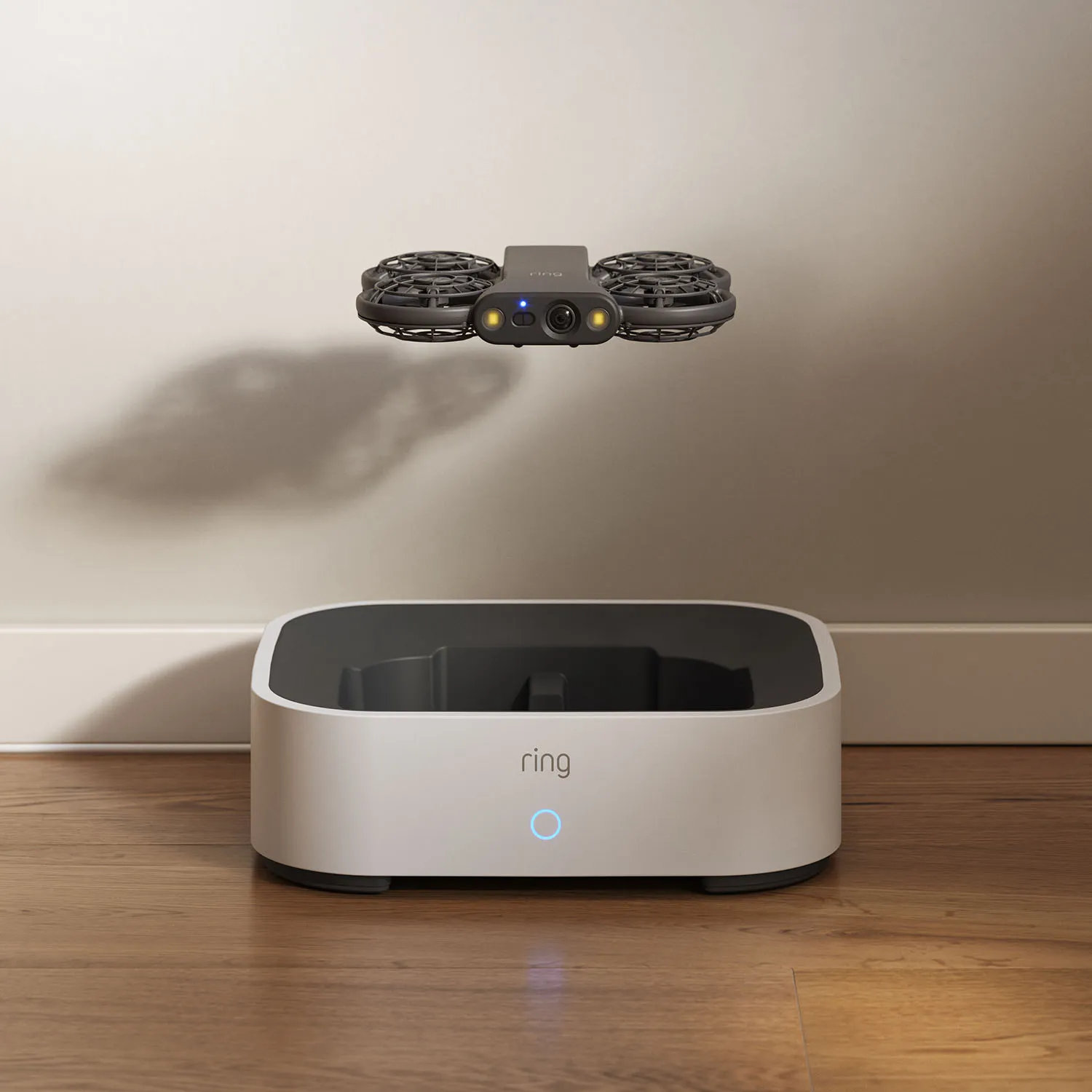
The Ring Drone Cam is a compact flying camera that moves between rooms while homeowners are away. It captures 2K video and includes LED lighting for darker areas. When inactive, the device remains in its docking station.
Unlike fixed security cameras, the drone can travel to different parts of a property. It responds to alerts from the company’s Ring Alarm security system. This allows homeowners to inspect areas where sensors detect unusual activity.
Users can schedule flights during overnight absences or vacations. The device also supports Alexa Home Map, Amazon’s interactive 3D interface for managing connected devices throughout a home.
The drone expands Ring’s smart-home lineup beyond conventional surveillance equipment. In October, the company introduced its first smart lock with a hand-powered backup, alongside additional 4K security cameras.
Ring Rover Cam Targets Business Security
The Ring Rover Cam is a ground-based robot designed to patrol offices, stores and other commercial spaces. Businesses can establish patrol routes and schedules. The robot then inspects designated areas without requiring an accompanying security employee.
The Rover streams continuous 4K video through Ring’s mobile application. It also records automatically when it detects a person, helping businesses document activity during patrols.
A height-adjustable periscope camera helps the robot see over obstacles. Two-way audio allows remote operators to communicate with people nearby. These features help businesses investigate alarms without immediately sending employees to the location.
AI Pilot Handles Autonomous Navigation
Both devices use Ring’s proprietary AI Pilot system for autonomous navigation. The technology combines computer vision, onboard sensors and cloud processing to move through indoor environments.
Ring says the system lets devices explore their surroundings and build detailed maps. This reduces the need for owners to program every movement manually.
The launch follows Amazon’s earlier attempt to develop autonomous security robots through Astro. Introduced in 2021, Astro was initially designed for household use. Amazon later developed a business security version but eventually discontinued that offering.
Ring says feedback from Astro customers helped shape development of its new robotic devices.
Privacy Questions Accompany the Expansion
Mobile cameras inside homes and workplaces raise questions about video protection, storage and access.
Ring says both devices use Throw Away the Key Encryption, or TAKE. The company describes it as its strongest default encryption system. However, Ring has not clarified whether either robot will support local video storage instead of cloud services.
The announcement follows years of criticism surrounding Ring’s surveillance practices. The Electronic Frontier Foundation has criticized Ring’s surveillance arrangements, particularly those involving law enforcement access to privately recorded footage.
Ring has also adjusted its relationships with surveillance technology providers. TechAmerica previously reported on the company’s canceled partnership with Flock Safety. That arrangement involved plans to connect customers with a broader law enforcement camera network.
Important questions remain about recording controls, data retention and circumstances under which footage may be shared.
The December and January launches will bring Ring’s autonomous security technology into homes and commercial properties. Real-world use will provide a clearer picture of navigation performance, reliability and privacy protections.