Deepfake detection technology is becoming an increasingly important part of enterprise cybersecurity as artificial intelligence makes it easier to imitate voices, manipulate video, and produce convincing digital identities. New research published in September 2026 suggests that businesses are encountering these threats faster than many can develop specialized defenses.
A survey of 250 U.S. enterprise security leaders found that 74% encountered or suspected a deepfake attack in the past year, while only 10% reported using purpose-built detection tools. A separate Gartner study identified deepfake-related social engineering incidents involving employee audio and video calls, reinforcing concerns about the reliability of traditional identity checks.
The findings expose a broader security problem. Recognizing a familiar face or voice is no longer sufficient evidence that the person behind a digital interaction is genuine. Enterprises increasingly need to verify identity through multiple independent signals rather than relying solely on what employees see or hear.
September Research Reveals Gaps in Enterprise Deepfake Defenses
The 2026 Deepfake Readiness Index, published September 28, examined responses from 250 security leaders at U.S. organizations employing at least 1,000 people.
According to the survey, 74% of respondents said their organizations had encountered or suspected deepfake attacks within the preceding 12 months. Only 10% reported having tools specifically designed to address those threats.
The research also found that 93% expressed concern about their organization’s preparedness.
Cybersecurity vendor Pindrop commissioned the study, and Wakefield Research conducted it in June 2026. Its findings describe the surveyed population rather than all businesses, and suspected incidents were not necessarily independently confirmed.
Separate Gartner findings provide additional context. In a September 22 report, Gartner said 41% of surveyed cybersecurity leaders had experienced at least one social engineering incident involving a deepfake during an employee audio call. Another 36% reported incidents involving video calls.
Gartner surveyed 297 senior cybersecurity leaders between March and May 2026.
Together, these studies suggest that synthetic media is becoming an operational identity-security concern, not merely a problem involving misleading online videos.
How Deepfake Detection Technology Works
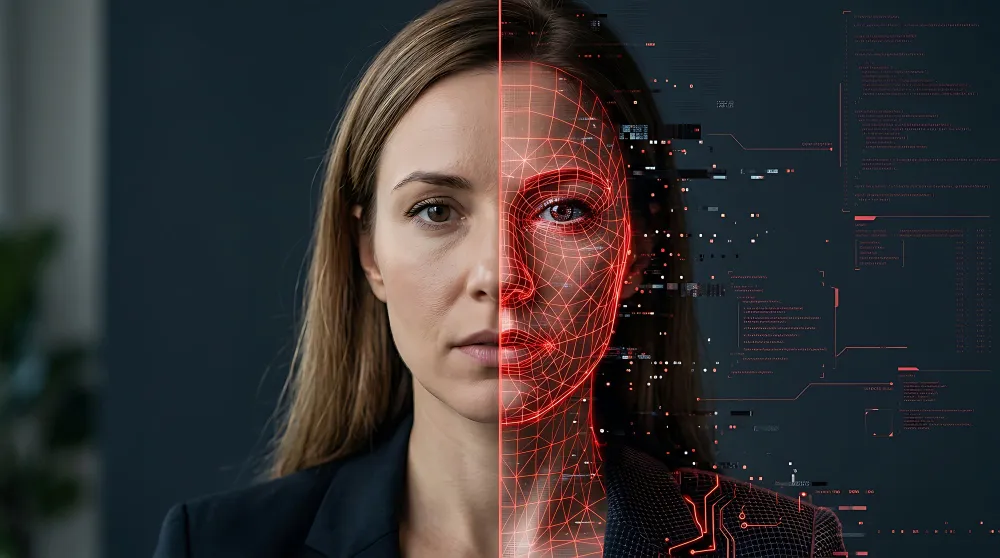
Deepfake detection systems examine digital media for signs that content has been artificially generated or manipulated.
Image and video analysis may look for inconsistencies in facial details, lighting, movement, texture, or patterns associated with synthetic image generation.
More advanced systems use machine learning models trained on examples of authentic and manipulated media. These models attempt to identify subtle statistical differences that may not be visible to human observers.
Audio detection follows a related approach. Systems analyze speech characteristics, acoustic patterns, and features that may distinguish synthetic voices from natural recordings.
However, detection performance can vary significantly with recording quality, compression, background noise, and the techniques used to generate manipulated content.
A model trained to recognize one type of deepfake may perform less reliably against unfamiliar generation methods.
For enterprise security, these limitations make it risky to treat a single detection score as definitive proof that an interaction is genuine or fraudulent.
Facial Liveness Detection Adds Another Security Layer
Biometric identity verification often uses facial recognition to compare a person against an enrolled image or identity document.
Facial recognition and liveness detection solve different problems.
Recognition attempts to establish whether two facial images represent the same individual. Liveness detection attempts to determine whether the biometric sample comes from a genuine, physically present person rather than a photograph, video replay, mask, or other presentation attack.
Some systems analyze natural facial movements and visual characteristics without requiring an explicit user action. Others ask users to perform a specific movement or follow instructions during verification.
These techniques can strengthen remote onboarding and authentication, but they are not infallible.
The National Institute of Standards and Technology’s digital identity guidance addresses presentation attack detection and the importance of verifying that biometric information is collected from a genuine applicant.
The effectiveness of liveness controls depends on implementation, testing, and resistance to evolving attack techniques.
Video Injection Attacks Can Bypass Ordinary Camera Checks
One of the most important developments in identity fraud involves attacks that manipulate the digital video stream before it reaches the verification system.
In a conventional presentation attack, someone may hold a photograph or replay a recording in front of a camera.
Video injection attacks operate differently. Instead of presenting fraudulent material to a physical camera, attackers attempt to substitute synthetic or prerecorded media within the software processing pipeline.
This can undermine controls designed around the assumption that incoming video originates from a legitimate camera.
For example, an identity verification application might receive a manipulated stream that appears to contain a live person, even though the frames did not originate from the device’s expected camera.
Gartner’s May 2026 research on deepfake identity threats recommends addressing both presentation attacks and injection attacks when securing facial biometric systems.
Device integrity verification, protected capture pipelines, and monitoring for suspicious software behavior can complement traditional image analysis.
Voice Cloning Creates Risks for Remote Business Decisions
Enterprise security threats extend beyond video-based identity verification.
AI-generated speech can imitate familiar voices, potentially making fraudulent phone calls more convincing.
Attackers may impersonate executives, employees, suppliers, or customers to request sensitive information or authorize unauthorized financial transactions.
A familiar voice does not prove the speaker controls the legitimate account or has authority to make a particular request.
Organizations can reduce exposure by requiring independent confirmation for sensitive actions. Financial transfers, changes to payment instructions, and account recovery requests should follow established verification procedures.
TechAmerica.ai has previously examined the broader threat in its reporting on AI-powered cybersecurity threats, including the use of synthetic media in social engineering.
Detection software can support these controls, but reliable organizational procedures remain essential when an attacker successfully imitates a trusted voice.
Digital Identity Verification Needs Multiple Independent Signals
Modern identity security increasingly relies on combinations of authentication methods rather than a single biometric measurement.
Depending on the risk and use case, organizations may verify a trusted device, require a cryptographic authenticator, check account history, or request additional confirmation through an established channel.
These methods can help establish whether the person requesting access possesses the credentials and authorization associated with a legitimate account.
A biometric match alone does not necessarily demonstrate that the interaction is trustworthy.
NIST’s authentication guidance emphasizes the limitations of biometric characteristics and the need for appropriate authentication safeguards.
The objective is to prevent a manipulated image or synthetic voice from becoming sufficient evidence for granting access to sensitive systems.
Security teams must also consider account recovery procedures, which can create alternative opportunities for impersonation when employees are persuaded to reset authentication credentials.
Media Provenance Can Help Establish Content History
Another approach involves recording information about how digital media was created or modified.
The Coalition for Content Provenance and Authenticity has developed the C2PA standard, which enables compatible systems to attach cryptographically signed information about a media file’s origin and editing history.
These records, commonly called Content Credentials, may help recipients identify whether an image or video has a documented production history.
However, provenance is not the same as deepfake detection.
A file without Content Credentials is not necessarily fraudulent. Similarly, a valid signature does not guarantee that the scene depicted is truthful.
Metadata may also be lost when files are converted, edited, or distributed through systems that do not preserve it.
The C2PA technical explanation distinguishes between verifying a file’s documented history and determining whether its contents represent reality.
For enterprises, provenance information is most useful when combined with trusted identity, communication, and authentication controls.
Accuracy and False Positives Remain Significant Challenges
Deepfake detection systems face two competing risks.
A false negative occurs when manipulated media passes as authentic. A false positive occurs when legitimate material is incorrectly classified as synthetic or suspicious.
Both outcomes can create problems for organizations.
Missed attacks may expose sensitive information or enable unauthorized transactions. Incorrect detections can prevent legitimate users from accessing services and increase security teams’ workload.
Performance should therefore be evaluated using representative media, devices, demographic groups, and real operating conditions.
Testing should account for compression, low lighting, poor audio quality, unfamiliar devices, and new manipulation techniques.
Systems should also provide appropriate escalation paths when an automated decision is uncertain.
Human reviewers can investigate unusual cases, but their decisions should be supported by reliable authentication evidence rather than visual judgment alone.
Privacy and Biometric Data Protection Require Attention
Deploying biometric security creates responsibilities involving sensitive personal information.
Facial templates, identity documents, voice recordings, and related verification data can reveal identifying characteristics that individuals cannot easily change.
Organizations must establish appropriate procedures for collection, access, retention, and deletion.
They should also evaluate whether biometric information is processed locally, stored centrally, or transferred to external service providers.
Security breaches involving identity data can have long-term consequences, particularly when documents or biometric identifiers are exposed.
TechAmerica.ai’s coverage of an identity verification data breach illustrates why protecting the information collected during authentication is as important as detecting fraudulent users.
Privacy requirements and lawful processing obligations can differ across jurisdictions, so legal and security reviews are important before deployment.
What Comes Next for Enterprise Deepfake Security?
The September 2026 research suggests that many organizations recognize the threat posed by AI-generated impersonation but have not yet deployed dedicated defenses.
Future security systems may increasingly combine synthetic media detection, biometric presentation attack detection, device integrity checks, and stronger authentication methods.
Better integration could help security teams evaluate suspicious interactions across video calls, customer onboarding systems, employee support channels, and financial workflows.
However, these systems will succeed only with independent performance testing, responsible biometric data handling, and the ability to adapt to new manipulation methods.
Technical defenses will also need clear internal procedures for verifying unusual requests.
The September Gartner cybersecurity survey reinforces the need to address synthetic impersonation across business communication channels.
Deepfake detection technology can help organizations identify suspicious media. Still, stronger enterprise security requires a broader principle: important decisions should depend on independently verified identity and authorization, not simply on whether a voice or face appears convincing.