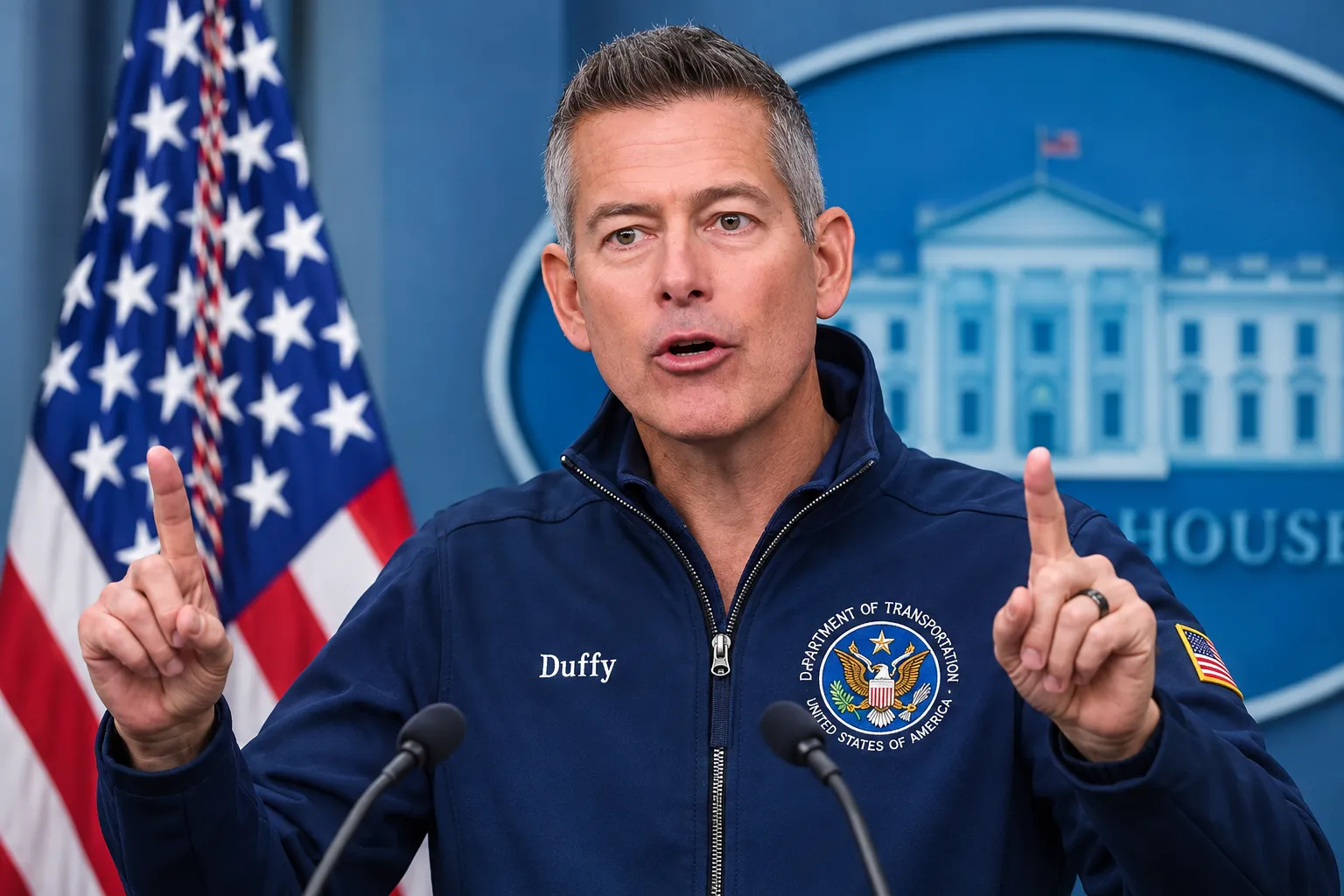
A routine telecommunications upgrade likely triggered the nationwide FAA ground stop that disrupted thousands of flights on November 13, Transportation Secretary Sean Duffy said Saturday.
The work involved replacing copper wiring with fiber-optic cable at a remote facility. Contractor L3Harris performed the upgrade, after which a router reportedly overloaded critical air traffic communication systems.
Officials are investigating whether the failure resulted from faulty equipment or an installation mistake. The Federal Aviation Administration has not announced a final cause.
FAA Ground Stop Linked to Network Upgrade
During a November 14 news conference, Duffy described the maintenance as straightforward work at a remote telecommunications facility.
He said investigators were examining whether the contractor installed a defective router or made an installation error.
The press conference itself experienced technical difficulties, although those problems were not linked to the aviation disruption.
FAA acting Chief Technology Officer Rebecca Guy said engineers detected unusually high network traffic from two locations. The systems generated approximately 1,000 connections every four to five seconds.
Guy explained the findings during a technical briefing. Engineers turned off both sources of excessive traffic and stabilized the network.
The FAA is conducting a root-cause analysis to establish why the equipment malfunctioned.
Thousands of Flights Canceled Across the United States
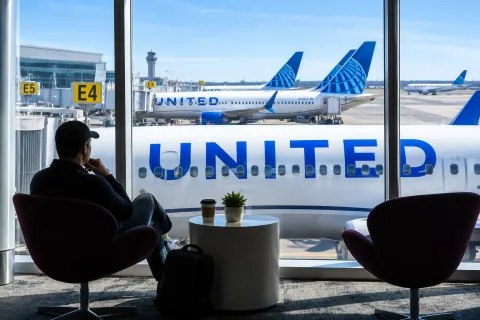
The disruption forced the FAA to halt departures nationwide for more than four hours Friday. It was only the third nationwide ground stop this century.
Aviation data firm Cirium recorded more than 8,200 canceled flights Friday evening. At least another 3,000 flights were canceled Saturday as airlines worked through the disruption.
The New York Times tracked the nationwide cancellations and subsequent recovery efforts as airports resumed operations.
Although the FAA lifted the ground stop, flight schedules remained disrupted. Airlines faced aircraft positioning problems and crews operating outside their planned schedules.
TechAmerica previously reported on the lifting of the nationwide FAA ground stop after the telecommunications failure.
Duffy Calls for Air Traffic Control Infrastructure Upgrades
Duffy used Saturday’s briefing to renew his request for congressional funding to modernize air traffic control infrastructure.
His remarks on infrastructure funding followed questions about why maintenance occurred during Friday afternoon’s busy travel period.
Duffy said major airport equipment changes generally take place overnight. Smaller, remote installations may undergo maintenance during daytime hours.
He acknowledged that the FAA would reconsider its scheduling when it plans similar upgrades.
FAA Says Outage Was Not Connected to AI
The incident occurred shortly after the FAA expanded its artificial intelligence traffic management system, known as SMART.
The $875 million platform provides recommendations to help controllers manage congestion, flight routes and scheduling. As Ars Technica reported, the rollout covers all 22 U.S. air traffic control centers.
The National Air Traffic Controllers Association said it had not participated in the system’s design or testing.
However, FAA Administrator Bryan Bedford said investigators had found no evidence of malicious activity or AI involvement. He addressed those concerns in a briefing on Saturday.
Homeland Security Secretary Markwayne Mullin had also faced questions about possible AI involvement. In a recorded exchange, Mullin jokingly referred to AI as “SI.”
Officials continue examining the malfunctioning equipment and maintenance procedures. The FAA has not determined whether the router itself failed or an installation error caused the network overload.