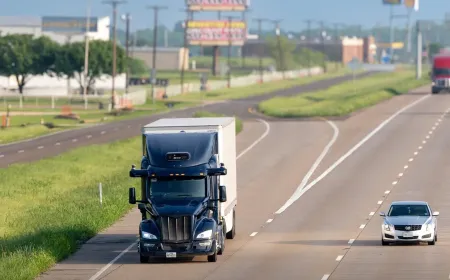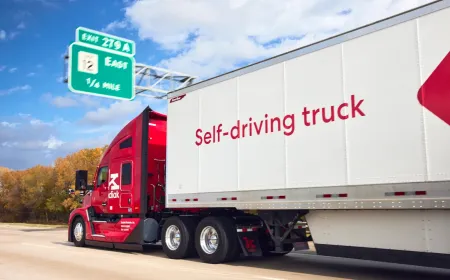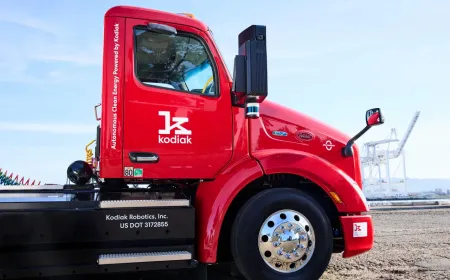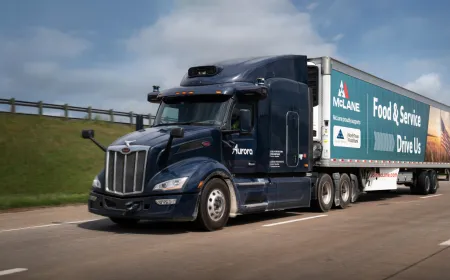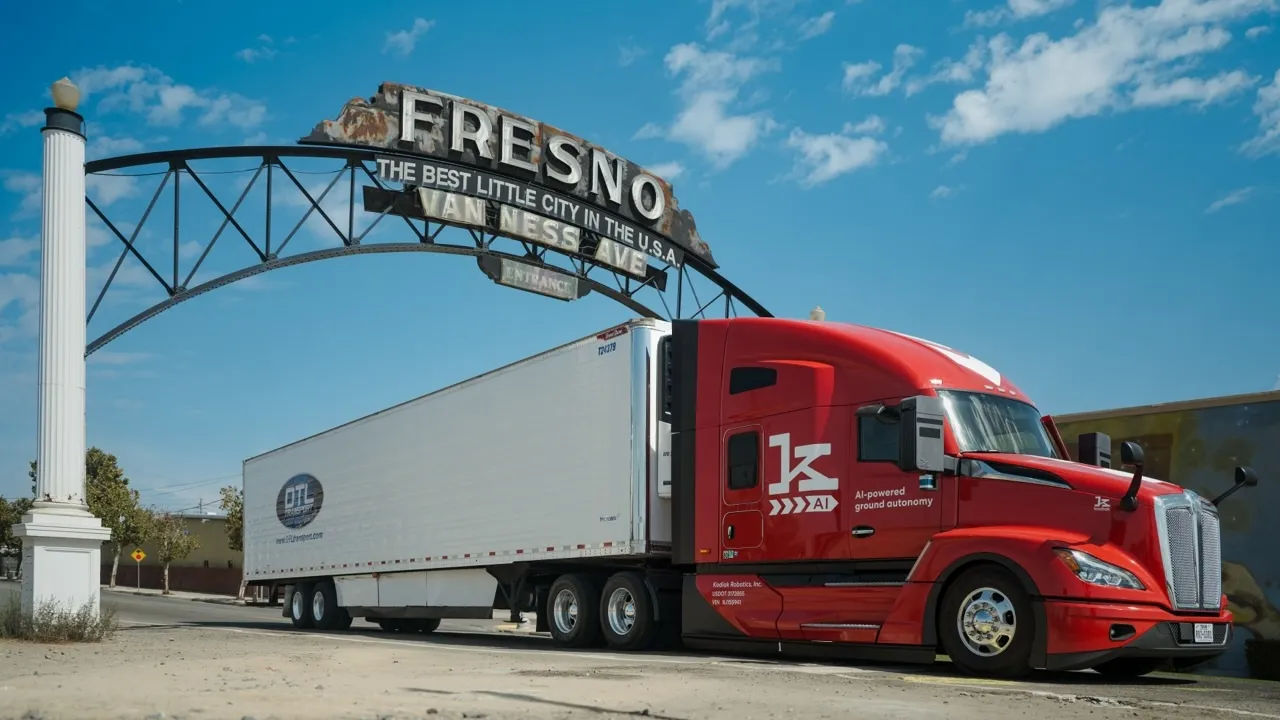
Kodiak AI driverless trucks will begin joining DTL Transport’s fleet in 2028 under a binding commercial agreement covering 75 vehicles. The deal is Kodiak’s first firm commitment to supply autonomous driving technology for customer-owned trucks operating on public highways.
DTL Transport, a California freight carrier specializing in produce and grocery shipments, will operate the vehicles on long-distance routes. Initial operations are planned between Dallas and El Paso, Texas, and along Interstate 20 between Dallas and Atlanta. Kodiak has already tested its technology on both corridors.
The agreement comes as Kodiak prepares to launch commercial driverless highway operations in December, without human safety operators. Its first service is expected to transport IKEA freight along Interstate 45 between Dallas and Houston.
Kodiak AI Driverless Trucks Move Toward Customer-Owned Fleets
The DTL agreement advances Kodiak’s shift from operating its own autonomous trucks to supplying technology that freight carriers can integrate into their fleets. Under its Driver-as-a-Service model, customers own and operate the vehicles while paying Kodiak mileage-based licensing fees.
Kodiak currently operates a Trucking-as-a-Service business involving customers such as Charger USA, Roehl Transport and Werner Enterprises. In that arrangement, Kodiak owns and manages the autonomous vehicles while transporting customers’ freight. The company generates revenue from three active Texas routes, although CEO Don Burnette has described those services as pilot-stage operations.
Burnette said smaller and midsize trucking companies can often integrate autonomous technology faster than larger carriers. He explained that Kodiak ultimately wants to focus on supplying its driving system rather than operating a trucking business.
Competitor Aurora Innovation is pursuing a similar approach. Aurora has outlined plans to expand its driver-as-a-service business, allowing freight operators to own their vehicles while licensing autonomous driving technology.
California Pilot Established DTL Partnership
Kodiak and DTL tested their partnership in September through a 225-mile autonomous freight operation between Fresno and Los Angeles. The trucks transported perishable goods along Interstate 5 and California State Route 99, with a human safety operator behind the wheel.
The pilot demonstrated how Kodiak’s system could handle perishable freight operations before the companies committed to a larger commercial deployment.
Kodiak already has experience supplying autonomous technology for customer-owned trucks, although those vehicles operate away from public highways. Atlas Energy Solutions has used its Driver-as-a-Service system in the Permian Basin since 2024.
Atlas currently owns and operates 35 driverless trucks equipped with Kodiak’s technology. Kodiak expects that fleet to expand to as many as 100 vehicles by mid-2027. The DTL contract extends the customer-owned model into interstate highway transportation.
What the 75-Truck Agreement Could Be Worth
Kodiak has not disclosed the financial terms of its agreement with DTL Transport. However, a 2025 investor presentation filed with the Securities and Exchange Commission indicates its potential revenue.
The presentation estimated annual recurring revenue of $150,000 to $190,000 per autonomous truck under a per-mile licensing arrangement. Those projections assumed approximately 225,000 miles annually per vehicle and used a human-driver cost benchmark of $0.97 per mile.
Applying the lower end of that revenue estimate to 75 vehicles suggests approximately $11.25 million in potential annual recurring revenue once the entire DTL fleet is deployed. That figure is an illustrative calculation, not a disclosed contract value or guaranteed revenue forecast.
Kodiak went public in September 2025, and its shares have faced substantial pressure since its market debut. The DTL agreement allows the company to demonstrate commercial demand for its technology beyond existing pilot operations.
The financial outcome will depend on how quickly DTL deploys the trucks, how many miles they operate, and the licensing terms ultimately applied. With deliveries scheduled to begin in 2028, the agreement also leaves Kodiak’s planned December driverless highway launch as its next major operational test.