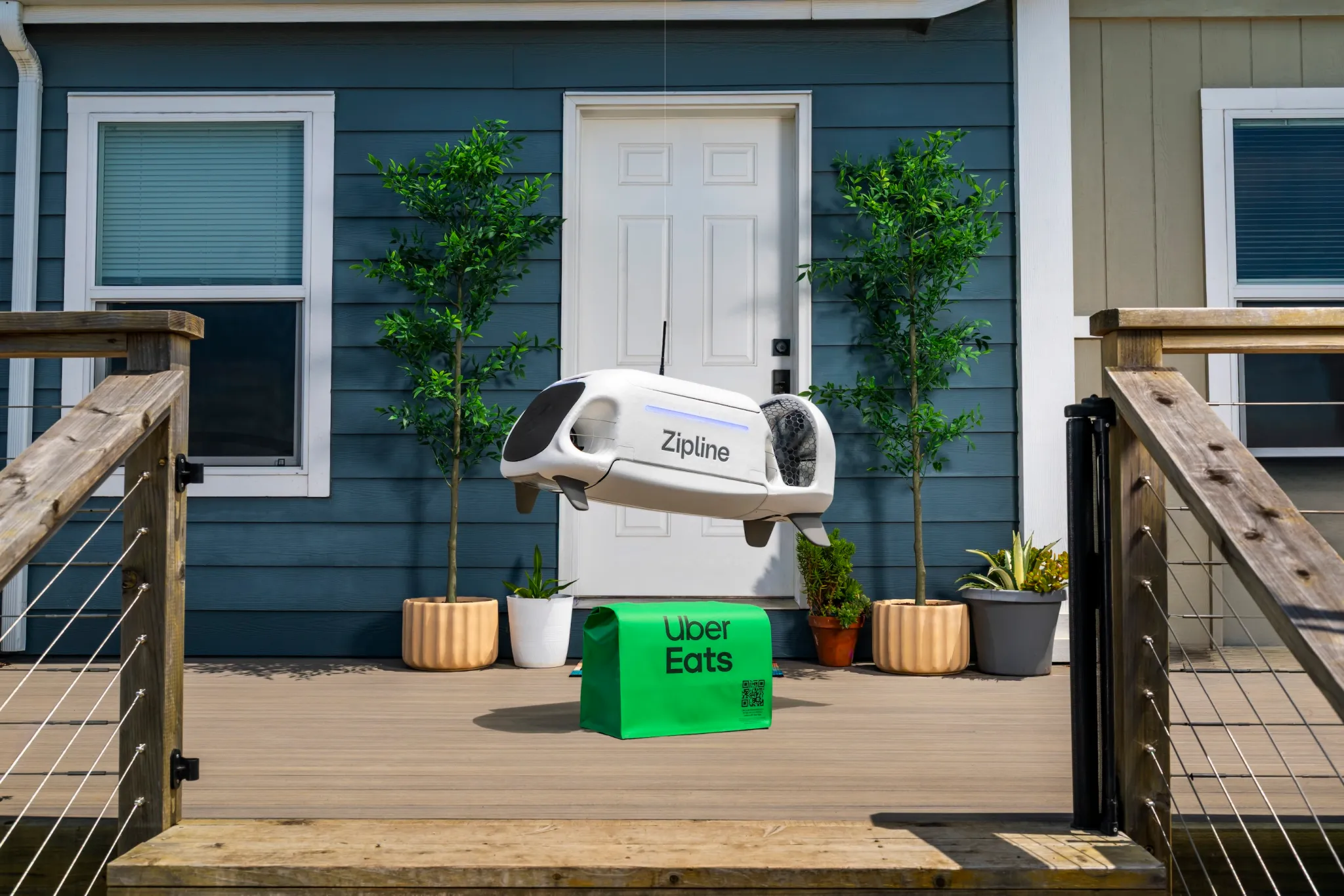
Uber Eats Zipline drone delivery has launched in Spring, Texas, allowing customers near Houston to receive restaurant orders by autonomous aircraft. The service began November 17, marking the first commercial rollout under the companies’ August partnership announcement.
The companies plan to expand into Dallas before introducing drone deliveries across dozens of additional U.S. cities. Their long-term goal is to complete 1 million drone deliveries daily by the end of 2029.
Uber Eats Zipline drone delivery begins in Texas.
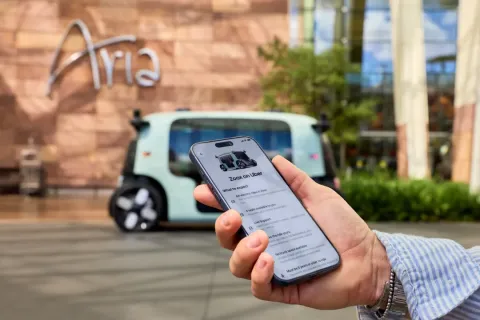
Customers in eligible areas can select a new drone icon within the Uber Eats app. The feature displays participating restaurants offering aerial delivery.
Initial restaurant partners include Jersey Mike’s, Zaxby’s, Urban Bird and Abu Omar Halal. The service supports food orders weighing up to eight pounds.
Zipline’s autonomous aircraft fly about 300 feet above the ground at speeds up to 70 mph. Instead of landing, the drones lower food containers to customers using a tether.
The system is designed to reduce delivery times while avoiding road traffic. However, service availability depends on location, aircraft operating limits and eligible restaurants.
Expansion targets dozens of U.S. cities
The launch follows the companies’ August partnership announcement, which outlined plans to integrate autonomous aircraft into Uber Eats.
TechAmerica.ai previously covered the Uber-Zipline partnership and its target of 1 million daily deliveries by 2029.
Zipline began operations in 2016 by delivering medical supplies in Rwanda. It later expanded internationally and received Federal Aviation Administration Part 135 certification in 2022.
The company has developed aircraft, logistics software, and delivery infrastructure to transport medical supplies, food, and retail products.
Uber has also invested in Zipline, although the investment amount remains undisclosed. The drone operator recently raised $1.5 billion to support its expanding delivery network.
TechAmerica.ai reported on Zipline’s latest funding round and Walmart’s plans to add 300 drone delivery locations.
Despite growing commercial activity, drone delivery faces challenges involving noise, wildlife, privacy and aviation safety. Some communities have raised concerns about expanding operations near residential areas.
The Texas launch gives Uber Eats another delivery option alongside human couriers and ground robots. Wider adoption will depend on operating costs, customer demand, regulatory approvals and community acceptance.