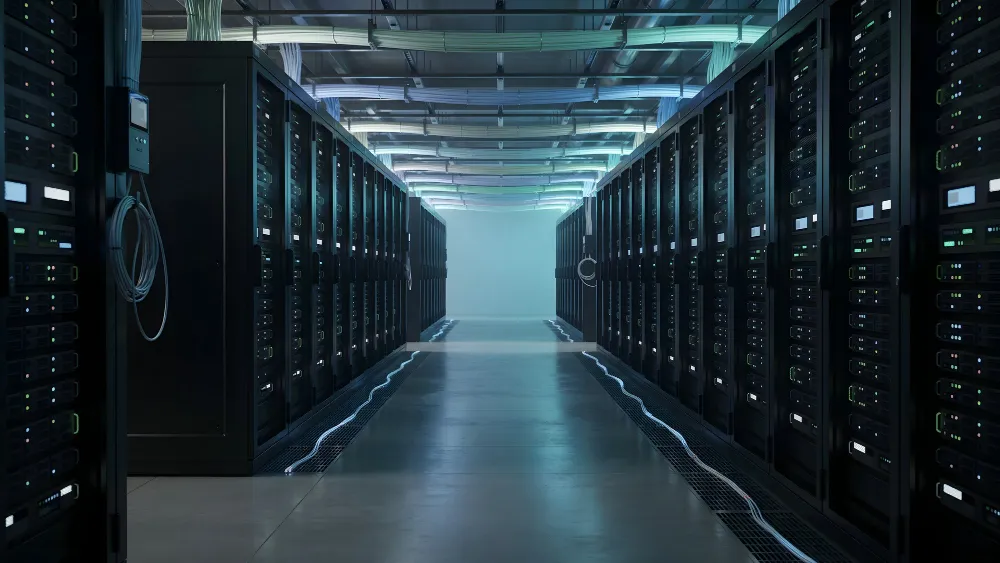
AI data center energy costs are becoming a critical factor in cloud infrastructure expansion as the electricity needed to support artificial intelligence competes with limited grid capacity. A new International Energy Agency report, published October 14, 2026, warns that rapid data center investment is straining electricity networks, equipment suppliers, and communities concerned about energy affordability.
The report, titled Powering Artificial Intelligence, examines data center development across more than 34 policy jurisdictions representing approximately 90% of global data center capacity. It finds that securing reliable electricity is becoming increasingly important to where facilities are built and how quickly they can begin operating.
The challenge extends beyond the amount of power required by AI processors. Cloud operators must also account for cooling equipment, electrical connections, backup systems, and the long-term cost of running high-density computing facilities.
IEA Warns That AI Infrastructure Is Straining Electricity Systems
Data center investment is expanding rapidly as technology companies develop computing infrastructure for AI training, inference, and conventional cloud services. The IEA estimates that the world’s largest data center operators will spend more than $700 billion in capital expenditure in 2026, primarily on new facilities.
That spending does not automatically translate into operational computing capacity. A data center may be constructed before its electricity connection, cooling infrastructure, or supporting equipment is ready.
According to the IEA’s October 2026 report, some electricity systems face long connection queues, network capacity limits, and slow permitting processes. These constraints can delay projects even when developers have already secured land and computing hardware.
The agency identified 134 policies and regulations addressing how data centers connect to and operate within electricity systems. Nearly 40% were announced or implemented during the preceding 12 months, showing how quickly governments are responding to the industry’s growth.
Data Center Electricity Demand Could Nearly Double by 2030
The IEA’s updated energy outlook projects that worldwide data center electricity consumption will rise from approximately 485 terawatt-hours in 2025 to 950 TWh by 2030. Under that central scenario, data centers would account for about 3% of global electricity demand by the end of the decade.
The forecast includes conventional cloud computing, storage, networking, and other digital workloads, not just artificial intelligence. However, the agency expects electricity use at AI-focused data centers to grow substantially faster than overall data center consumption.
The distinction matters because the industry is expanding several types of computing infrastructure at once. General-purpose servers continue to support business software, websites, and databases, while AI applications add demand for specialized accelerators and high-performance networking.
The IEA’s updated electricity projections also warn that equipment shortages and development bottlenecks could limit near-term growth. Actual consumption will depend on investment decisions, infrastructure availability, and demand for AI services.
Electricity Prices Are Changing Cloud Infrastructure Economics
Electricity is an important recurring expense for data center operators. Unlike servers and buildings, which require substantial upfront investment, operators must purchase power continuously throughout a facility’s operating life.
A data center’s electricity bill depends on its consumption, utility tariffs, demand charges, power procurement arrangements, and local market conditions. Two facilities using similar computing equipment may face very different operating costs because of their locations.
In its October 6, 2026, outlook, the U.S. Energy Information Administration forecast an average wholesale electricity price of $52 per megawatt-hour across 11 monitored trading hubs in 2026. That represented an 11% increase from 2025.
The EIA forecast attributed much of the increase to extreme weather and other regional market conditions. Attributing the entire rise to artificial intelligence or data center development would be misleading.
Wholesale prices also differ from the final electricity costs commercial customers pay. Network charges, contractual terms, and other expenses can materially change a facility’s actual bill.
AI Accelerators Create New Power and Cooling Requirements
AI computing depends heavily on specialized processors designed to perform large numbers of mathematical operations. During model training, many accelerators may operate simultaneously, exchanging information over high-speed networks.
Inference workloads also consume electricity as trained models respond to user requests. Their energy requirements vary with model size, hardware utilization, response length, and the efficiency of the underlying software.
As computing equipment becomes more powerful, operators must deliver greater electrical capacity to individual server racks. High-density installations can require substantial changes to power distribution and cooling design.
Conventional air cooling remains useful in many facilities, but higher heat loads can favor liquid-based approaches. Direct-to-chip cooling, for example, transfers heat away from processors using liquid circulating through a controlled system.
These technologies can improve heat removal, but their overall environmental impact depends on electricity consumption, local climate, water requirements, and system design. You can’t evaluate cooling efficiency from a single equipment specification.
TechAmerica.ai recently examined related developments in data center cooling-fluid monitoring, where sensors are being developed to detect conditions that could damage equipment or interrupt operations.
Why Grid Connection Delays Matter as Much as Chip Supply
A cloud provider cannot operate a new computing facility at full capacity without an adequate electricity supply. Grid connection delays can therefore affect expansion plans even when processors, storage systems, and buildings are available.
Utilities must determine whether existing substations, transformers, and transmission networks can support additional demand. If upgrades are necessary, developers may face lengthy planning and construction schedules.
The problem is particularly significant when several large facilities seek connections in the same region. Proposed projects may collectively request more capacity than local infrastructure can supply within the intended development period.
Uncertainty also remains about how much electricity some proposed data centers will ultimately require. Facilities may be developed in stages, and commercial demand for their computing services can change before construction is completed.
The IEA argues that clearer project information and predictable connection rules can help distinguish viable developments from speculative proposals.
More Efficient Processors Can Reduce the Cost of Computing
Data center operators have traditionally compared computing hardware using measures such as processing speed, memory capacity, and purchase price. Energy efficiency is becoming another central consideration.
A processor that completes a workload using less electricity may reduce operating costs. However, the result depends on how effectively the hardware is used and whether the software is optimized for it.
For AI systems, useful efficiency measures include energy consumed per completed inference, performance per watt, and the electricity required to train a model to a defined standard.
Chip architecture, memory access, networking, and numerical precision can all influence these results. Software techniques such as quantization, batching, and workload scheduling may also reduce computing requirements.
However, greater efficiency does not necessarily mean total electricity consumption will fall. Lower costs can encourage organizations to deploy more AI applications, potentially increasing aggregate demand.
Energy savings should therefore be measured at both the workload and facility levels rather than inferred solely from improvements in processor specifications.
Cloud Providers Are Rethinking Electricity Procurement
Cloud infrastructure operators are increasingly considering electricity availability before selecting new development sites. Some are pursuing long-term power purchase agreements, on-site generation, energy storage, and arrangements intended to support grid flexibility.
The IEA reported that data center operators signed power purchase agreements covering approximately 45 TWh of electricity during the first half of 2026, nearly 20% more than in the same period of 2025.
Such contracts can help operators manage procurement risk, but their environmental benefits depend on the electricity source, delivery arrangements, and generation timing. A contractual renewable energy purchase does not necessarily mean a facility consumes carbon-free electricity every hour.
Backup generators and battery systems can support reliability during outages. Batteries may also help facilities manage demand peaks, although the economic and technical benefits depend on local electricity rules and operating requirements.
These options are changing the relationship between data centers and utilities. Large computing facilities are no longer simply passive electricity customers; under appropriate arrangements, some may eventually provide flexibility or support grid stability.
Who Pays for Electricity Network Expansion?
New data center development can require costly investments in transmission lines, substations, and other electricity infrastructure. Determining how those expenses are shared has become an increasingly important policy question.
Utility regulators must consider whether to recover the costs of serving large new customers primarily from project developers or distribute them among other electricity users.
Developers argue that new facilities can support investment, employment, and broader economic activity. Community groups and consumer advocates are concerned about potential increases in electricity bills, environmental impacts, and commitments that may outlast individual projects.
Some jurisdictions are introducing requirements intended to ensure that major electricity consumers contribute to new generation or network capacity.
TechAmerica.ai previously reported on Massachusetts’ clean-power requirements for large data centers, illustrating how regulators are seeking to manage electricity demand without shifting unnecessary costs to existing customers.
No single policy model fits every electricity market. The effectiveness of different approaches depends on local grid conditions, regulation, and the maturity of proposed projects.
Water Use and Emissions Complicate Sustainability Claims
Electricity efficiency is only one measure of a data center’s environmental performance. Cooling technology, water availability, and the sources of electricity used to operate a facility also matter.
The IEA estimates that data center electricity consumption is currently associated with approximately 150 million metric tons of carbon dioxide emissions. Under its central scenario, that figure could increase to around 350 million tons by 2035.
The agency also found that nearly 40% of identified AI-dedicated data center capacity is located in areas with high or extremely high baseline water stress.
These findings underline the importance of assessing facilities individually. Water use and emissions vary significantly across locations and technologies, so a global estimate should not be treated as representative of every project.
For operators, meaningful sustainability reporting requires clear information about electricity consumption, energy sources, cooling systems, and the conditions of surrounding communities.
What Rising Energy Costs Mean for the Future of AI Cloud Computing
The economics of AI cloud infrastructure are becoming closely tied to electricity systems. Operators must evaluate not only the performance and price of computing equipment, but also the availability of reliable power throughout a facility’s operating life.
That shift could influence decisions about where new data centers are built, which processors are deployed, and how workloads are distributed across regions.
Energy-efficient hardware and better software can reduce the resources needed for individual tasks. Yet those improvements will not eliminate the need for grid investment, cooling infrastructure, or credible estimates of future demand.
The IEA’s October 2026 report suggests that cooperation between electricity providers, regulators, and data center developers will be essential as computing demand expands.
AI data center energy costs are therefore more than an operating expense. They are becoming a constraint on how quickly new cloud capacity can be delivered and whether that expansion remains affordable and sustainable.