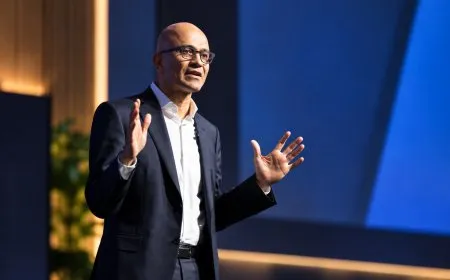
Unpatchable critical infrastructure poses a growing cybersecurity threat as artificial intelligence makes software vulnerabilities easier to discover and exploit. Microsoft CEO Satya Nadella warned that many essential systems rely on outdated firmware that cannot be readily updated.
Speaking at The New York Times DealBook Summit on November 18, Nadella highlighted weaknesses in transportation systems, industrial equipment and building infrastructure. He said internet-connected devices could become increasingly exposed as AI-assisted attacks grow more sophisticated.
Unpatchable critical infrastructure creates security risks.
Nadella pointed to chillers, heating systems and other equipment that depends on embedded software. These devices frequently operate for years without receiving the security updates available to conventional computers.
Commercial chillers are cooling systems used in large buildings, industrial facilities and data centers. When their controls are connected to networks, vulnerable firmware can create additional cybersecurity risks.
Nadella also raised concerns about transportation infrastructure containing discoverable vulnerabilities that operators cannot easily repair.
TechAmerica.ai previously reported on cyberattacks targeting industrial refrigeration systems, highlighting the consequences of compromised temperature controls.
AI accelerates vulnerability discovery and patching
Nadella said AI tools are speeding up vulnerability detection, but attackers can also exploit discovered weaknesses faster.
Previously, companies often had more time to test security patches before deploying them. Now, active exploitation can force emergency updates, increasing the risk of software instability.
TechAmerica.ai has also covered AI-assisted hacking tools that can accelerate network intrusion attempts.
Microsoft Outlook outage highlights operational challenges
Nadella briefly addressed a recent Microsoft Outlook outage, attributing the disruption to a latent software bug rather than a cyberattack.
He said Microsoft had published an incident report and would use its findings to improve system architecture and operations.
His broader warning focused on the difficulty of securing older infrastructure while responding to increasingly rapid threats. Organizations must modernize vulnerable systems and improve real-time detection without compromising essential services.