EndoQuest Robotics has hired Jared Eben as chief commercial officer as it prepares to advance its flexible robotic surgery system and target a potential U.S. launch in 2027. Eben joins EndoQuest from HCA Healthcare, where he served as vice president of robotics, AI and neuroscience. His career also includes leadership roles at medical technology companies including Proximie and Auris Health, as well as experience in healthcare operations and commercialisation. EndoQuest said his background across medical technology and health systems was a key reason for the appointment. The company’s announcement said Eben will lead commercial strategy and health system partnerships as the company prepares for the next phase of its business. The appointment comes as EndoQuest works toward a planned 2027 U.S. launch of its Endoluminal Surgical System, subject to U.S. Food and Drug Administration authorisation. The system remains investigational and has not been cleared for commercial sale in the United States.
A commercial role ahead of a potential launch
Eben’s immediate responsibilities will include working with physicians and operational leaders as EndoQuest prepares healthcare providers for robotic endoluminal surgery. That work will involve more than introducing the technology to hospitals. Eben said his priorities include training, clinical workflows and the requirements needed to establish robotic endoluminal surgery programs. He also highlighted the need to show meaningful clinical and economic value to patients, physicians and health systems.
That focus reflects EndoQuest’s current stage. The company is no longer only developing the technology. It is also preparing for the practical questions that come with introducing a new surgical platform into hospitals, including how physicians will use it and how health systems will evaluate its value.EndoQuest CEO Eduardo Fonseca said Eben brings experience from both medical technology companies and health systems. That combination gives the company someone who understands both surgical technology development and the operational side of healthcare.
EndoQuest is pursuing flexible robotic surgery.
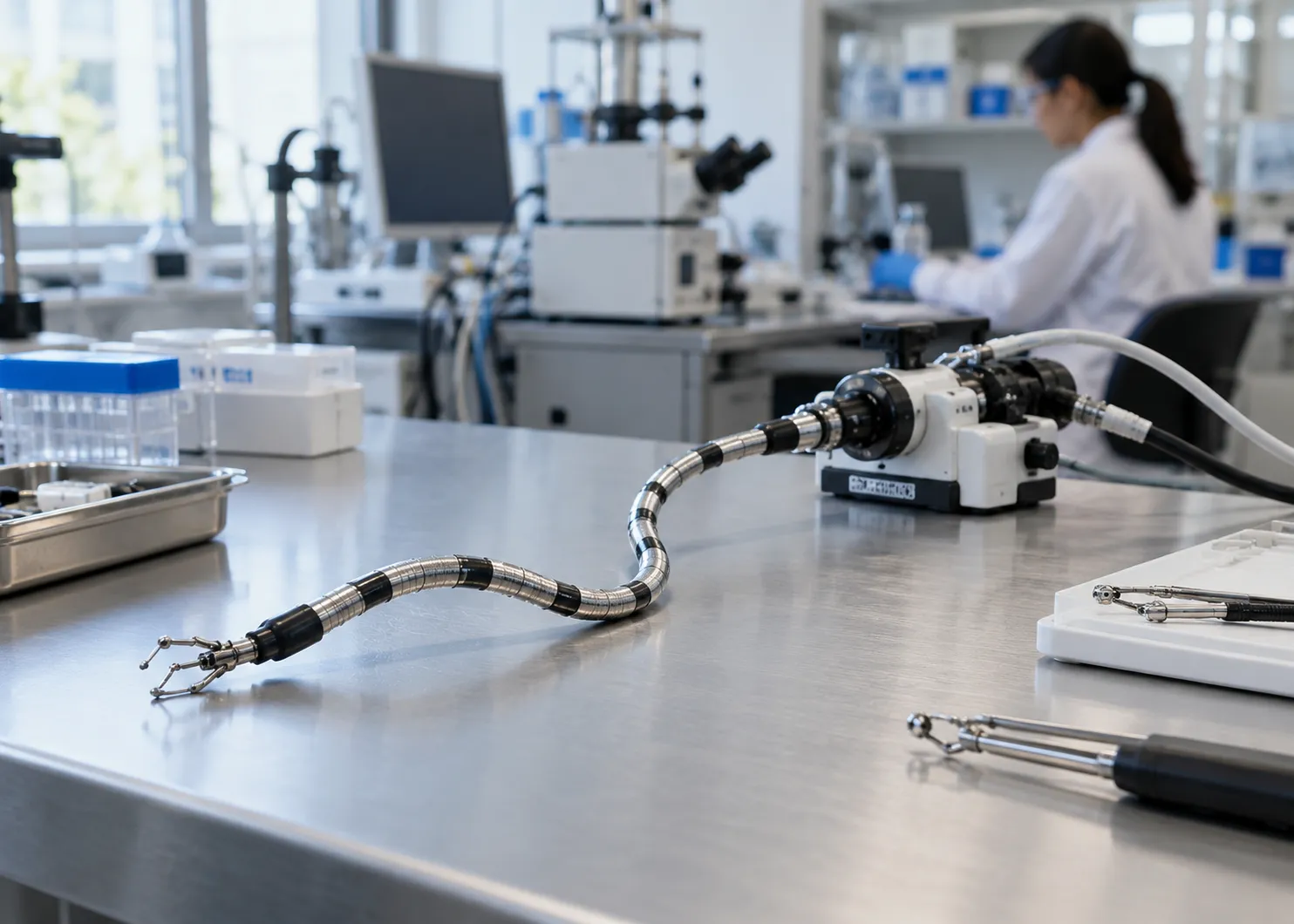
The company’s Endoluminal Surgical System is designed for procedures performed through natural openings in the body and, for some applications, through a single incision. EndoQuest says its platform combines the flexibility of endoscopy with robotic surgical instruments that give physicians greater control during procedures.
The ELS System uses a flexible, steerable platform that delivers two surgical instruments and a flexible videoscope to the treatment area. The company is developing the technology primarily for endoluminal procedures involving the gastrointestinal tract. This approach differs from conventional robotic surgery, which relies on instruments entering the body through several external incisions. EndoQuest is pursuing a system that can reach the surgical site through existing anatomical pathways or through a single access point. The company presents this approach as a way to minimise external incisions and potentially reduce the physical burden associated with conventional surgical access. However, these are development goals and should not be treated as established clinical outcomes for the investigational system.
Clinical work moves toward an FDA submission.
Eben’s appointment comes shortly after EndoQuest completed enrollment in its PARADIGM clinical trial. The study evaluates the ELS System in robotic endoscopic submucosal dissection procedures for lesions in the rectum and sigmoid colon.
The PARADIGM trial completed 50 robotic endoscopic submucosal dissection procedures across 49 subjects. Six investigators performed the procedures at five U.S. institutions, including colorectal surgeons and gastroenterologists. EndoQuest reported preliminary results showing a 100% en bloc resection rate, a 100% conversion-free rate, and a 95.8% R0 resection rate. The company also reported no device-related bleeding or perforations in the available July 18 data. Those results remain preliminary. EndoQuest said the data were still subject to follow-up, verification, and database review. The company plans to use the trial results as part of a De Novo Classification Request seeking authorisation to market the system in the United States. The regulatory process will therefore be an important milestone for the company. The FDA is also developing broader recommendations for robotically assisted surgical devices, including premarket testing, clinical data, and labelling. TechAmerica.ai recently examined those plans in its report on FDA surgical robot guidance.
The system is not yet a commercial product.
EndoQuest’s commercial preparations should not be confused with regulatory approval. The company states that its Endoluminal Surgical System is an investigational device and has not been cleared by the FDA for commercial sale in the United States. That distinction matters as the company prepares for a potential 2027 launch. The target depends on the regulatory process and the company’s ability to translate its clinical work into a successful submission. For Eben, the timing means he’ll begin commercial responsibilities before the product reaches the market. He will need to help EndoQuest build relationships with health systems and physicians while the company continues through the regulatory process.
Adoption will be the next challenge.
If EndoQuest receives authorisation, the company will face the practical challenge of convincing hospitals and physicians to adopt a new form of robotic surgery. That will depend on more than the technology itself. Hospitals will need to consider training, operating room workflows, staffing, economics and the clinical evidence supporting the system. Physicians will also need to determine where flexible robotic surgery fits into procedures currently performed with conventional endoscopy or other surgical approaches. The completed PARADIGM enrollment gives EndoQuest a clinical foundation for its next regulatory step. Eben’s appointment also adds a commercial focus.
For now, the 2027 U.S. launch remains a target rather than a confirmed event. The next major milestones will be EndoQuest’s De Novo submission, the FDA’s response and the company’s ability to turn clinical evidence into broader interest from surgeons and health systems.