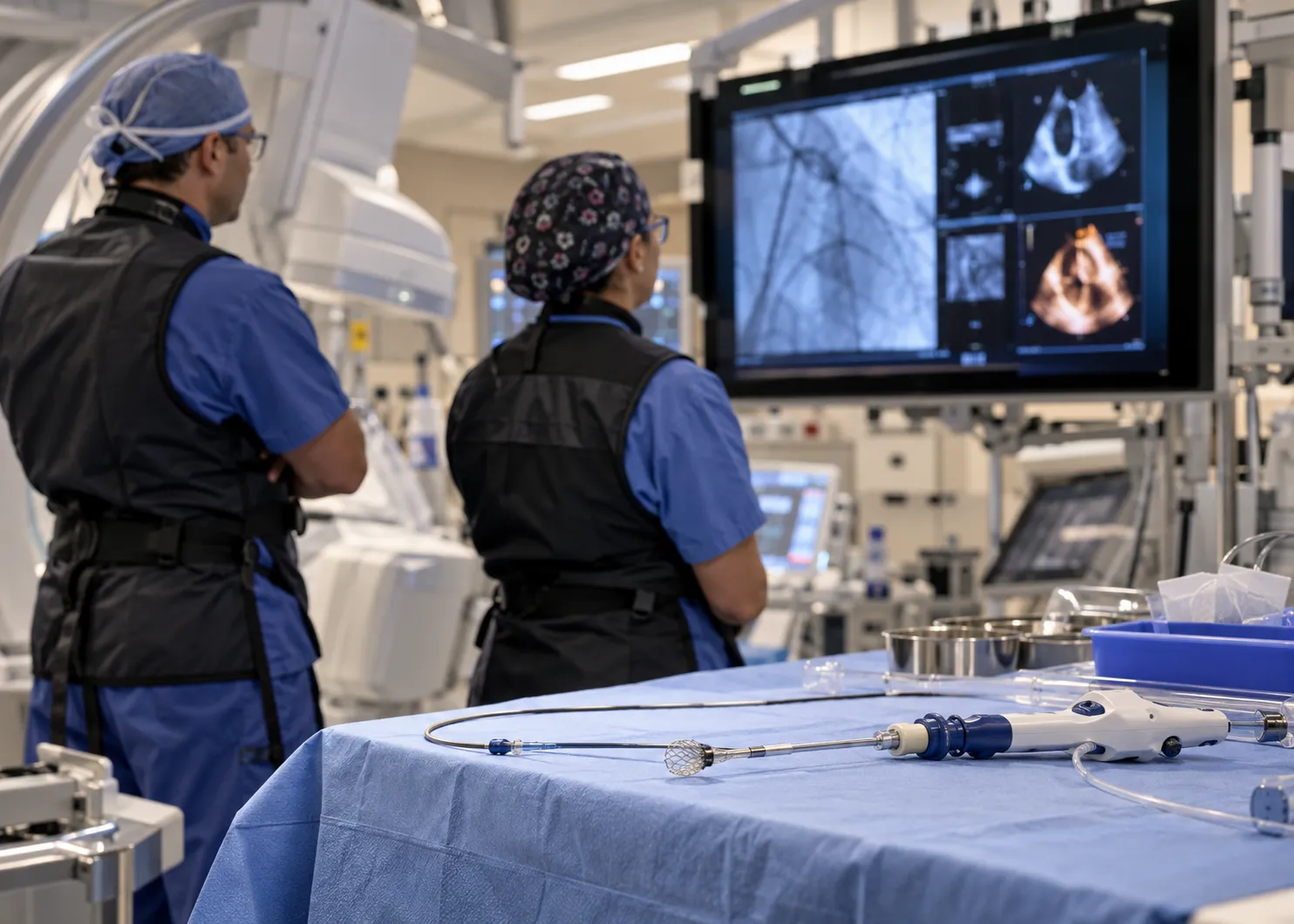
Edwards Lifesciences has received FDA approval for its PASCAL Precision system. The approval covers PASCAL Precision tricuspid valve repair for eligible patients with severe tricuspid regurgitation. The approval applies to patients whose symptoms persist despite optimal medical therapy. Patients must also face intermediate or greater surgical risk. A multidisciplinary heart team must determine that the patient is suitable for transcatheter edge-to-edge repair.
The FDA indication applies to patients who meet these criteria:
-
Symptomatic severe tricuspid regurgitation
-
Persistent symptoms despite optimal medical therapy
-
Intermediate or greater risk for surgery
-
Appropriate for transcatheter edge-to-edge repair, as determined by a multidisciplinary heart team
Edwards previously received FDA approval for PASCAL Precision for degenerative mitral regurgitation. The new decision expands the system’s use to tricuspid valve treatment. The company’s FDA approval announcement provides the full indication and approval details.
PASCAL Precision Tricuspid Valve Repair Expands Treatment
The new approval gives physicians another transcatheter option for eligible patients. Tricuspid regurgitation occurs when the tricuspid valve does not close properly. Blood can then flow backwards through the heart. Severe disease can cause symptoms that affect daily activities. Treatment decisions depend on each patient’s condition and medical history. The FDA indication covers a specific patient population. Patients must have symptomatic severe disease despite optimal medical therapy. Edwards describes PASCAL Precision as a transcatheter edge-to-edge repair system. The device is delivered through a catheter. It brings portions of the valve leaflets together. This can reduce backward blood flow. Edwards’ PASCAL Precision product information provides additional information about the system.
Edwards Adds Repair to Its Tricuspid Portfolio
The approval gives Edwards another option within its structural heart business. The company already markets EVOQUE for transcatheter tricuspid valve replacement. PASCAL Precision provides a repair approach. The new PASCAL Precision tricuspid valve repair indication gives Edwards another option for eligible patients. Repair and replacement are different treatment strategies. The best option depends on the patient’s condition, anatomy and surgical risk. Edwards said the expanded indication gives it both repair and replacement technologies for mitral and tricuspid valves. The company described itself as the only U.S. provider with that combination. That statement reflects Edwards’ own market description. The new indication could strengthen Edwards’ position in tricuspid treatment. It also gives heart teams another device to consider for appropriately selected patients.
Abbott Remains a Major Competitor
The expanded indication puts Edwards in direct competition with Abbott. Abbott already has FDA approval for TriClip. The device repairs the tricuspid valve via transcatheter delivery.MedTech Dive reported that Abbott does not currently have an FDA-approved transcatheter tricuspid replacement system. That gives Edwards a different portfolio structure. Its offerings include PASCAL Precision for repair and EVOQUE for replacement. The availability of both approaches does not mean every patient will qualify. Treatment depends on clinical assessment and individual anatomy. Analysts cited by MedTech Dive said the expanded indication could strengthen Edwards’ market position. Competition will depend on clinical evidence, physician adoption and patient selection.
PASCAL Ace Also Receives FDA Approval
Edwards announced another FDA decision alongside the tricuspid indication. The FDA approved PASCAL Ace with Capture Clarity for degenerative mitral repair procedures. Edwards said the system is the first FDA-approved TEER device with fluoroscopic indicators. The indicators help confirm leaflet capture. The feature helps physicians confirm leaflet capture. This is an important step during transcatheter edge-to-edge repair. The PASCAL Ace decision is separate from the tricuspid approval. PASCAL Ace covers degenerative mitral repair. The new PASCAL Precision indication covers tricuspid repair. Keeping the approvals separate is important. They involve different valve conditions and procedural uses.
Clinical Evidence Will Add More Data
The FDA decision follows the device’s clinical development for tricuspid disease. Edwards said one year of data from the CLASP II TR pivotal trial will be presented at TCT. The presentation should provide more information about the system’s performance in patients with tricuspid regurgitation.FDA approval establishes the device’s permitted use. Additional evidence can provide more information about its performance. That evidence can also help physicians assess different patient groups and treatment settings. Regulatory approval does not mean every patient with tricuspid regurgitation is a candidate. Patient selection depends on clinical assessment, anatomy and medical history. The treating heart team also makes the final clinical decision. Upcoming data will provide more evidence on PASCAL Precision tricuspid valve repair in patients with tricuspid disease.
Transcatheter Treatment Continues to Expand
The approval comes as transcatheter approaches expand treatment options for structural heart disease. For some patients, catheter-based procedures can offer an alternative to conventional surgery. The appropriate approach depends on the patient’s clinical circumstances. Surgical risk and anatomy also matter. The new indication expands the options available to U.S. heart teams.TechAmerica.ai previously covered Edwards’ AUTUS valve FDA approval for children. The AUTUS technology involves a separate treatment for pediatric pulmonary valve disease. The two approvals involve different patient groups and valve conditions. They also show Edwards’ activity across structural heart treatment.
What the Approval Means for Edwards
The new approval gives Edwards another FDA-approved use for PASCAL Precision in the U.S.It also expands the company’s transcatheter treatment portfolio. Physicians can consider the repair system for eligible patients with tricuspid valve disease. EVOQUE remains available for appropriate replacement cases.
The expansion could increase the number of patients considered for Edwards’ transcatheter technologies. The company will still need to demonstrate performance as adoption grows. Clinical evidence and physician experience will influence its market position. The upcoming CLASP II TR data will provide another opportunity to assess the system. The original MedTech Dive report covered the FDA approval, competitive landscape and analyst reaction.