Siemens Healthineers has begun separating its in vitro diagnostics business, which it will call Olyrian Diagnostics. Announced on Nov. 5, the transition is expected to finish by mid-2028, while the unit remains within Siemens Healthineers during preparations.
The move comes as laboratory diagnostics trails the company’s imaging operations. Quarterly results show declining diagnostics sales and a much lower profit margin, underscoring the challenge as the business prepares for independence.
Olyrian Diagnostics customers retain existing arrangements.
The company’s announcement says the new identity will appear in stages. Products, services, contracts, service levels and customer contacts remain unchanged for now, with future changes communicated directly.
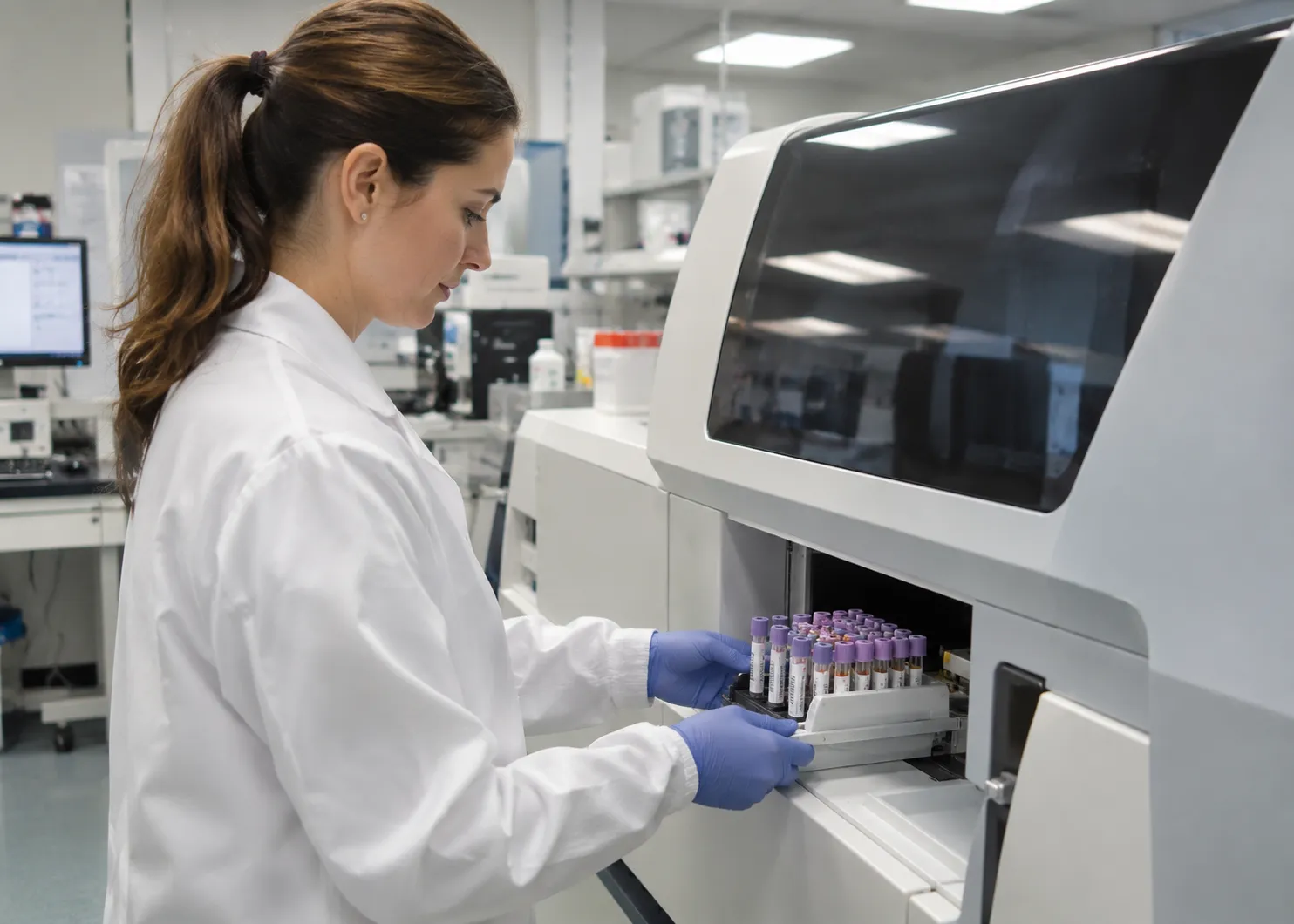
The business supplies equipment and tests for laboratories and point-of-care use. Its existing portfolio spans chemistry, immunoassay, haematology, urinalysis and blood gas testing, alongside automation, information systems and support services.
That range distinguishes the operation from a single specialised assay. For example, Abbott’s Oncodetect test searches for molecular evidence of residual cancer; the Siemens portfolio supports multiple laboratory testing disciplines.
Laboratory diagnostics also serves a different clinical function from medical imaging. TechAmerica’s coverage of AI-enabled medical equipment describes Siemens Healthineers’ radiology tools, which help analyse scans and automate imaging tasks.
For hospitals, those technologies can contribute to the same patient’s care while requiring different equipment, staff and operating processes. The planned separation gives the testing business its own corporate identity without immediately changing customers’ existing arrangements.
Earnings reveal the gap between diagnostics and imaging
Siemens Healthineers’ fourth-quarter results show how differently its businesses are performing. Diagnostics comparable revenue fell 4.2%, while imaging grew 10%; their adjusted operating margins also diverged sharply.
The company reported these figures for the quarter ended Sept. 30:
-
Diagnostics: 4.2% comparable revenue decline and a 5.4% adjusted EBIT margin.
-
Imaging: 10% comparable revenue growth and a 21.9% adjusted EBIT margin.
-
Precision Therapy: 4.8% comparable revenue growth and a 13.8% adjusted EBIT margin.
-
Overall company: 5.9% comparable revenue growth and a 15.9% adjusted EBIT margin.
EBIT measures earnings before interest and taxes. These adjusted figures reflect the company’s reported performance, not a forecast of what the diagnostics business will earn on its own.
For fiscal 2027, Siemens Healthineers expects overall comparable revenue growth of 4% to 5%. It forecasts adjusted basic earnings per share of 2.20 euros to 2.40 euros, compared with 2.42 euros in fiscal 2026.
A separate shareholder vote concerns the Healthineers name
Olyrian Diagnostics is one part of a broader corporate reorganisation. Siemens Healthineers also intends to drop Siemens from its own name as its parent prepares to relinquish control through a planned spinoff.
The companies’ joint announcement sets out a separate timetable for that transaction. Shareholders of both companies are due to vote on the spinoff in February 2027. Siemens Healthineers shareholders must also approve the name change.
The parent-company separation is expected in 2027. Brand migration would begin after the spinoff enters the German Commercial Register, with a three-year transition covering legal entities and products.
Those steps should not be confused with the mid-2028 target for preparing the diagnostics unit to operate independently. They involve different corporate relationships, approval requirements and implementation schedules.
Cost reductions accompany the separation.
The financial turnaround will continue as Olyrian Diagnostics takes shape. Reuters reported that the diagnostics business is targeting another 400 million euros in savings, with weakness in China continuing to weigh on performance.
A new identity alone will not reverse the earnings decline. The next results will show whether Olyrian Diagnostics can stabilise sales and improve profitability while absorbing separation costs.
Chief Financial Officer Jochen Schmitz said the savings effort spans operations, research and development, sales and other functions, MedTech Dive reported. He said a significant portion should be realised by 2028, placing the cost program alongside the planned organisational transition.