Michigan battery manufacturer Our Next Energy (ONE) plans to go public through a merger with Wen Acquisition Corp. The deal values the company at $600 million before the transaction and implies a combined equity value of approximately $1 billion.
The Our Next Energy SPAC merger could generate up to $400 million in gross proceeds, assuming no shareholder redemptions. The combined company plans to trade on Nasdaq under the ticker ONEE.
The announcement marks a significant development for a startup that previously faced funding difficulties, layoffs, and leadership changes.
Our Next Energy SPAC Merger Follows Financial Setbacks
Founded by former Ford and Apple engineer Mujeeb Ijaz, ONE initially focused on electric-vehicle batteries. Its early technology combined lithium iron phosphate (LFP) cells with higher-energy manganese-rich batteries to extend driving range.
An early prototype demonstrated more than 600 miles of driving range on a single charge. However, slower-than-expected EV adoption and competition from cheaper imported batteries complicated its expansion.
ONE struggled to complete a Series C funding round in 2023. The company subsequently reduced its workforce and abandoned plans for a $1.6 billion battery factory in Michigan, as earlier reporting on its financial difficulties detailed.
Ijaz left the CEO position in December 2023 but returned in March 2025 following new financing. The startup has raised approximately $483 million over its history, according to PitchBook.
Battery Startup Shifts Toward Defense and Rail
After Ijaz returned, ONE moved away from its original automotive strategy. It began prioritizing grid storage, defense equipment and railway applications.
Automotive News previously outlined the strategic shift in its reporting on the company’s changing business model.
ONE now develops LFP batteries for industrial applications through its Michigan manufacturing operations. These batteries generally offer lower material costs and improved thermal stability compared with some higher-energy lithium-ion chemistries.
The company has developed a hybrid locomotive using a 2.8-megawatt-hour battery. It also produces a smaller system designed to help diesel engines restart more efficiently.
Ijaz said customers were seeing approximately 50% lower diesel fuel consumption with its hybrid technology. That improvement remains a company-reported result.
ONE is also targeting defense applications, including drones, submarines and specialized computing infrastructure. Domestic manufacturing may provide an advantage where federal procurement rules restrict certain foreign battery supplies.
Michigan Battery Production Supports Expansion
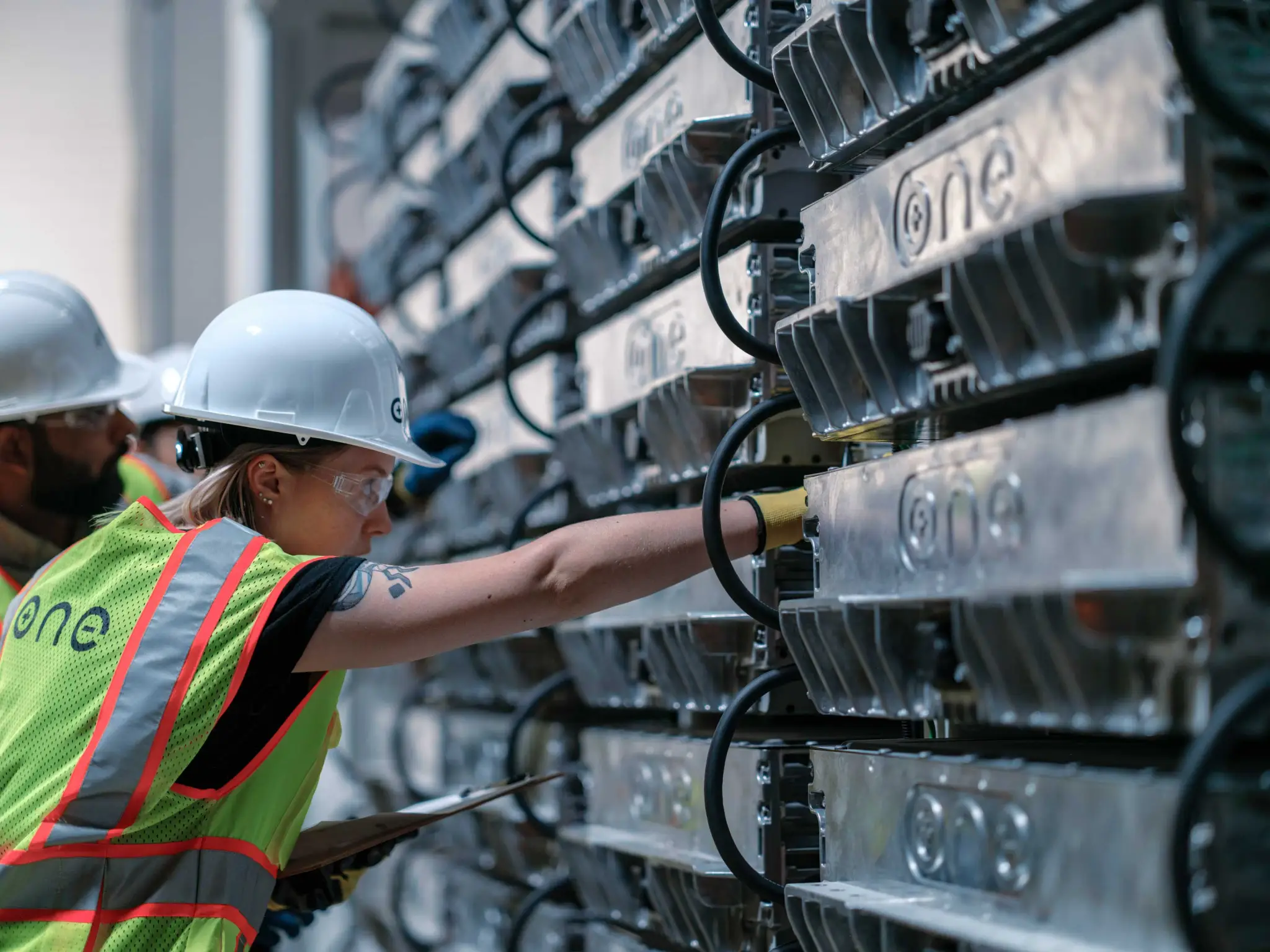
ONE operates a battery pack assembly facility in Novi, Michigan, with an annual production capacity of approximately 3 gigawatt-hours.
A nearby cell factory is being upgraded to produce 50 megawatt-hours annually. The company currently uses both domestic and imported battery cells in its manufacturing operations.
ONE reports $200 million in binding multiyear contracts with defense and railroad customers. It expects about $30 million in revenue for 2026 and targets $60 million in 2027.
These revenue figures are company projections, not guaranteed results.
Battery Market Competition Remains a Challenge
ONE faces competition from established battery suppliers, particularly manufacturers offering lower-cost cells from China.
According to Grand View Research, the global EV battery market is estimated at $72.9 billion in 2026. The firm projects it could approach $199 billion by 2030.
Despite that market’s size, ONE is concentrating on customers that value American manufacturing and specialized battery performance.
The move reflects broader changes in the U.S. battery industry. TechAmerica previously examined rising defense demand for domestic battery technology as federal funding supports American supply chains.
ONE’s proposed listing would provide capital for its next expansion phase. The merger remains subject to closing conditions, and proceeds could decline if SPAC shareholders redeem their shares.