The Agility Robotics Nasdaq debut marks a milestone for humanoid automation. The company began trading on November 5, 2026, under the ticker AGLT after merging with Churchill Capital Corp XI. The transaction and related financing provided approximately $465 million in gross capital.
The Oregon-based company is the first U.S. publicly listed business focused exclusively on humanoid robotics with established commercial deployments. Its market entry comes nearly a year after Figure AI CEO Brett Adcock predicted on X that Agility would go bankrupt within 12 months.
Agility Robotics Nasdaq Debut Brings $465 Million in Capital
The company entered public markets through a special purpose acquisition company, or SPAC. The financing includes approximately $164 million from Churchill XI’s trust account and $201 million in private investment led by Foxconn. It has already received another $100 million.
CEO Peggy Johnson has emphasized practical industrial applications rather than attention-grabbing robot demonstrations. Agility focuses on repetitive physical work, including moving containers and materials through warehouses and manufacturing facilities.
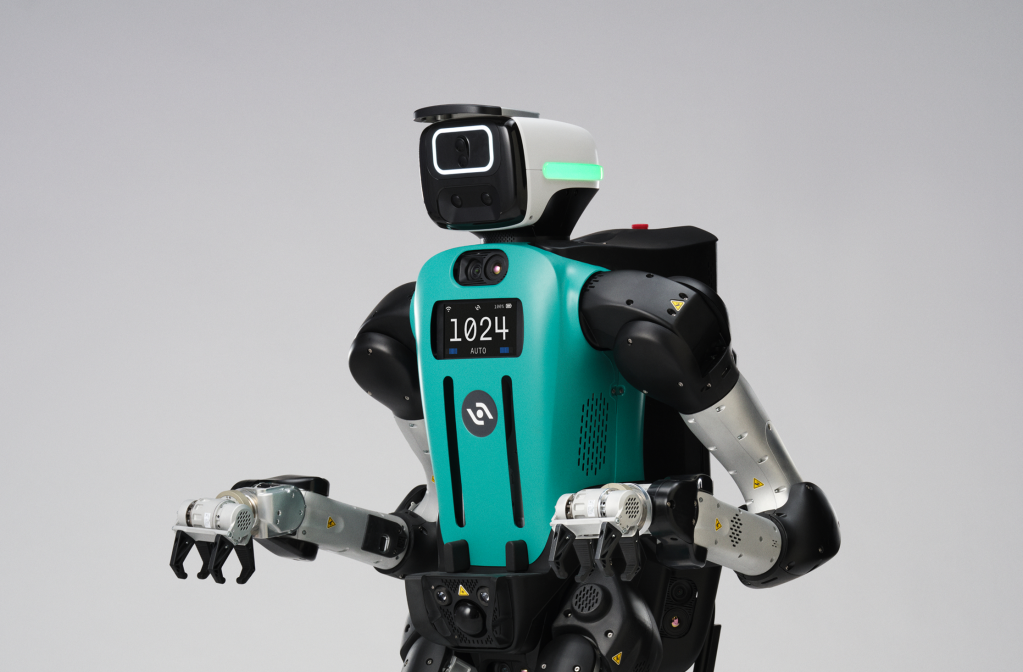
Founded in 2015 as an Oregon State University spinoff, Agility has deployed its Digit humanoid robots with companies including GXO, Schaeffler and Toyota Motor Manufacturing Canada.
At GXO’s logistics operations, Digit robots have moved more than 100,000 totes. Toyota has also adopted the technology for factory material handling, as previously covered in TechAmerica’s report on Toyota’s Digit deployment.
Digit 5 Orders Offer Growth Potential
Agility says it has secured more than $300 million in multiyear orders for Digit 5, its next-generation humanoid robot. However, those commitments depend on meeting contractual milestones, product specifications and performance requirements.
Digit 5 is designed to operate safely alongside workers, expanding beyond the restricted workspaces used in earlier deployments. Agility expects early customer deliveries during the first half of 2027, followed by broader availability later that year.
The company is targeting industrial customers that need robots to lift, transport and position materials. Its existing technology has demonstrated high placement accuracy, but more complex manipulation tasks remain challenging.
Agility also plans to expand production through its RoboFab manufacturing facility. The site is designed for annual production capacity of up to 10,000 robots, although actual output will depend on customer demand and manufacturing progress.
Financial Losses Remain a Major Challenge
Despite its commercial deployments, Agility remains far from profitability. The company generated approximately $174,000 in revenue during the first six months of 2026 while reporting a net loss of nearly $362 million.
A substantial portion of its revenue came from related parties. The company must increase commercial deployments and establish sustainable operating economics as it scales production.
Agility promotes a robots-as-a-service business model that it says can save industrial customers approximately $100,000 annually per robot. Those savings depend on reliability, operating hours, maintenance costs, and successful integration into existing workflows.
Real-World Robotics Data Could Support Development
Agility says its robots have accumulated more than 65,000 hours of operational experience in customer facilities. That data can support improvements in movement, task execution and reliability.
Training humanoid robots remains difficult because physical interactions are more complicated than text-based AI tasks. Developers combine simulation, human demonstrations and real-world operating data to improve robot performance.
Competing companies, including Figure AI, Tesla and Boston Dynamics, are also working to develop more capable humanoid systems. However, reliable deployment in industrial environments remains an important commercial challenge.
Agility’s public listing provides additional funding for manufacturing, research and customer expansion. Its next test will be converting Digit 5 orders into sustained revenue while reducing losses and demonstrating reliable performance at greater scale.