The Nasdaq rebound gained momentum Friday, November 6, as Nvidia and other semiconductor stocks recovered from a sharp technology selloff. The recovery followed a turbulent session that pushed the Nasdaq Composite into correction territory. However, stronger U.S. employment data raised fresh concerns about Federal Reserve interest rates.
At 9:57 a.m. Eastern, the Nasdaq Composite was up 1.82% at 24,758.34, while the S&P 500 gained 1.02%. The Dow Jones Industrial Average slipped 0.22%, highlighting the uneven recovery across Wall Street. Technology shares led the advance, but investors remained cautious about AI spending, regulation and inflation.
Nasdaq Rebound Follows Sharp AI Stock Selloff
Thursday’s decline marked the Nasdaq Composite’s steepest one-day loss in 19 months. The technology-heavy index entered correction territory, generally defined as a decline of at least 10% from a recent peak. The selloff also threatened to extend the index’s weekly losing streak to four consecutive weeks.
The downturn followed Democratic victories in the November midterm elections. Investors grew concerned that changes in congressional control could lead to tougher AI regulations and additional scrutiny of data center development. Those concerns affected companies whose valuations depend heavily on continued investment in AI infrastructure.
The broader market also fell sharply. According to Reuters market reporting, the earlier technology rout erased nearly $3 trillion in market value from S&P 500 companies. The scale of the decline demonstrated how closely major stock indexes have become tied to expectations surrounding artificial intelligence.
Nvidia, AMD and Intel Lead Semiconductor Recovery
Nvidia rose 6.5% during Friday’s morning session, recovering part of its previous decline. Thursday had been the company’s worst trading day since January 2025, when the emergence of China’s DeepSeek AI model unsettled investors. The latest rebound suggested renewed buying interest, although it did not erase the earlier losses.
The recovery extended across the semiconductor industry. The Philadelphia Semiconductor Index climbed more than 6% after falling over 12% in the preceding session. AMD, Intel and Micron Technology recorded gains ranging from about 7% to 13% during morning trading.
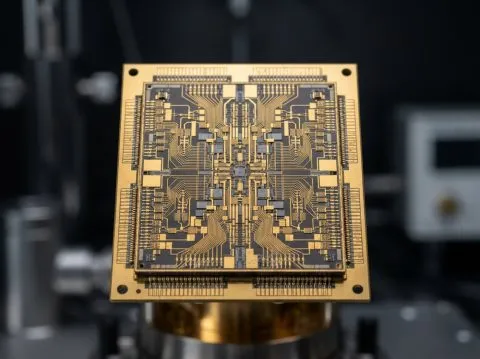
These companies occupy different positions in the semiconductor supply chain. Nvidia supplies graphics processing units widely used for AI training and inference. AMD competes in accelerated computing, while Intel and Micron provide processors and memory technologies used across computing infrastructure.
The industry remains exposed to changes in corporate technology budgets and AI infrastructure investment. Demand for advanced processors depends partly on whether cloud providers and technology companies continue expanding computing capacity. TechAmerica previously examined another challenge facing the sector in its reporting on Nvidia H200 chip shipments affected by Chinese import restrictions.
AI Data Center Stocks Recover as Regulation Concerns Persist
Friday’s recovery extended beyond semiconductor manufacturers. Data center operators IREN and Applied Digital rebounded alongside cloud infrastructure providers CoreWeave and Nebius Group. GE Vernova and Constellation Energy, whose businesses have exposure to electricity demand and infrastructure investment, also recovered from substantial losses.
Investors have increasingly linked these companies’ prospects to large-scale AI development. Training advanced models requires computing hardware, networking equipment, cooling systems and considerable electricity. Delays in data center construction can therefore affect multiple industries, not just chip manufacturers.
Political uncertainty has added another consideration. New restrictions involving energy consumption, environmental approvals or AI deployment could influence where technology companies build infrastructure. However, the election results do not establish that new federal restrictions will become law.
Physical infrastructure also presents challenges independent of regulation. Electricity connections, construction schedules and equipment availability can delay projects even when financing is available. TechAmerica previously examined these constraints in its coverage of modular AI data center production, including power and cooling requirements.
Strong US Jobs Report Raises Federal Reserve Rate Concerns
The stockmarket’ss recovery coincided with a stronger-than-expected U.S. employment report. Employers added 165,000 jobs in October, substantially exceeding economists’ expectations of approximately 65,000. The unemployment rate declined to 4.1% from 4.2% in September.
The figures, published by the U.S. Bureau of Labor Statistics, showed employment growth in professional and business services, health care, and transportation and warehousing. Average hourly earnings increased 0.4% during October and 3.1% over the preceding 12 months.
Although stronger employment generally signals economic resilience, it can complicate monetary policy decisions. A firm labor market may give the Federal Reserve more flexibility to address inflation through higher borrowing costs. Technology companies are particularly sensitive to interest-rate expectations because investors often value their shares using projections of future earnings.
After the employment report, traders raised expectations of a December rate increase. Reuters reported that futures markets implied about a 78% probability of a hike, up from 70% earlier. Those probabilities reflect market pricing and can change as new economic information becomes available.
Energy prices added another concern. A rise in crude oil prices during Thursday’s session intensified worries about inflation and borrowing costs. Brent crude futures eased Friday slightly, but investors continued evaluating the effect of energy costs on businesses and consumers.
Technology Gains Mask Weakness Across Wall Street
The Nasdaq’s advance did not produce an equally strong recovery throughout the market, at 9:57 a.m. Eastern, six of the S&P 500’s 11 major sectors remained negative. Consumer staples fell approximately 1.6%, while utilities declined around 0.9%.
Market volatility also remained elevated. The Cboe Volatility Index, commonly known as the VIX, eased to approximately 23.88 after recording its largest one-day increase in about 19 months on Thursday. The decline suggested reduced immediate market anxiety, but not a return to the conditions preceding the selloff.
Individual corporate developments produced additional divergence. Atlassian shares fell about 11.5% following its fiscal first-quarter results. Airbnb gained approximately 9.2% after raising its full-year revenue growth forecast. These movements illustrated how earnings expectations continued to influence prices alongside broader economic developments.
What the Nasdaq Recovery Means for AI Investors
The semiconductor rebound shows that investors still see opportunities in artificial intelligence despite heightened uncertainty. However, a single session of strong gains does not establish that the broader correction has ended. Technology valuations remain sensitive to company earnings, capital spending plans and expectations for future profitability.
Several developments could influence the market’s direction. Investors will monitor whether major technology companies sustain their AI infrastructure commitments and whether semiconductor demand continues supporting revenue growth. Proposed regulatory measures, inflation data and Federal Reserve decisions will also affect sentiment.
The distinction between long-term AI demand and short-term stock performance remains important. Companies can experience substantial share-price declines even when their underlying technology businesses continue expanding. Conversely, a sharp rebound does not guarantee that earlier valuation concerns have disappeared.
Friday’s Nasdaq recovery offered temporary relief after one of the technology sector’s most difficult sessions in recent months. Nvidia and other chipmakers led the advance, but the mixed performance of broader indexes showed that uncertainty persists. Whether the recovery continues will depend on economic conditions, policy developments and the financial performance of companies driving AI investment.