The Nasdaq selloff deepened Thursday, November 5, 2026, as semiconductor and artificial intelligence infrastructure stocks fell sharply. The technology-heavy index fell more than 3% in morning trading, reversing part of Wednesday’s post-election rally. Investors were reassessing chip demand, data center expansion plans and the potential economic effects of the U.S. midterm elections.
The decline spread across chipmakers, AI cloud providers and companies supplying equipment for large computing facilities. Qualcomm faced particularly heavy selling after disappointing smartphone chip sales, while Nvidia and Advanced Micro Devices also declined. The losses highlighted growing concerns about the costs and financial returns of the AI infrastructure boom.
Nasdaq Selloff Pushes Technology Stocks Toward Correction
At 9:57 a.m. Eastern, the Nasdaq Composite was down 795.08 points, or 3.09%, at 24,941.44. The S&P 500 fell 1.66% to 7,560.88, while the Dow Jones Industrial Average declined 0.66% to 53,004.25. Those figures reflected intraday trading, not final closing prices.
The losses followed a strong session Wednesday, when investors welcomed greater clarity after the midterm elections. The post-election Big Tech rally had lifted several major technology companies as markets assessed the prospect of divided government in Washington.
Thursday’s reversal showed how quickly those expectations could change. Investors appeared increasingly concerned that tighter scrutiny of AI development could disrupt companies dependent on rapid infrastructure growth. The Nasdaq was also approaching correction territory, generally defined as a decline of at least 10% from a recent peak.
Qualcomm Shares Slide as Smartphone Chip Demand Weakens
Qualcomm was among the hardest-hit semiconductor companies, with its shares falling approximately 9% during morning trading. Investors reacted to weaker-than-expected fourth-quarter smartphone chip sales and declining revenue associated with Apple. The results reinforced concerns about demand in a major segment of the semiconductor industry.
According to Qualcomm’s financial disclosures, the company generated $43.1 billion in revenue during fiscal 2026. Its fourth-quarter GAAP revenue totaled approximately $10.3 billion, an 8% decline from the corresponding period a year earlier. The figures demonstrate the pressure facing Qualcomm’s established smartphone business despite its expansion into other markets.
Qualcomm is pursuing growth in automotive electronics, connected devices and AI data center processors. Its expanding infrastructure partnerships could diversify future revenue, but those opportunities remain separate from the current weakness in handset demand. Investors must weigh the company’s long-term plans against near-term pressure on its core business.
Semiconductor Stocks Face Broad Selling Pressure
Qualcomm’s decline was part of a much wider retreat across the semiconductor industry. The Philadelphia Semiconductor Index fell approximately 7.1% during morning trading. Nvidia, AMD, Intel and Marvell Technology contributed to the downturn as investors reduced exposure to chip-related companies.
The weakness followed earlier losses driven by concerns about the financial sustainability of AI investment. TechAmerica previously examined how fears about AI spending affected Nasdaq stocks in late October. Thursday’s decline extended that debate beyond individual earnings reports to the wider infrastructure supply chain.
Semiconductor companies occupy different positions within the technology market. Nvidia and AMD supply processors used in AI computing, while Intel participates in processor design and manufacturing. Qualcomm’s exposure includes smartphones, connected devices and emerging data center products. Their differing businesses make the breadth of Thursday’s losses particularly significant.
The selloff did not establish that demand for AI processors had collapsed. Instead, it suggested investors were becoming more cautious about valuations and future growth expectations. Companies with strong demand can still face substantial share-price declines when forecasts fail to justify existing market expectations.
AI Data Center Expansion Faces Growing Political Uncertainty
Concerns about future data center construction added another layer of pressure. Democratic victories in the midterm elections renewed attention to proposals for tighter oversight of major computing facilities. Opposition to rapid development has been growing in several states with substantial planned infrastructure investment.
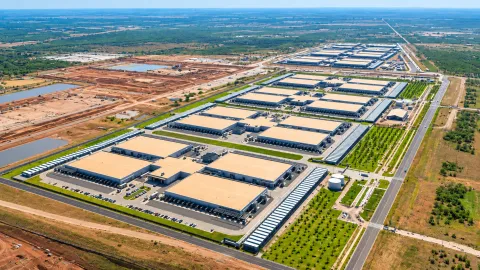
New AI data centers require extensive electricity supplies, high-performance networking equipment and sophisticated cooling systems. Developers must also secure land, construction approvals and access to electrical grids. These requirements make expansion sensitive to local regulations, permitting delays and changes in financing costs.
Investors are particularly concerned about slower construction in major development markets. However, the election results do not automatically establish new restrictions. Any significant changes would depend on subsequent decisions by lawmakers, regulators and local authorities.
The distinction matters because the financial implications could vary considerably. Slower construction might reduce immediate capital spending for established technology companies. For developers relying on new facilities to generate revenue, the same delays could create serious financial challenges.
AI Infrastructure Companies Suffer Heavy Losses
Shares of several data center operators declined sharply as investors evaluated these risks. IREN, Hut 8 and Applied Digital fell between 6% and 11% during morning trading. AI cloud providers CoreWeave and Nebius Group dropped approximately 9.3% and 13.4%, respectively.
Dell Technologies also came under pressure, with shares falling roughly 10.5%. The company’s servers and computing systems connect it to the broader AI infrastructure market. Utilities and energy equipment suppliers exposed to data center growth, including GE Vernova and Constellation Energy, also declined.
These companies face different operational and financial challenges. Cloud providers depend on demand for computing services, while infrastructure developers must manage construction costs and funding requirements. Equipment suppliers depend partly on customer investment schedules. A delay in facility construction can therefore affect several businesses across the same supply chain.
Financing is another important consideration. Large AI projects often require substantial spending before they generate their expected revenue. Higher borrowing costs or delayed customer deployments can weaken project economics. Investors are increasingly examining whether projected demand can support those commitments.
Why Major Technology Companies Are Also Under Pressure
Thursday’s decline was not limited to smaller infrastructure businesses. Meta Platforms fell approximately 3.4% during morning trading, while Amazon and Alphabet recorded more modest losses. Tesla dropped about 9.5%, adding to weakness across large technology-related companies.
The market reaction contrasted with Wednesday’s enthusiasm for established technology companies. Some investors expected slower data center expansion to reduce capital expenditure and support cash flow. Thursday’s selling reflected a competing concern: restrictions might also limit future AI service capacity and revenue growth.
Both arguments have financial merit, but their importance differs by company. Businesses with existing infrastructure may benefit from reduced competition for electricity and computing capacity. Companies that need new facilities to meet customer demand could face a tougher outlook.
This distinction has become central to technology valuations. Investors are no longer considering AI investment solely as a source of future revenue. They are increasingly evaluating the costs, financing requirements, and operational limitations of expanding the necessary infrastructure.
Federal Reserve Policy Adds Pressure to Growth Stocks
Interest-rate expectations created another challenge for equities. Persistent inflation and energy market uncertainty have complicated the FederalReserve’ss policy outlook. Cleveland Federal Reserve President Beth Hammack indicated Thursday that she favored a gradual approach to raising interest rates to control inflation.
Higher rates can particularly affect technology companies whose valuations depend heavily on anticipated future earnings. They increase borrowing costs and can reduce the present value investors assign to future cash flows. Infrastructure businesses requiring substantial outside financing may be especially sensitive to those changes.
The broader economic environment also remains uncertain. Elevated energy prices linked to conflict in the Middle East have contributed to inflation concerns. Although crude prices recently declined, continued volatility could influence consumer spending, corporate investment and central bank decisions.
October Jobs Report Could Shape the Next Market Move
Investors are awaiting the October U.S. employment report, scheduled for Friday, November 6. The Bureau of Labor Statistics release calendar confirms that the figures are due at 8:30 a.m. Eastern. The report will provide further evidence about labor market conditions and potential inflation pressures.
Stronger employment growth could reinforce expectations that the Federal Reserve will maintain a restrictive monetary policy. Weaker figures might support a less aggressive rate outlook, although they could also raise concerns about economic growth. The market response will depend on how the data compare with expectations.
Corporate earnings will remain important alongside economic indicators. Investors will examine semiconductor sales forecasts, AI infrastructure commitments and the financial performance of major cloud providers. Evidence of improving returns on computing investments could support confidence, while further spending concerns may prolong volatility.
What the Nasdaq Selloff Means for the AI Investment Boom
Thursday’s market decline exposed growing tension between AI’s technological potential and the cost of building its supporting infrastructure. Demand for advanced computing remains strong, but electricity access, construction timelines, and financing conditions can limit expansion. Political uncertainty has added another consideration to an already expensive investment cycle.
For semiconductor manufacturers, the immediate challenge is maintaining growth across multiple product categories. Smartphone demand remains important for Qualcomm, while AI processor suppliers depend heavily on continued infrastructure investment. Data center developers must demonstrate that new capacity can generate sufficient revenue to justify construction costs.
The Nasdaq’s recovery will depend partly on whether corporate results support current growth expectations. Investors will also watch how proposed data center restrictions develop and whether monetary policy tightens further. Neither the election results nor Thursday’s share-price declines determine the industry’s long-term direction.
The latest selloff shows that confidence in artificial intelligence is increasingly tied to financial execution. Companies must demonstrate not only that demand exists, but also that they can build and operate the required infrastructure profitably. Until that balance becomes clearer, technology stocks may remain vulnerable to sharp changes in investor expectations.