The Discovered Materials AI challenge is offering $1 million to solve five longstanding problems in materials science. Announced November 5, 2026, the initiative aims to measure whether advanced AI systems can make meaningful scientific discoveries.
The Y Combinator-backed startup is offering $200,000 for each successful solution. Researchers and AI developers can examine the problems and submission requirements on the company’s official Grand Challenges page.
Discovered Materials AI Challenge Targets Five Scientific Problems
Discovered Materials worked with academic researchers to identify problems that remain unresolved despite decades of scientific investigation. The challenges address superconductivity, semiconductor manufacturing, quantum chemistry and thermal behavior.
The first seeks a predictive theory explaining cuprate superconductivity. These materials can conduct electricity without resistance under certain conditions, but scientists still lack a complete microscopic explanation.
The second concerns semiconductor interfaces. Researchers must predict how fabrication processes influence electrical properties where materials meet, particularly during growth, cooling and annealing.
A third challenge targets computational chemistry. It seeks methods that calculate chemical reaction barriers more accurately while using fewer computing resources.
The fourth examines how laser pulses change material behavior. Researchers must model electron-vibration interactions over extended periods.
The fifth focuses on heat transport across solid interfaces. Better predictions could help engineers develop semiconductor devices that dissipate heat more efficiently.
AI Models Struggle With Advanced Materials Physics
Before launching the competition, Discovered Materials tested advanced AI models against the problems. The company gave autonomous agents internet access and additional resources for several days.
According to co-founder Advaith Sridhar, the systems made little meaningful progress. Their performance illustrated how difficult it is to apply AI reasoning to complex physical phenomena.
Unlike many mathematical problems, materials science often lacks straightforward ways to verify proposed solutions. Researchers must establish whether a theory accurately predicts physical behavior, not merely whether its calculations appear consistent.
Stanford professor Felipe Jornada helped develop the challenges. He said solving fundamental materials problems could improve electronics, energy storage and future manufacturing technologies.
Startup Builds on Earlier Semiconductor Research
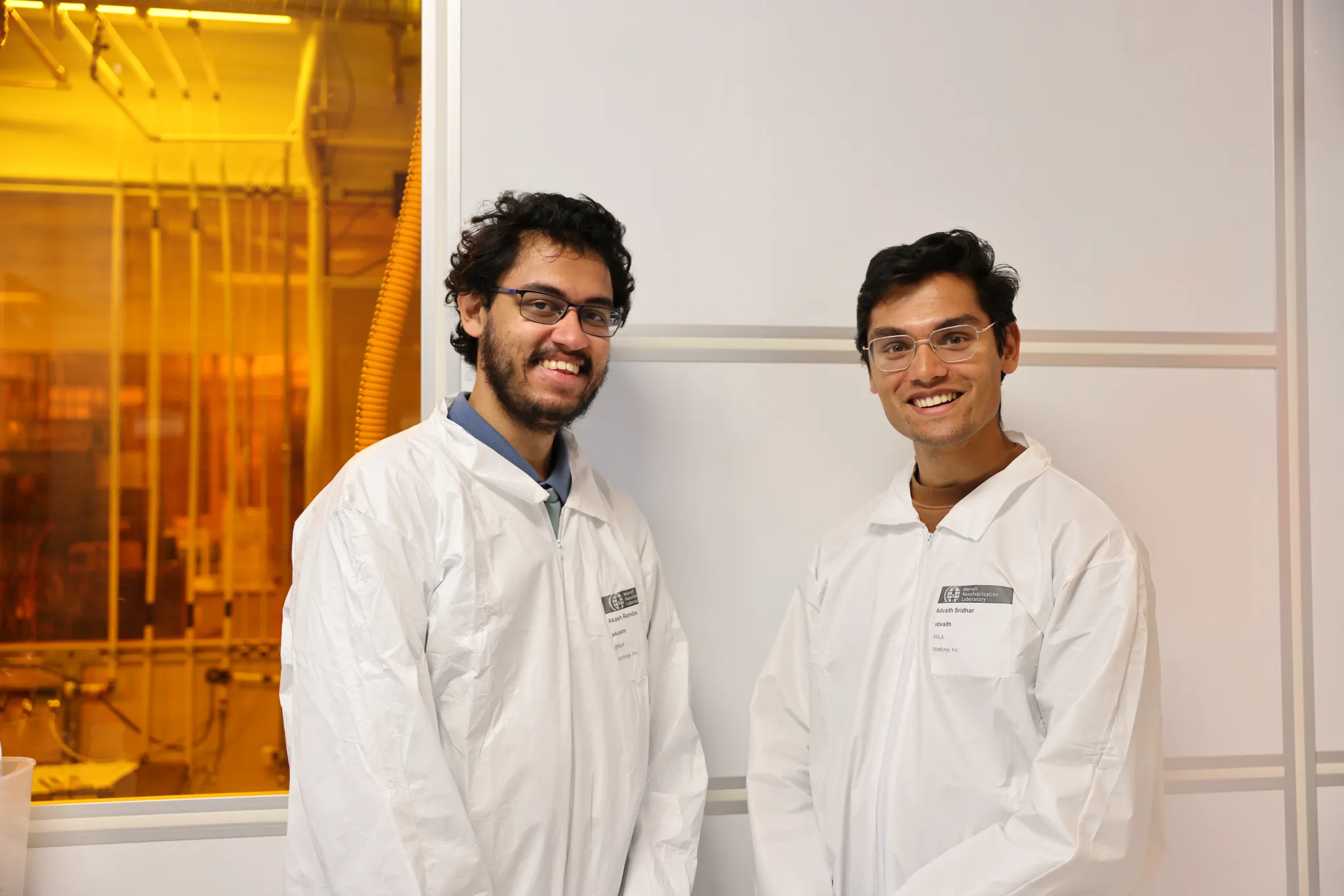
Founded by Advaith Sridhar and Akash Ramdas, Discovered Materials develops AI systems to identify promising semiconductor materials. The company participated in Y Combinator’s spring 2026 batch.
In August, the startup announced $9 million in seed funding. TechAmerica previously covered its research into cooler, more efficient chips, including AI-assisted material discovery and laboratory validation.
The company’s approach combines AI-generated material candidates with physics-based simulations. Promising discoveries must still undergo physical testing before manufacturers can establish their commercial value.
That challenge extends across semiconductor research. As TechAmerica explained in its semiconductor materials analysis, promising laboratory results do not automatically translate into reliable industrial manufacturing.
Discovered Materials intends to use the five open problems as benchmarks for scientific AI progress. The $1 million competition remains open, with awards dependent on meeting the published solution requirements.