Microsoft DirectX ray tracing update introduces major improvements to how graphics processors handle complex scenes in PC games. Announced October 28, 2026, the changes arrive through DirectX 12 Agility SDK 1.722 Preview. Microsoft describes the release as its most significant ray tracing upgrade since the technology debuted in 2018.
The update introduces clustered geometry, partitioned acceleration structures, and GPU-driven scene processing. These features are designed to reduce the work required to update detailed environments. Supported graphics hardware includes Nvidia GeForce RTX, AMD Radeon, and Intel Arc GPUs, although compatibility varies by generation and driver.
Microsoft DirectX Raytracing Update Improves Scene Processing
Ray tracing simulates how light travels through a virtual environment. Game engines use it to create reflections, shadows, and other lighting effects. However, tracking complex geometry can place substantial demands on graphics hardware.
Traditional ray tracing relies on acceleration structures that organize scene geometry for efficient calculations. These structures must be updated when objects move or environments change. In highly detailed games, rebuilding them can consume considerable processing time.
Microsoft’s official DirectX announcement introduces new methods for reducing that overhead. The improvements focus on managing geometry more efficiently rather than changing how ray tracing fundamentally works.
The company says the new approach could help developers render more detailed scenes. It may also reduce unnecessary rebuilding work when only small parts of an environment change.
Clustered Geometry Reduces Repeated GPU Work
Clustered geometry is one of the update’s biggest additions. Instead of treating large collections of triangles as a single structure, developers can divide them into smaller reusable groups.
Each cluster can contain up to 256 triangles and 256 vertices. Developers can assemble these clusters into larger acceleration structures without rebuilding every triangle repeatedly.
The approach is particularly relevant to games featuring complex environments and animated objects. Detailed landscapes, characters, and changing scenery can require frequent geometry updates.
Microsoft demonstrated the technology using a DirectX 12 development sample. On an AMD Radeon RX 9070, one test configuration increased performance from approximately 1.2 frames per second to 79 frames per second.
Acceleration structure build time fell from 788 milliseconds to 3.11 milliseconds. The test also showed a substantial reduction in acceleration structure memory consumption.
However, these figures come from a specific technical demonstration. They do not represent expected frame-rate improvements in commercial games. Performance will depend on the engine, scene complexity, GPU, and implementation.
The demonstration also showed increased temporary memory requirements for some operations. The results therefore illustrate a potential engineering benefit rather than a universal performance improvement.
Partitioned TLAS Makes Large Game Worlds More Efficient
Microsoft also introduced Partitioned Top-Level Acceleration Structures, known as PTLAS. The technology allows developers to update selected portions of a scene while preserving unchanged regions.
In conventional ray tracing pipelines, scene changes can trigger costly acceleration structure updates. PTLAS reduces unnecessary work by organizing objects into smaller partitions.
For example, a large environment may contain buildings, trees, vehicles, and moving characters. If only a few objects move, the system can update only the relevant partitions. Other regions can retain their existing acceleration structures.
This could benefit games featuring extensive open worlds and frequent movement. It may also help developers manage geometry streaming and animation more efficiently.
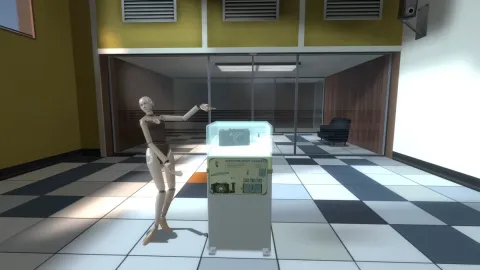
In a separate domino simulation, Microsoft compared conventional acceleration structure rebuilding with PTLAS. The traditional approach required approximately 2.88 milliseconds for a scene update. The partitioned version completed the update in approximately 0.79 milliseconds.
That improvement applied to the measured update operation. It did not mean overall game performance increased by the same proportion. Microsoft also observed a slightly higher tracing cost in that particular example.
Nvidia, AMD and Intel GPU Support Explained
The new features are designed to work across multiple graphics architectures. Microsoft says they do not fundamentally require hardware capabilities beyond existing ray tracing support. However, compatible drivers and vendor implementation remain necessary.
According to Microsoft’s Agility SDK release documentation, the initial supported hardware includes all Nvidia RTX GPUs. AMD support currently covers the Radeon RX 9000 series.
Intel support includes Arc B-Series graphics cards and selected Core Ultra processors. These include supported models in the 200V and Series 3 families.
Older ray tracing hardware may receive support in future driver releases. Microsoft has not guaranteed compatibility across every previously released GPU.
The preview also requires developers to use the appropriate SDK, drivers, and experimental feature settings. Consumers should not expect a standard graphics driver update to improve every existing game automatically.
Games must implement the new capabilities to benefit. Even then, results will vary depending on how each engine manages geometry and rendering workloads.
DirectX 12 Agility SDK 1.620 Adds More Developer Tools
Alongside the ray tracing preview, Microsoft released DirectX 12 Agility SDK 1.620 for general developer use. The retail release introduces additional improvements to graphics development and debugging.
One notable feature is expanded support for Advanced Shader Delivery. This technology helps developers distribute precompiled shaders and reduce certain compilation tasks.
The release introduces Partial Graphics Programs, allowing reusable shader components across multiple graphics pipeline configurations. Microsoft says the approach can reduce duplicated shader data and improve development efficiency.
However, support for this particular optimization is currently limited to specific AMD Radeon GPUs. Broader hardware compatibility remains dependent on future vendor implementations.
The release also expands diagnostic tools for graphics developers. New capabilities include DirectX Dump Files and improvements to debugging and command processing.
Meanwhile, Shader Model 6.10 remains in preview. Microsoft plans to introduce it in a subsequent retail SDK release.
What the DirectX Upgrade Means for PC Gaming
The update could help developers create more detailed ray-traced environments without repeatedly rebuilding large amounts of scene data. Its greatest potential lies in complex worlds with extensive animation, streaming geometry, and frequent environmental changes.
Microsoft identified Gears of War: E-Day as an early example of similar technology. The game uses Nvidia’s RTX Mega Geometry approach. Standardizing related capabilities through DirectX could make them accessible to developers working across different GPU brands.
The distinction matters for PC gaming. Vendor-specific rendering technologies can require separate implementations. A common DirectX interface offers developers a more consistent approach across compatible hardware.
However, the new ray tracing features remain in preview. Microsoft has not announced a final retail release date for clustered geometry and PTLAS.
The update does not guarantee higher frame rates in existing games or eliminate ray tracing’s hardware demands. Its importance lies in giving developers more efficient tools for future rendering workloads.
For PC gamers, the benefits will become clearer as studios integrate the technology into upcoming titles. Microsoft has established the technical foundation, but real-world performance will depend on individual games and their graphics engines