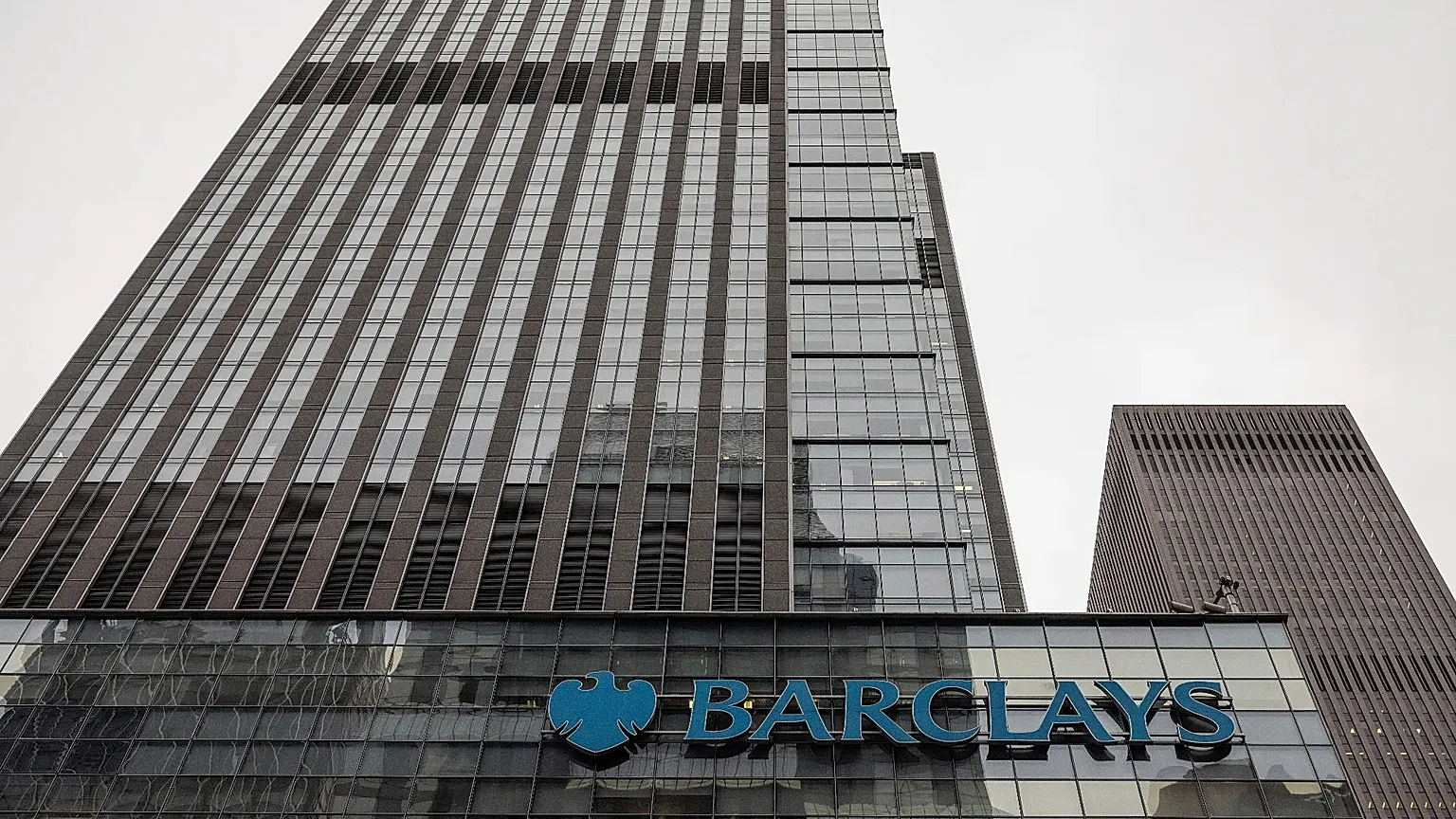
Barclays layoffs in 2026 are expected to affect about 5,000 positions as the British banking group reorganizes operations and uses artificial intelligence to boost productivity. The plan, equivalent to about 5% of its workforce, was outlined alongside third-quarter earnings on October 22. Finance chief Anna Cross told reporters that approximately 1,000 jobs had already been cut, while the remaining 4,000 were expected to go by the end of the fourth quarter. The planned reductions are significant, but the entire 5,000 should not yet be described as completed departures.
Barclays is making these changes during a profitable year, not amid a bank-wide earnings collapse. Its latest results and management commentary suggest a reallocation of spending from some established support activities toward technology and other priorities. Employees, investors and customers should distinguish a workforce plan from a verified count of people who have already left.
Barclays sets a 5,000-job reduction target for 2026
In an October 22 Reuters report, the bank said it would cut about 5,000 jobs in 2026. Cross put completed reductions at roughly 1,000 at that stage, with the remaining 4,000 scheduled for the final quarter. Those are management estimates tied to a stated deadline; no audited final full-year layoff total is available as of November 27.
Barclays did not supply an office-by-office global table for the complete plan. Its major operations span the United Kingdom, continental Europe, the United States, and India. Still, a bank’s international presence does not mean each country will experience a specified number of job losses. Country-level figures require separate notices or direct disclosures.
| Measure | Reported value | Interpretation |
|---|---|---|
| 2026 reduction plan | About 5,000 jobs | Target announced October 22 |
| Already completed by October 22 | About 1,000 | Management-reported completed reductions |
| Expected in fourth quarter | About 4,000 | Future cuts, not completed as of announcement |
| Share of workforce | About 5% | Approximate proportional impact |
| Support-function share | About 60% | Management estimate of affected roles |
The table summarizes the October announcement, not a rolling independent tally. Barclays could revise timing and implementation as the program proceeds. Changes in reported full-time-equivalent positions can also reflect factors other than dismissals, including vacancies, contractor changes and replacement hiring.
Why support roles are most exposed
Cross said approximately 60% of the planned reductions would affect support functions, with developers among the examples she gave. Support teams can include operations, technology delivery, administration and other internal services. It would be inaccurate to conclude that 60% of every Barclays division is being reduced or that every affected person works directly on software.
The bank is seeking to simplify processes and reduce repeated work across units. Centralized systems and automation can let smaller teams handle some tasks, even as other roles grow. Restructuring may involve combining responsibilities, redesigning workflows, and directly eliminating roles.
The distinction is especially important in technology employment. Removing a software support position is not the same as eliminating an entire engineering organization. The October disclosures do not specify how many software developers will leave or what share of cuts will be replaced by a particular AI system.
How AI fits into the restructuring
Barclays has explicitly connected efficiency improvements to organizational simplification and technology change, including AI. According to Associated Press reporting, management presented its job plan as part of a wider effort to redirect investment toward automation and productivity. AI can assist with repetitive information processing, document handling, analytics and internal service workflows, but this does not establish a direct one-to-one substitution of a model for each affected job.
Financial services remain heavily regulated. Automation in lending, fraud monitoring and customer support requires oversight, accurate data, model testing and accountable decision-making. Some savings could come from better tools and simplified workflows rather than wholesale staff replacement, while the bank may still need specialist employees to maintain and supervise its systems.
Nor is AI the only factor. Cost targets, changing service delivery models, and process consolidation are part of the wider restructuring. The bank has not provided a complete breakdown of causation, dividing 5,000 roles into AI-related, ordinary efficiency-related, and other categories.
Barclays’ financial results provide the business context.
The SEC-filed third-quarter results show profit before tax and segment performance across Barclays UK, its corporate and investment banking operations and U.S. consumer banking. Reuters reported a third-quarter pretax profit of about £2.3 billion, up about 12% from a year earlier. Profit growth does not rule out staff reductions, even as executives seek better cost-to-income ratios.
Barclays incurred transformation program expenses during the first nine months of the year. Industry reporting cited £307 million in restructuring spending, covering a broader program of staffing, technology, and organizational changes. It should not be labeled exclusively as cash severance payments to the 5,000 employees potentially affected.
Cross also pointed to more than £1.1 billion in anticipated efficiency savings in 2027. Those savings are a management objective, not an independently verified benefit already realized. Whether the program meets that goal will depend on implementation costs, future business performance and operational execution.
Where the 2026 layoffs stand by month
For January through September, the reviewed public reporting does not provide a reliable month-by-month register of every Barclays layoff. Some of the approximately 1,000 reductions completed before the October announcement occurred earlier in 2026, but assigning exact monthly totals without company records would be speculative. No supported month-specific breakdown is provided for every month in that period.
October 22 is the clearest public disclosure date: the bank set out an approximately 5,000-job annual plan, indicated about 1,000 positions had already been eliminated and said roughly 4,000 more were expected before year-end. November does not yet provide verified evidence that the full fourth-quarter objective has been met. The final 2026 outcome therefore remains open.
What the Barclays cuts mean for banking employment
Barclays illustrates a broader tension across large financial institutions: digital operations can expand while back-office headcount decreases. HSBC, another global lender, has also been undertaking restructuring. TechAmerica.ai has separately examined HSBC’s 2026 workforce changes, where local restructuring plans and net workforce totals likewise require different interpretations.
Comparisons should not combine these banks’ figures as though they share the same reporting definitions or execution dates. An announced target at Barclays, a country-specific plan elsewhere and a reported net headcount decline measure different things. For employees, the practical consequences depend on location, consultation processes, internal redeployment and the final implementation timetable.
As of November 27, the clearest verified finding is that Barclays plans to remove approximately 5,000 jobs in 2026, about 1,000 of which management said were already gone on October 22. Full-year filings or new company statements will be needed later to confirm whether the remainder was completed on schedule and how the impact was distributed internationally.
Key facts about the Barclays 2026 workforce-reduction plan.
How many jobs is Barclays cutting in 2026?
Barclays announced plans to cut about 5,000 jobs in 2026, or about 5% of its workforce.
Were all 5,000 Barclays layoffs completed in October?
No. The finance chief said about 1,000 cuts had occurred by October 22, with about 4,000 more planned by the end of the fourth quarter.
Is Barclays using artificial intelligence to reduce staffing?
Barclays cited technology, including AI, as part of its efficiency strategy, but it has not disclosed a one-to-one count of AI replacements for affected workers.
Which Barclays departments face the biggest impact?
Management indicated roughly 60% of planned cuts would fall in support functions, including some developer roles. No complete division-by-division tally was provided.
Which countries are affected by Barclays layoffs in 2026?
The company-wide plan is global, but reviewed disclosures do not provide a reliable complete country-by-country distribution.
Has Barclays reported the final 2026 layoffs total?
Not as of November 27, 2026. The 5,000 figure remained an annual plan, and the fourth-quarter portion had not been confirmed as fully completed.
Have another question about this story? Email the newsroom.