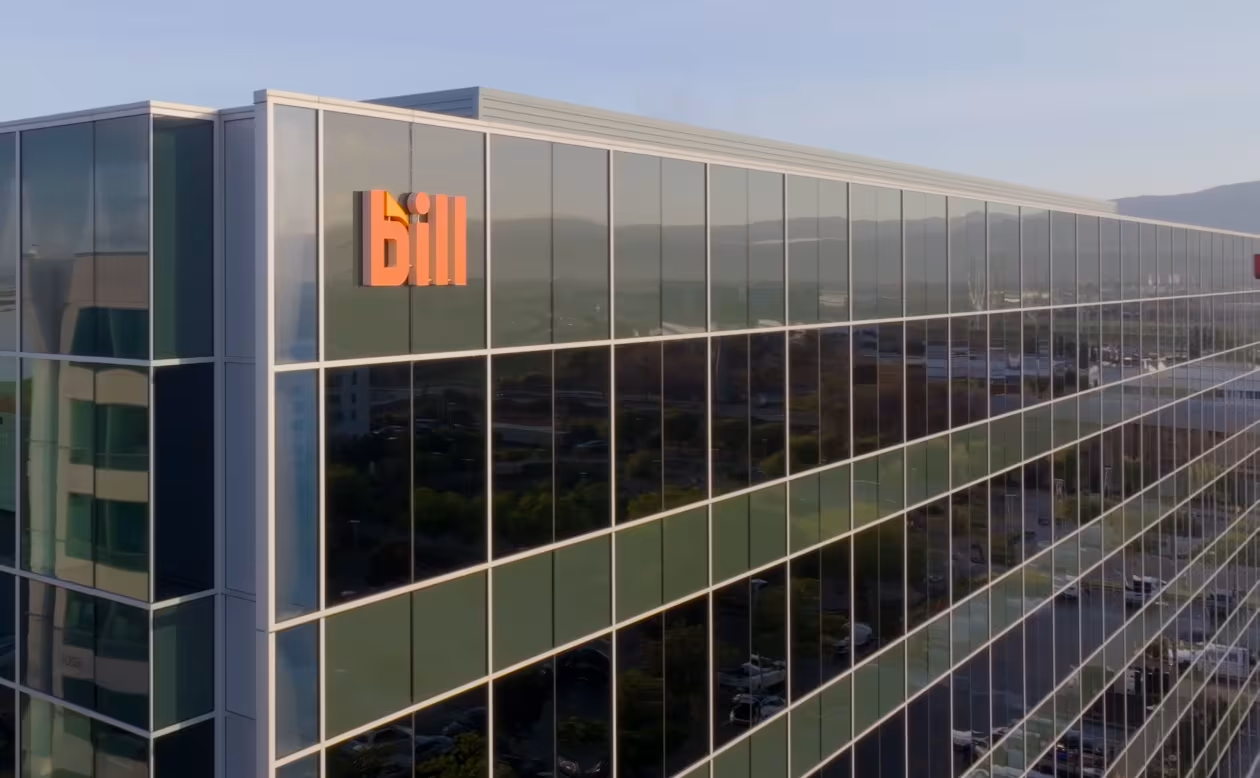
BILL Holdings layoffs in 2026 affected about 30% of the financial technology company’s workforce as part of a restructuring announced on May 7. Subsequent regulatory disclosures confirmed that the workforce reduction was substantially complete by September 30, 2026.
The restructuring included voluntary employee departures and additional workforce reductions. BILL also announced a transition toward a remote-first operating model in August, resulting in further changes to its office footprint.
The company recorded $90.9 million in restructuring charges during fiscal 2026. This amount covers multiple workforce reduction initiatives, not just the May announcement.
BILL Holdings layoffs 2026 timeline
According to its May 7 Form 8-K filed with the SEC, BILL initially announced plans to reduce its workforce by up to 30%.
The company estimated restructuring expenses of approximately $30 million to $60 million, primarily involving severance, employee benefits and stock-based compensation.
| Date or period | Development |
|---|---|
| October 15, 2025 | Earlier workforce reduction affecting approximately 6% of employees |
| March 2026 | Additional workforce reduction with approximately $5 million in restructuring charges |
| May 7, 2026 | New workforce reduction of up to 30% announced |
| June 30, 2026 | Fiscal year ends with $90.9 million in restructuring charges |
| August 2026 | Remote-first operating strategy announced |
| September 30, 2026 | May workforce restructuring substantially complete |
The October 2025, March 2026 and May 2026 workforce reductions were separate decisions. Their percentages should not be combined into a single calendar-year layoff figure.
Why BILL Holdings is reducing its workforce
BILL provides financial software that supports business payments, accounts payable, accounts receivable, and expense management.
In his May 7 communication to employees, CEO and founder René Lacerte outlined plans to transform BILL into a company organized around artificial intelligence.
Management intends to simplify the organizational structure, speed decision-making, and focus resources on fewer strategic priorities.
The restructuring also aims to improve profitability and operational efficiency while supporting continued investment in financial automation.
Artificial intelligence is therefore an explicit part of BILL’s organizational transformation. However, the company has not established how many individual positions were directly replaced by AI systems.
Voluntary separation program offered to employees
BILL introduced a voluntary separation program as part of the May restructuring. Participation was capped at approximately 20% of its overall workforce.
Eligible employees could voluntarily leave the company in exchange for an enhanced separation package. Management planned to determine the remaining workforce reductions after considering voluntary departures.
The voluntary separation cap formed part of the broader 30% workforce reduction target. It did not represent an additional 20% reduction.
The reviewed disclosures do not establish the final number of voluntary departures or the precise breakdown between voluntary and involuntary separations.
BILL Holdings restructuring charges reach $90.9 million
The company’s fiscal 2026 annual report filed with the SEC disclosed $90.9 million in restructuring expenses during the year ended June 30, 2026.
| Financial measure | Reported amount |
|---|---|
| March 2026 restructuring charges | Approximately $5 million |
| Initial May restructuring estimate | $30 million to $60 million |
| Total fiscal 2026 restructuring charges | $90.9 million |
| Severance and termination benefit charges during fiscal 2026 | $74.996 million |
| Accelerated stock-based compensation during fiscal 2026 | Approximately $15.5 million |
| Cash restructuring payments during fiscal 2026 | $19.174 million |
| Remaining restructuring liability at June 30 | $56.240 million |
Annual restructuring expenses include workforce reductions initiated in October 2025, March 2026, and May 2026. The total cannot be attributed exclusively to the May workforce reduction.
The company’s March-quarter Form 10-Q separately identifies approximately $5 million in charges associated with the earlier March restructuring.
September financial disclosures confirm restructuring progress. BILL’s Form 10-Q for the quarter ended September 30, 2026 confirmed substantial completion of the May workforce reduction.
The filing also provided updated information about restructuring payments and outstanding financial obligations.
| Restructuring liability movement | Amount in USD millions |
|---|---|
| Opening liability on June 30, 2026 | 56.240 |
| Downward adjustments | 2.608 |
| Cash payments during July through September | 50.803 |
| Remaining liability on September 30 | 2.829 |
Of the remaining liability, $2.720 million related to severance and termination benefits. The remaining $109,000 involved other restructuring obligations.
These payments and liabilities reflect previously recorded restructuring expenses. They do not represent separate additional workforce reductions.
BILL transitions to a remote-first operating model
In August 2026, BILL announced plans to transition toward a remote-first organization and reduce its reliance on traditional office space.
During the following quarter, the company vacated some leased office spaces that it intends to sublease.
BILL subsequently recorded a $25.8 million noncash impairment charge involving operating lease assets and property and equipment.
This expense relates to changes in the company’s real estate requirements. It is not a severance payment or evidence of another 30% workforce reduction.
How many employees does BILL Holdings have?
BILL reported 1,683 employees as of June 30, 2026, in its annual regulatory filing.
The workforce included employees working remotely and at company offices in San Jose, California, and Draper, Utah.
However, the June employee count does not show the exact number of departures completed under the May restructuring. Hiring, voluntary resignations and other employment changes can influence reported workforce totals.
The reviewed disclosures do not provide a complete breakdown of affected positions by department, country or job title.
BILL Holdings financial performance following the restructuring
BILL reported improved revenue and profitability during the quarter ended September 30, 2026, corresponding to the first quarter of fiscal 2027.
| Financial indicator | September 2026 quarter | September 2025 quarter |
|---|---|---|
| Revenue | $353.8 million | $314.5 million |
| Net income or loss | $60.3 million net income | $3.0 million net loss |
Quarterly revenue increased by approximately 12.5%. The prior-year revenue figure reflects a retrospective accounting change involving card rewards.
The results show improved reported profitability during the restructuring period. However, they do not establish that workforce reductions alone caused the improvement.
Other enterprise software companies have also adjusted staffing levels and investment priorities. TechAmerica has examined similar developments in its coverage of Workday’s 2026 workforce restructuring.
Have BILL Holdings layoffs been completed?
As of November 29, 2026, official regulatory disclosures establish that the May workforce reduction was substantially complete by September 30.
The company continues to evaluate opportunities to improve its operating structure. However, the reviewed filings do not identify any additional workforce reductions beyond the previously announced initiatives.
The final number of employee departures, the geographic distribution of affected positions, and the full breakdown of voluntary separations remain undisclosed in the reviewed records.
Follow further workforce announcements and corporate restructuring developments in TechAmerica’s coverage of technology layoffs.
Answers based on disclosed workforce figures and clearly stated limitations.
How many employees were affected by BILL Holdings layoffs in 2026?On May 7, 2026,
BILL Holdings announced plans to reduce its workforce by up to 30%. Subsequent SEC disclosures confirmed a reduction affecting about 30% of the workforce, although the reviewed records did not disclose an exact final employee departure count.
When did BILL Holdings announce its 2026 layoffs?
BILL announced its major workforce reduction on May 7, 2026. The company had also undertaken a separate, smaller workforce reduction in March 2026.
Why is BILL Holdings reducing its workforce?
BILL aims to simplify its organizational structure, improve operational efficiency, strengthen profitability and concentrate resources on strategic priorities, including its transformation toward AI-focused operations.
How much did BILL Holdings restructuring cost?
BILL recorded $90.9 million in restructuring expenses during the fiscal year ended June 30, 2026. This amount covers multiple workforce reduction initiatives, not just the May layoffs.
Did BILL Holdings offer voluntary separation packages?
Yes. BILL introduced a voluntary separation program with enhanced separation benefits, capped at approximately 20% of its workforce. The program formed part of the broader 30% reduction target.
How many employees does BILL Holdings have in 2026?
BILL reported 1,683 employees as of June 30, 2026. This figure does not establish the exact number of employees who subsequently departed under the restructuring plan.
Are BILL Holdings layoffs connected to artificial intelligence?
Artificial intelligence is an explicit part ofBILL’ss organizational transformation strategy. However, the company has not disclosed a verified number of positions directly replaced by AI systems.
Have BILL Holdings layoffs been completed?
BILL confirmed that its May 2026 workforce reduction was substantially complete by September 30, 2026. The company also announced a remote-first strategy that includes reductions in its office footprint.
Have another question about this story? Email the newsroom.