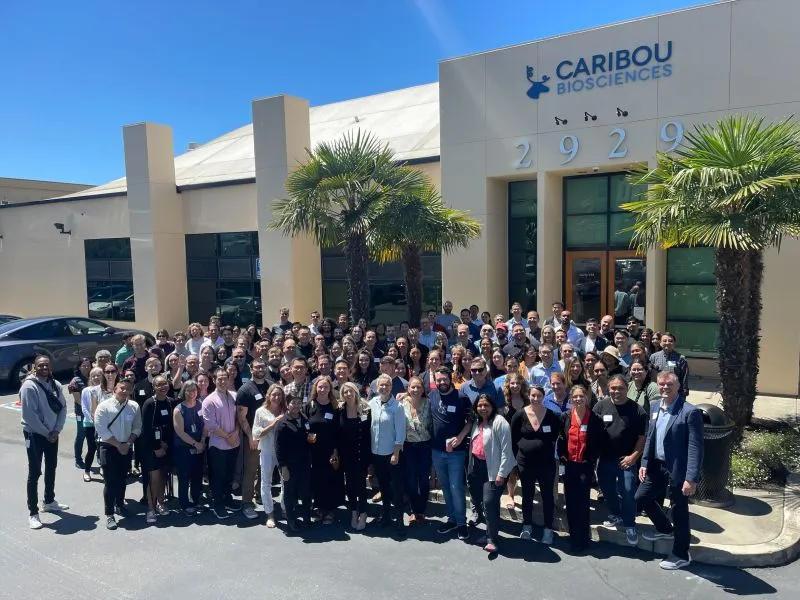
Caribou Biosciences’ 2026 layoffs are part of a sweeping retreat from the biotechnology company’s experimental cancer treatment programs. After directors approved a restructuring on October 2, Caribou announced that it would substantially reduce its workforce, stop its clinical trials and investigate strategic alternatives. The decision highlights the financial pressure facing developers of allogeneic cell therapies, even when their technology has shown potential in early research.
The company did not disclose an exact number or percentage of employees affected by its 2026 decision. Its October regulatory disclosure said departures would occur in phases, with most affected workers expected to leave in the fourth quarter. Some personnel would remain to support possible transactions, clinical shutdowns and a wind-down of operations.
What Caribou confirmed about the 2026 layoffs
Caribou’s board authorized both an extensive personnel reduction and the planned discontinuation of its remaining clinical-stage allogeneic CAR-T programs. The company said these actions are connected: without financing to continue the programs, it needed to reduce expenditures while considering its next corporate steps. It did not publish a final workforce count for the new round of job losses.
- October 2: Directors approved the operational restructuring.
- October 6: Caribou publicly announced the plan and its review of strategic alternatives.
- Fourth quarter: Most affected employees were expected to depart, although a limited team would remain.
- November 5: The company’s quarterly filing detailed restructuring costs, liquidity and risks associated with the plan.
The third-quarter Form 10-Q describes the staff reduction as substantial, but that description should not be converted into a precise layoff count. It also states that the company cannot guarantee the timetable or expected savings. Announced departures, actual separations and employees retained for transition work are different measures.
Restructuring costs could reach $19 million.
Caribou estimated total expenses of approximately $15 million to $19 million from the 2026 restructuring. Of that amount, $10 million to $11 million relates to one-time severance payments, continued healthcare coverage and associated employee costs. Another $5 million to $8 million covers the anticipated discontinuation of two Phase 1 trials. Most of those costs were expected to be recognized in the fourth quarter of 2026.
The estimate is not a final bill. Caribou warned that lease obligations, contract termination expenses, intellectual property licensing arrangements and possible impairment charges could add substantial costs. A large announced restructuring provision also should not be mistaken for an employee headcount: expense totals include different types of obligations and do not establish how many jobs were lost.
Why Caribou is stopping its cancer treatment programs
The two programs at the center of the decision were vispacabtagene regedleucel, commonly called vispa-cel, and CB-011. Vispa-cel was being studied in an early-stage trial known as ANTLER for relapsed or refractory B-cell non-Hodgkin lymphoma. CB-011 was being evaluated in the CaMMouflage phase 1 trial for relapsed or refractory multiple myeloma.
Both programs used allogeneic CAR-T technology, which aims to create cell treatments from donor-derived rather than patient-specific immune cells. This approach could simplify manufacturing and availability, but developers still face significant clinical, regulatory, and commercial hurdles. Caribou attributed its decision to the difficult financing environment for this category of therapy, not to a completed regulatory finding that the treatments were ineffective.
The company’s November financial update reaffirmed its plan to cease its clinical programs. Discontinuing development should not be interpreted as proof that any therapy was approved, commercially available or permanently impossible to pursue under a different owner. A potential buyer or partner could assess the assets, but that disclosure did not establish a completed transaction.
Cash reserves and the search for strategic alternatives
As of September 30, 2026, Caribou held $94.8 million in cash, cash equivalents and marketable securities. Its quarterly filing described a $76.0 million net loss for the first nine months of the year and $72.3 million in cash used for operating activities over that period. Those figures help explain why management is emphasizing cash preservation and transaction options.
Caribou said its review could consider a merger, acquisition, business combination, transactions involving its assets, or even dissolution and liquidation. These are possibilities under evaluation, not announced outcomes. The company engaged Wedbush Securities as a financial adviser and did not establish a firm timetable for concluding its search.
Management cautioned that severance, clinical shutdown expenses, public company compliance and continuing contractual obligations would reduce available funds. Even as operations contract, not every cost disappears immediately. The company also faces practical risks if remaining employees leave before it can properly manage contracts, trials and regulatory responsibilities.
How the 2026 cuts differ from Caribou’s 2025 reduction
The October 2026 plan follows a separate decision announced April 24, 2025, when Caribou reduced its workforce by 47 employees, approximately 32% at that time. That earlier restructuring included a narrower research pipeline and discontinued other programs. The 47 people were part of the 2025 reduction and must not be counted as confirmed 2026 layoffs.
The newer decision goes further by discontinuing development of both remaining clinical-stage programs while the board considers broader strategic transactions. Separating the two years avoids inflating the number of workers affected and gives readers a clearer picture of the change in corporate strategy.
TechAmerica.ai also covered Caribou in its October 2026 layoffs roundup, alongside reductions announced by other technology and biotechnology companies. This company-specific report examines the filings, cost breakdown and clinical implications in more detail.
What remains uncertain for employees and investors
Caribou has disclosed the direction of its workforce plan but not a verified final number of 2026 job cuts, a complete schedule of employee exits or an agreed sale of the company. Its disclosures indicate that most departures were anticipated in the fourth quarter, while some staff would stay to assist with remaining obligations. The actual sequence may differ from management’s initial expectation.
Employees face uncertainty about individual departure dates and retention arrangements. Investors face additional questions about how much cash will remain after severance, trials, contracts and advisory expenses. Any eventual transaction would need to be evaluated on its own disclosed terms rather than assumed from the review process.
For now, the central confirmed development is that Caribou Biosciences chose to stop advancing its remaining clinical programs while executing a significant workforce reduction. Until further filings disclose definitive numbers or a completed deal, treat those elements as a restructuring in progress rather than a finalized shutdown or an exact total of layoffs.
How many employees did Caribou Biosciences lay off in 2026?
The company described a substantial workforce reduction but did not disclose a confirmed exact number or percentage in its October announcement and November quarterly filing.
When were the Caribou Biosciences layoffs announced?
Directors approved the plan on October 2, 2026, and Caribou announced it publicly on October 6. Most affected employees were expected to depart during the fourth quarter.
What will Caribou's restructuring cost?
Caribou estimated $15 million to $19 million in restructuring expenses, including approximately $10 million to $11 million in severance and related employee costs.
Which Caribou Biosciences trials are being discontinued?
Caribou planned to discontinue the ANTLER phase 1 trial of vispa-cel and the CaMMouflage phase 1 trial of CB-011.
Is Caribou Biosciences being acquired?
No completed acquisition was announced in the cited filings. The company is evaluating alternatives including mergers, asset transactions and potentially dissolution or liquidation.
Did Caribou also cut jobs in 2025?
Yes. Caribou disclosed a separate April 2025 reduction of 47 employees, about 32% of its workforce at that time. That figure is not its 2026 layoff total.
Have another question about this story? Email the newsroom.