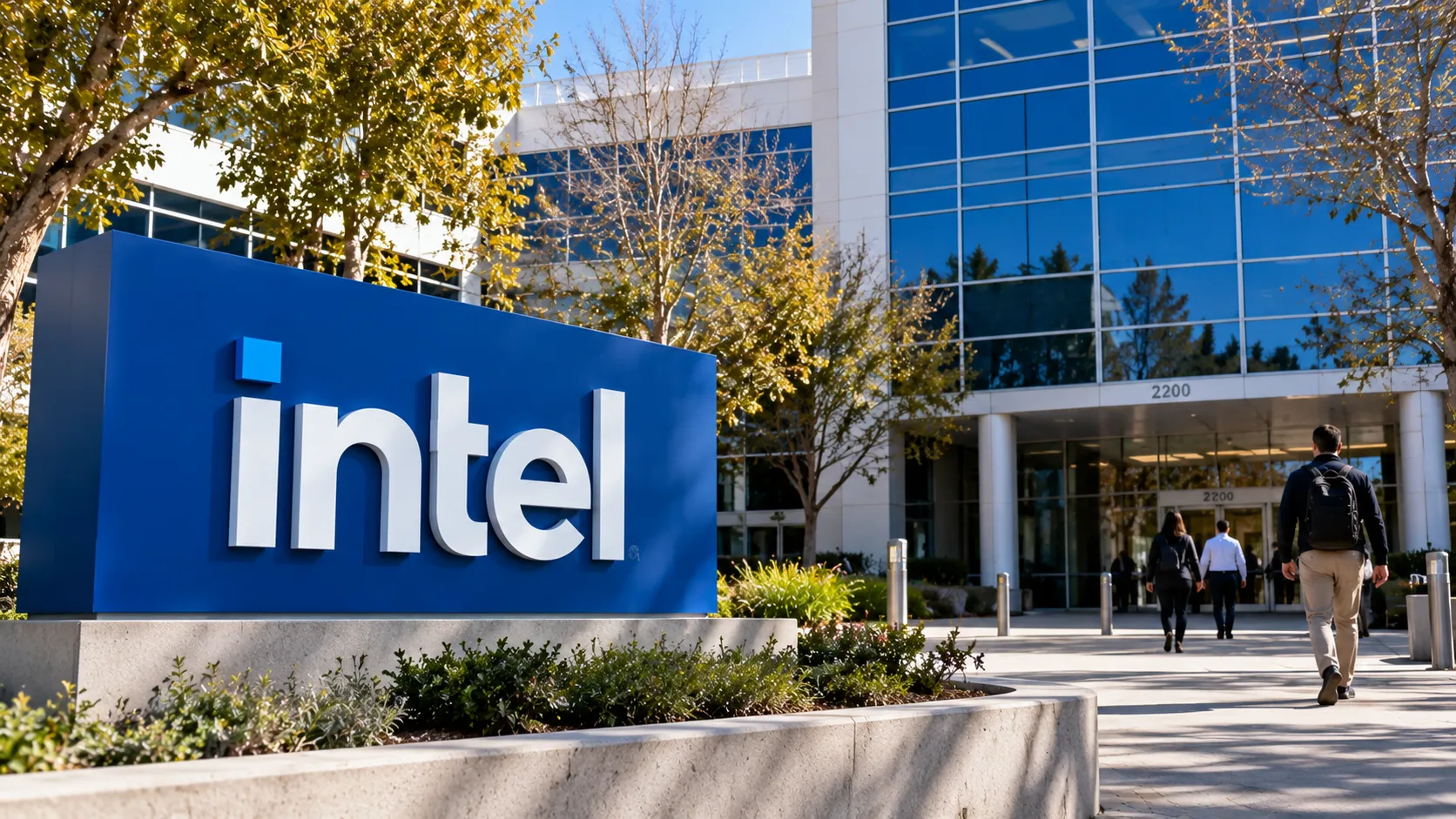
Intel layoffs in 2025 continued into November, when the semiconductor company eliminated 59 positions across three Santa Clara, California, offices. The permanent job cuts took effect November 30, according to employment records published by the state’s Employment Development Department.
The reductions affected Intel’s headquarters and two additional Silicon Valley facilities. Although modest compared with the company’s larger workforce cuts earlier in the year, they extended a restructuring campaign aimed at reducing operating expenses and simplifying management.
Intel had already announced plans to reduce its core workforce by approximately 15% as chief executive Lip-Bu Tan worked to improve the company’s financial performance and sharpen its focus on core semiconductor businesses.
Intel Layoffs 2025: Where the 59 Jobs Were Cut
California employment records identified three Intel locations in Santa Clara affected by the November reductions.
The largest group worked at Intel’s headquarters at 2200 Mission College Boulevard, where the company eliminated 45 positions.
The company also cut three jobs at its Bowers Avenue office. The company eliminated the remaining 11 positions at a facility on Juliette Lane.
KRON4’s December 9 report classified all 59 reductions as permanent.
California’s Employment Development Department, which administers the state's Worker Adjustment and Retraining Notification system, filed the records.
California’s WARN reporting program lets the public review certain company announcements involving layoffs, closures, and relocations.
The November records establish the number and location of the affected positions. They do not provide a complete list of employee job titles or explain the business reasons for each reduction.
The Job Cuts Were Part of Intel’s Wider Restructuring
The Santa Clara reductions followed several earlier rounds of workforce cuts across Intel’s U.S. operations.
In the second quarter of 2025, Intel introduced a companywide restructuring plan intended to lower expenses and simplify its organization.
Management said it wanted to reduce layers of supervision, improve accountability, and focus investment on its most important products.
In its third-quarter SEC filing, Intel said the plan was expected to reduce its core workforce by approximately 15% from its second-quarter level.
The company also redirected investment from lower-priority programs to its core client computing and server businesses.
These decisions reflected a broader effort to make Intel more competitive after several years of financial and operational challenges.
The 59 positions eliminated in November were one identifiable part of that wider process, not a separate announcement of thousands of additional job cuts.
Intel Confirmed a 15% Core Workforce Reduction.
Intel subsequently provided a more complete assessment of its restructuring in its annual regulatory filing.
The company’s 2025 Form 10-K confirmed that its headcount-reduction initiatives had reduced the core Intel workforce by about 15% compared with the end of the second quarter.
Intel reported about 80,100 employees in its core business at the end of December 2025.
Its consolidated employee count, including certain subsidiaries, was approximately 85,100. That compared with 108,900 at the end of 2024.
However, the difference between those two consolidated figures should not be described entirely as layoffs.
Changes in the company’s corporate structure also affected reported headcount. Intel deconsolidated Altera after selling a majority stake in September 2025, removing about 3,000 employees from subsequent consolidated totals.
The headcount figures also reflect attrition and changes in the businesses included in the company.
As a result, Intel’s annual filings show a major reduction in staffing, but they should not be used to calculate a precise total of employees dismissed during 2025.
Restructuring Costs Reached $2.2 Billion in 2025
Intel’s workforce and operational changes had a substantial financial impact.
In its annual report, Intel recorded approximately $2.2 billion in restructuring and related charges during 2025.
That amount included about $1.8 billion in employee severance and benefit costs tied to workforce reductions and other restructuring activities.
The company also recorded expenses related to impairments, facility consolidation and decisions to exit certain business activities.
Those figures cover the wider restructuring programs, including actions carried forward from 2024. They are not costs attributable solely to the 59 Santa Clara positions.
Intel said the changes were intended to lower expenses and redirect resources toward its most important operations.
The restructuring also included a review of manufacturing capacity, real estate commitments, and planned investments.
Lip-Bu Tan Focused on a Smaller, More Efficient Intel
The workforce reductions were part of a broader shift under chief executive Lip-Bu Tan.
Tan became Intel’s CEO in March 2025 and began emphasizing faster decision-making, simpler reporting structures and stronger engineering execution.
Intel’s second-quarter 2025 financial announcement explained that management intended to operate with fewer organizational layers.
The company also revised its manufacturing investment plans.
Intel canceled previously planned projects in Germany and Poland, announced changes to assembly and testing operations, and slowed construction activity in Ohio.
These decisions reflected an effort to match spending more closely with expected demand.
They were separate from the Santa Clara employment filing, but they provide context for the broader restructuring.
Intel’s Financial Performance Remained Under Pressure
Intel’s annual financial results, published in January 2026, showed why management remained focused on costs.
The company reported $52.9 billion in revenue for 2025, broadly unchanged from the previous year.
Its full-year net loss attributable to Intel narrowed to about $300 million, down from $18.8 billion in 2024.
In its official financial results, the company also reported lower research, development, marketing and administrative expenses.
The changes reflected workforce reductions and other cost-saving actions.
Intel continued to work on manufacturing technology, central processing units, and products serving data centers and AI workloads.
However, the company faced pressure to improve execution and generate stronger financial returns on its investments.
The November layoffs occurred against this wider financial backdrop.
Did Artificial Intelligence cause the Intel Layoffs?
Intel did not identify AI-based employee replacement as the reason for the 59 Santa Clara job cuts.
Its official restructuring disclosures focused on lowering expenses, simplifying the organization and concentrating resources on core businesses.
Although the company continued investing in technology used for AI computing, that does not establish that automation directly eliminated the positions identified in the November filing.
This distinction matters when examining technology employment trends.
A semiconductor company may reduce staff because of manufacturing costs, strategic changes or organizational restructuring while continuing to develop AI-related products.
Intel’s public disclosures support the explanation that its 2025 reductions were part of a broader business transformation.
They do not establish that artificial intelligence replaced the 59 affected employees.
Intel’s November Cuts Add to the 2025 Tech Layoff Wave
Intel was among the major technology employers that announced repeated workforce reductions during 2025.
The industry also saw substantial cuts at software companies, cloud providers, consumer technology businesses and smaller startups.
TechAmerica.ai documents those developments in its 2025 technology layoffs report.
The Intel case demonstrates why individual announcements should be recorded separately from larger companywide programs.
The November filing covered 59 positions in Santa Clara, while the company's annual restructuring affected far more workers across multiple locations.
Combining local WARN notices with companywide workforce reductions without checking for overlap can lead to double counting.
What the November Layoffs Mean for Intel
The November 30 reductions showed that Intel’s restructuring continued even after the company had implemented most of its larger workforce changes.
The affected positions were concentrated at three Santa Clara sites, including its headquarters.
Intel later confirmed that its core workforce declined substantially in 2025 and that restructuring expenses reached billions of dollars.
The company continued operating its major semiconductor businesses while pursuing a smaller organizational structure.
For the Santa Clara employees, the immediate outcome was 59 permanent job eliminations.
For Intel, the announcement marked another stage in a broader transformation intended to cut costs and improve its competitiveness in the semiconductor industry.