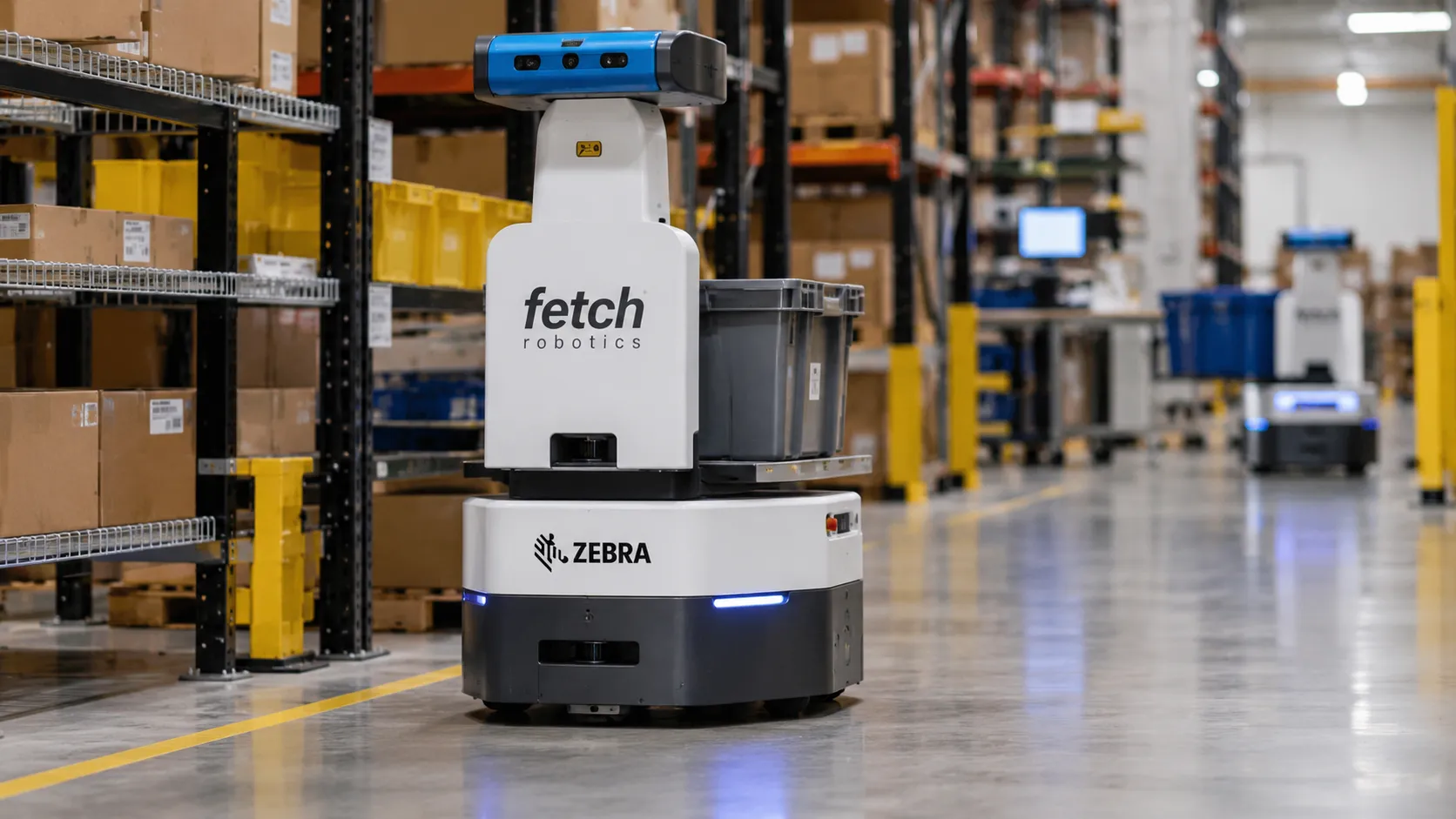
The Zebra Technologies robotics layoffs began taking shape in December 2025 as the Illinois-based company moved to exit its autonomous mobile robot business. The decision affected a division built around Fetch Robotics, which Zebra acquired in 2021 to expand into warehouse automation.
The company initially explored selling the business or discontinuing its operations. At the time, reports indicated that most employees in the division were expected to leave by the end of 2025, although Zebra did not disclose an official headcount reduction.
The uncertainty over the unit’s future ended in 2026. Zebra sold the business to robotics software developer Skild AI in a transaction completed on March 27 and publicly announced on April 15.
Zebra Technologies Robotics Layoffs Follow December 2025 Decision
Zebra confirmed its decision to exit the robotics automation business in a December 2025 filing with the Securities and Exchange Commission.
The company said the move would let it focus resources on its core technology businesses and higher-priority investments.
At the time, Zebra estimated the exit could trigger up to $80 million in one-time pretax charges. That forecast included approximately $60 million in anticipated noncash asset impairment charges.
Zebra also projected annual pretax cost savings of at least $20 million.
The decision marked a change from the company’s earlier efforts to expand its presence in warehouse robotics. It had spent several years developing products that combined mobile robots, software and devices used by frontline workers.
Most Robotics Employees Were Reportedly Expected to Leave
The proposed exit immediately raised questions about employment in the robotics division.
According to The Robot Report, which cited multiple sources familiar with the situation, most of the division’s employees were expected to leave before the end of December 2025.
The publication also reported that approximately one-quarter of the workforce would remain temporarily through March 2026 to support existing deployments.
Those figures were reported expectations, not an official tally of completed layoffs. Zebra did not publish the division’s total workforce or identify how many employees ultimately departed.
Its subsequent financial statements confirmed that the exit involved employee severance costs. However, the company combined those expenses with other restructuring-related charges, making it impossible to establish a reliable job-cut count from the filing alone.
For employees, the timing added uncertainty about whether positions would disappear permanently or transfer to a potential buyer.
Zebra’s $290 Million Fetch Robotics Acquisition
Zebra entered the autonomous mobile robot market by acquiring Fetch Robotics in 2021.
Fetch developed self-navigating industrial robots that transported materials within warehouses, fulfillment centers and manufacturing facilities. The systems were designed to reduce repetitive movement and help workers complete orders more efficiently.
In its July 2021 acquisition announcement, Zebra said it expected to pay about $290 million for the 95% of Fetch it didn’t already own.
The deal closed in August of that year.
Zebra subsequently integrated Fetch technology into its broader automation portfolio. Its offerings included robots to move goods and software to coordinate warehouse activities.
The acquisition gave Zebra a more direct position in the growing market for autonomous industrial equipment. By late 2025, however, the company had concluded that owning the robotics business was no longer central to its investment strategy.
Zebra Recorded $55 Million in Exit Costs.
The financial consequences became clearer when Zebra published its 2025 annual results.
In its annual SEC filing, the company reported approximately $55 million in one-time costs related to the proposed sale or exit of the robotics automation business.
About $45 million involved impairments of long-lived assets. The remaining charges included employee severance and working capital expenses.
These figures were lower than Zebra’s initial estimate of up to $80 million, but they still showed a substantial accounting impact from the restructuring.
The company also announced a separate productivity plan affecting other parts of its organization. That program should not be combined with the reported employment impact of the robotics division.
The robotics exit was therefore both a financial restructuring and a decision about which technologies Zebra wanted to own and develop.
Skild AI Acquired the Robotics Business in March 2026
Zebra ultimately sold the division rather than permanently closing it.
Zebra completed the transaction with Pittsburgh-based Skild AI on March 27, 2026, according to its first-quarter SEC filing.
The filing disclosed total consideration of $20 million, including $9 million in cash, a $9 million Skild AI equity stake, and $2 million held in escrow.
Zebra recorded a pretax gain of approximately $5 million on the sale.
The companies announced the acquisition on April 15.
The transaction transferred the business to a company focused on developing artificial intelligence software for physical robots.
Although the sale consideration was substantially below Zebra’s original 2021 acquisition price, the two transactions involved different circumstances and assets. They should not be treated as a direct calculation of investment losses.
Neither company’s acquisition announcement provided a verified count of employees who joined Skild AI.
What Skild AI Plans for the Fetch Robotics Technology
Skild AI develops software to operate different kinds of robots without needing a separate control system for each machine.
The company said the acquisition would help it bring that technology into warehouse operations.
In its April 2026 announcement, Skild AI described plans to build on Fetch’s established warehouse automation systems.
The acquired business included technology associated with Zebra’s Symmetry Fulfillment platform, which coordinates activities between robots and human workers.
That deployment experience could give Skild AI opportunities to test and expand its robot intelligence technology in commercial environments.
For customers using Fetch-based systems, the acquisition also provided a successor owner. However, the announcement did not establish that every existing product or customer agreement would continue unchanged.
Why Zebra Changed Its Robotics Strategy
Zebra’s decision did not mean the company was abandoning automation altogether.
Instead, it chose to prioritize areas such as radio-frequency identification, machine vision and artificial intelligence tools designed for frontline operations.
Those technologies support businesses that need to identify products, monitor inventory and automate activities across warehouses, factories and retail environments.
This shift highlights an important distinction in industrial technology. A company can remain committed to automation while deciding that manufacturing and supporting an entire mobile robot product line no longer fits its strategy.
For Zebra, selling the Fetch-based unit created a clearer separation between its core technology portfolio and the robotics systems it had acquired several years earlier.
The decision also came during a period of widespread restructuring across the technology industry. TechAmerica.ai has documented other workforce reductions in its 2025 technology layoffs report.
The broader employment picture continued to evolve in 2026, as TechAmerica.ai’s technology layoffs overview covered.
What the Sale Means for Employees and Customers
The outcome was different from the complete shutdown considered in December 2025.
Skild AI acquired the business and its technology, while Zebra stopped operating the division directly.
Less clear is the full employment impact of that transition.
Contemporary reports pointed to significant departures before the sale. Zebra’s regulatory filings confirmed severance expenses, but neither the filings nor the acquisition announcement established a complete workforce count.
That distinction matters when technology layoff trackers record Zebra. The company confirmed its decision to exit the business, but it has not disclosed the number of positions eliminated.
The transaction also shows how robotics companies can change ownership even when their underlying technology still has commercial applications.
For Zebra, the exit closed a chapter that began with its 2021 acquisition of Fetch Robotics. For Skild AI, the purchase created an opportunity to extend its software into established warehouse automation systems.