

































Meta Says Muse Was Inspired by OpenClaw but Built From Scratch
Meta confirms its Muse AI assistant was heavily inspired by OpenClaw while saying the product was built from scratch.

Meta has acknowledged that its Muse AI assistant was heavily inspired by OpenClaw, an open-source personal AI agent project, while clarifying that Muse itself was built from scratch.
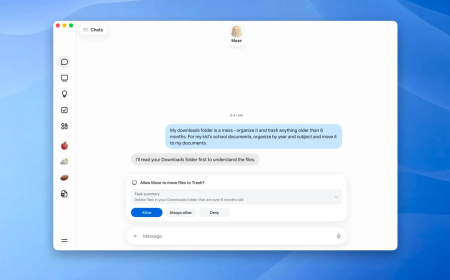
Nat Friedman, head of product at Meta’s Superintelligence Labs, addressed the comparisons in an X post, saying Muse was “definitely heavily inspired as a product by OpenClaw.” He said the team wanted to create a similar experience that could be made safer, easier to use, and scalable for billions of people.
OpenClaw’s Influence on Muse
Friedman, the former GitHub CEO who joined Meta alongside Chief AI Officer Alexandr Wang, was previously featured with Wang in TIME’s AI 100 coverage. Friedman said the Meta team had become enthusiastic users of OpenClaw and wanted to create a similar personal AI assistant experience for a broader audience.
OpenClaw is an open-source AI agent project that lets developers inspect and build on its technology. The project gained attention among AI developers and users interested in personal AI assistants.
Users Found Similarities Between the Two Systems
The discussion around Muse began after AI app founder Ansh Nanda shared comparisons between the two systems, claiming Muse closely resembled OpenClaw in structure and behaviour.
Other users also highlighted similarities between the assistants. One user pointed to a SOUL.md file in Muse, a plain-text configuration file used by AI agents to define personality, communication style, values, behavioural rules, and expertise.
A separate comparison shared by Charles McDowell pointed to similarities between the file names and content used by the two systems, including claims that the SOUL.md configuration files were nearly identical.
Meta’s Approach to Scaling AI Agents
When asked why Muse used similar file structures and naming conventions, Friedman did not dispute the comparisons. Instead, he said Meta believed OpenClaw creator Peter Steinberger had developed effective concepts worth adapting.
Friedman said Meta built Muse independently but wanted to create a personal AI agent experience that could be safer, more secure, easier to use, and capable of scaling to a much larger audience.
The development reflects the growing interest in personal AI agents, as technology companies work to move beyond traditional chat assistants toward systems that can manage more tasks for users.
Muse has gained early attention following its launch, reaching the top of the U.S. App Store. The product’s adoption has placed it among the growing number of consumer AI assistants competing for mainstream users.
What's Your Reaction?
 Like
0
Like
0
 Dislike
0
Dislike
0
 Love
0
Love
0
 Funny
0
Funny
0
 Angry
0
Angry
0
 Sad
0
Sad
0
 Wow
0
Wow
0