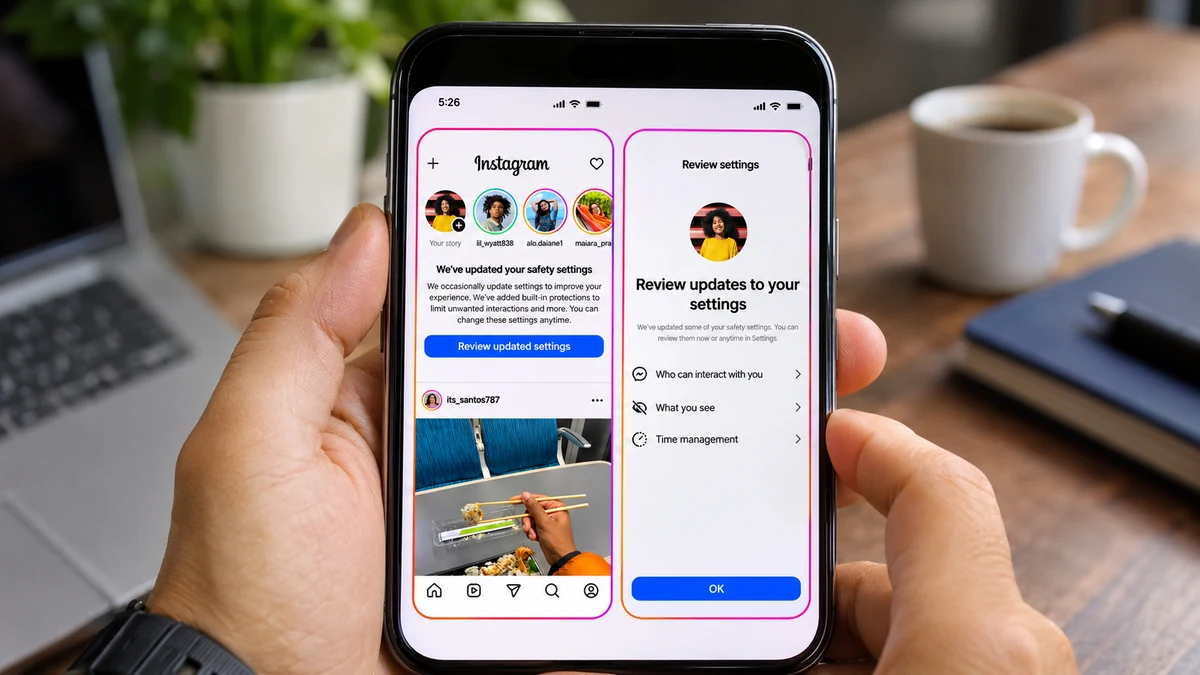
Instagram AI age checks are expanding worldwide as Meta moves to identify more teenagers who register with adult birth dates. The company announced the expansion on Nov. 9, saying millions more users will automatically receive Teen Account protections. The rollout comes as Meta faces lawsuits alleging its social media platforms harm young users.
The technology estimates whether an account belongs to someone under 18, even when the registered birth date suggests otherwise. According to Meta’s official announcement, the expansion will extend existing safeguards to teenagers who might otherwise avoid age-based restrictions.
How Instagram AI Age Checks Identify Teenagers
Meta uses artificial intelligence to assess whether an Instagram account likely belongs to a teenager. The system examines contextual signals rather than relying exclusively on the birth date provided during registration. Accounts identified as belonging to users aged 13 to 17 can be placed under Teen Account restrictions.
In a May 2026 technical update, Meta explained that its age-assurance systems analyze information such as profile descriptions, posts, captions and references to school grades. The company also described visual analysis that looks for general age-related clues in images. Meta said that process does not use facial recognition to identify individuals.
The company distinguishes between identifying teenagers who qualify for restricted accounts and detecting children below its minimum permitted age. Instagram generally requires users to be at least 13, although some countries require a higher minimum age. Instagram may remove accounts believed to belong to younger children or subject them to additional age-verification requirements.
What Changes Under Instagram Teen Accounts?
Instagram Teen Accounts apply safeguards designed to reduce unwanted contact and exposure to potentially inappropriate content. These include private-account defaults, tighter messaging restrictions and limitations on sensitive material. Time-management features also encourage teenagers to take breaks from the platform.
Meta provides parental supervision tools that can help families manage teenagers’ Instagram experiences. Younger teenagers need parental permission to relax certain protective settings. The worldwide age-detection expansion is intended to apply these safeguards even when users provide inaccurate birth dates.
The technology still depends on estimates rather than direct confirmation of every user’s age. Incorrect classifications remain a concern, so clear age-verification and correction procedures are important for affected account holders.
Meta Adds Apple Age Signals and Parent Notifications
Meta is also introducing additional ways to establish users’ ages. In Australia, the company has begun using Apple’s age-range signal, which can provide developers with age-category information from a device’s account setup. Meta says this offers another way to determine whether an Instagram user qualifies for age-restricted experiences.
During November, parents in the United States will begin seeing an Instagram video explaining Meta’s age-assurance approach. The information will describe how teenagers receive protections and how parents can help ensure their children’s registered ages are accurate.
The company is continuing to expand its age-estimation technology on Facebook. It also plans to begin introducing similar capabilities globally on Threads before the end of 2026.
Legal Pressure Intensifies Over Teen Safety
The announcement follows growing legal scrutiny of Meta’s approach to protecting minors. Lawsuits have alleged that features on Instagram and Facebook contribute to harmful experiences among young users, including concerns involving compulsive use and mental health. Those allegations should be distinguished from established findings about the effects of particular platform features.
In August 2026, Meta reached settlements worth up to $18 billion with nearly every U.S. state and territory over claims concerning harm to teenagers. The agreements included commitments to improve the company’s ability to identify teenagers and children younger than 13.
Meta also reached a settlement in October with a teenage plaintiff involved in a Los Angeles trial concerning allegations that Instagram and Facebook were designed to encourage addictive use. The broader legal debate continues to examine whether existing platform safeguards adequately protect children and teenagers.
Age Estimation Raises Privacy and Accuracy Questions
Automated age detection challenges social media platforms. Companies need to distinguish adults from minors without collecting sensitive personal information unnecessarily. AI estimates can reduce dependence on self-reported birth dates, but they do not eliminate the possibility of mistakes.
Meta has argued that app stores should play a greater role in age verification, allowing developers to receive consistent age-range information. Its Australian implementation provides an example of that approach. However, the effectiveness of such systems depends on reliable age signals and how consistently platforms apply them.
The latest expansion marks a broader shift toward automatic age-based protections rather than relying only on users to disclose their ages accurately. Its impact will depend on how reliably Instagram identifies teenagers, handles incorrect classifications and enforces restrictions. Meta has not provided independently verified global accuracy figures for the expanded system.