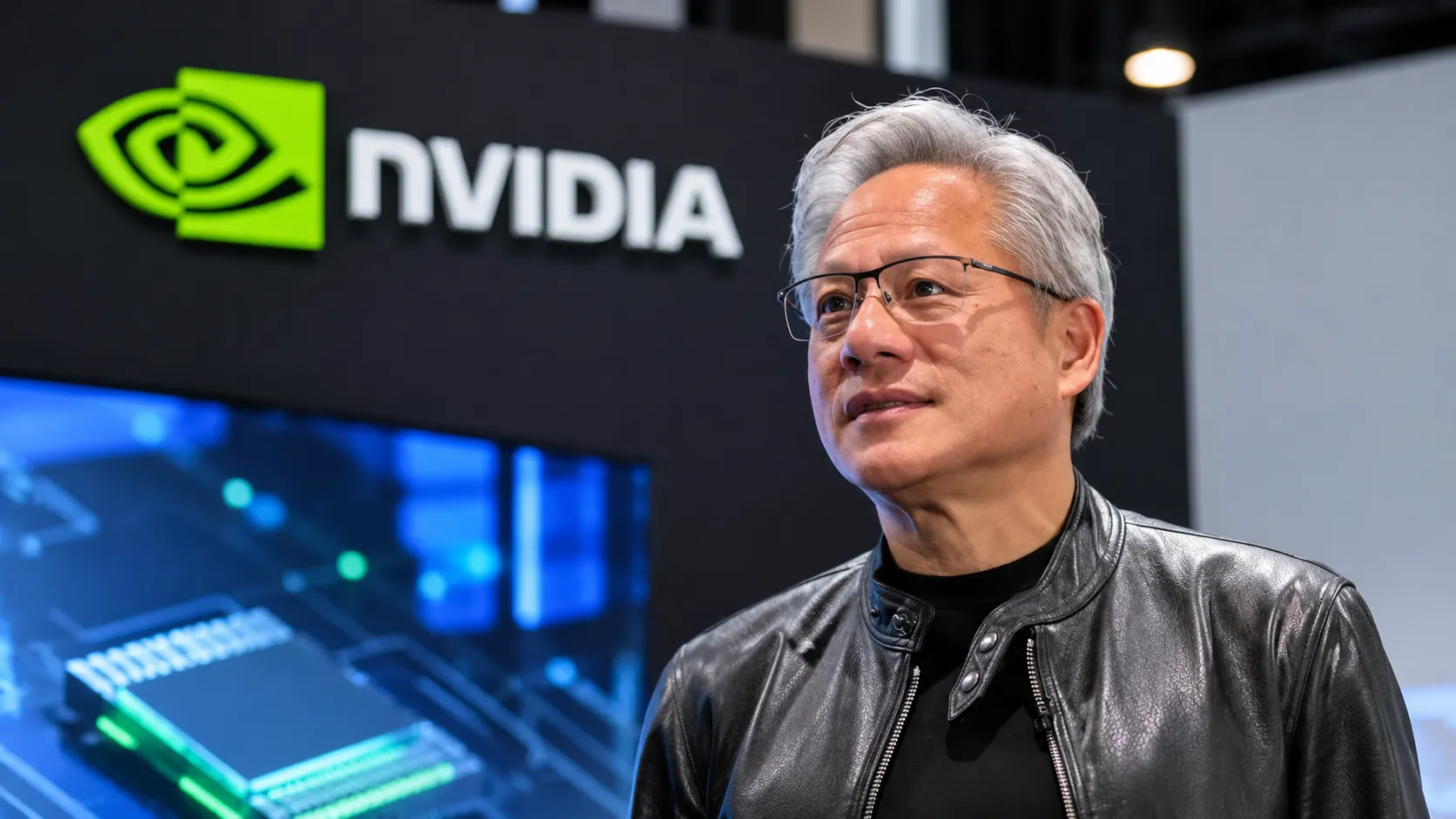
Wall Street rebounded Monday, Nov. 9, as investors returned to technology stocks following a difficult week for artificial intelligence companies. However, Nvidia shares fell sharply after the chipmaker announced an investigation involving CEO Jensen Huang. The decline contrasted with gains across major U.S. stock indexes and much of the semiconductor industry.
At 9:46 a.m. Eastern, the Dow Jones Industrial Average was up 1.27%, while the S&P 500 gained 1.48%. The Nasdaq Composite advanced 1.87%. Nvidia was down approximately 5.6% as investors assessed uncertainty surrounding the company’s leadership and the broader outlook for AI investment.
Why Nvidia Shares Fell Despite the Market Rally
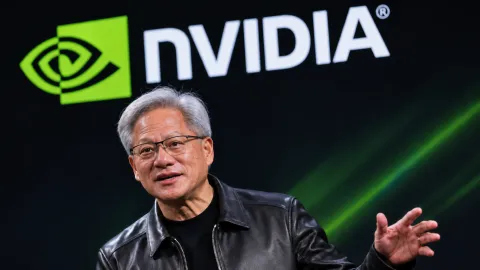
Nvidia’s decline followed a November 8 announcement that its board had initiated an independent investigation. The inquiry concerns reports that a foreign intelligence effort may have targeted Huang. Independent directors and outside legal counsel will oversee the review.
The company said it had no reason to believe national security or Nvidia’s confidential information had been compromised. Its board also expressed confidence in Huang and the leadership team. Huang has agreed to cooperate with the investigation, and Nvidia said it would provide further updates when appropriate.
The announcement introduced uncertainty around one of the technology industry’s most influential executives. Huang co-founded Nvidia in 1993 and has overseen its growth into a leading supplier of AI computing hardware. Investors are closely watching whether the investigation could affect corporate governance, strategic decisions or future regulatory scrutiny.
Semiconductor Stocks Recover After Last Week’s Selloff
While Nvidia remained under pressure, several other semiconductor companies recovered as investors returned to technology shares. Marvell Technology gained approximately 5%, while Broadcom advanced 6.5% during morning trading. The Philadelphia Semiconductor Index rose 3.3%, reversing part of the previous week’s losses.
The rebound followed the semiconductor index’s steepest weekly decline since March 2025. Last week’s selling reflected concerns about expensive AI valuations, future infrastructure spending and possible restrictions affecting data center development.
Major cloud computing companies also advanced, with gains ranging from approximately 2.5% to 5%. Their performance suggested that investors were distinguishing Nvidia’s company-specific uncertainty from the financial prospects of other businesses supporting AI infrastructure.
AI Spending and Regulation Remain Market Concerns
Political developments added another layer of uncertainty to technology stocks. Following the Democrats’ victories in the U.S. midterm elections, investors began reassessing the possibility of stricter oversight of AI infrastructure and data center construction.
Analysts at Morgan Stanley and UBS suggested that last week’s selloff may have been excessive. They questioned whether fears of sweeping restrictions on data center development would translate into significant regulatory changes.
Nevertheless, the long-term profitability of AI infrastructure remains an important consideration. Large technology companies continue investing in processors, electricity supply and computing facilities. Investors want clearer evidence that revenue from AI services can justify those substantial expenditures.
A sustained reduction in spending by major cloud providers could affect semiconductor demand. That possibility remains particularly relevant to Nvidia because its accelerated computing platforms are widely used to train and deploy advanced AI models.
Inflation Data Could Influence the Next Market Move
Investors also awaited the October Consumer Price Index report, scheduled for Tuesday, Nov. 10. Economists expected annual inflation of approximately 2.7%, making the report an important indicator for the Federal Reserve’s next monetary policy decision.
Stronger-than-expected employment data had already increased concerns about a potential December interest rate increase. Higher borrowing costs can place additional pressure on growth-oriented technology valuations, particularly when future earnings expectations account for much of a company’s market value.
Corporate earnings offered some support to sentiment. According to LSEG data cited by Reuters, 82.4% of the 335 S&P 500 companies reporting results through Thursday had exceeded analysts’ expectations. Investors were also monitoring upcoming results from companies connected to energy, investment and AI infrastructure.
What Investors Are Watching Next
Monday’s advance demonstrated that interest in technology stocks had not disappeared after the previous week’s losses. However, Nvidia’s weakness showed how company-specific developments can weigh on a major AI supplier even when the wider market strengthens.
Upcoming developments include findings from Nvidia’s independent investigation, inflation data, and corporate earnings updates. Together, they could help determine whether the semiconductor recovery develops into a sustained rebound or remains a temporary response to last week’s sharp decline.