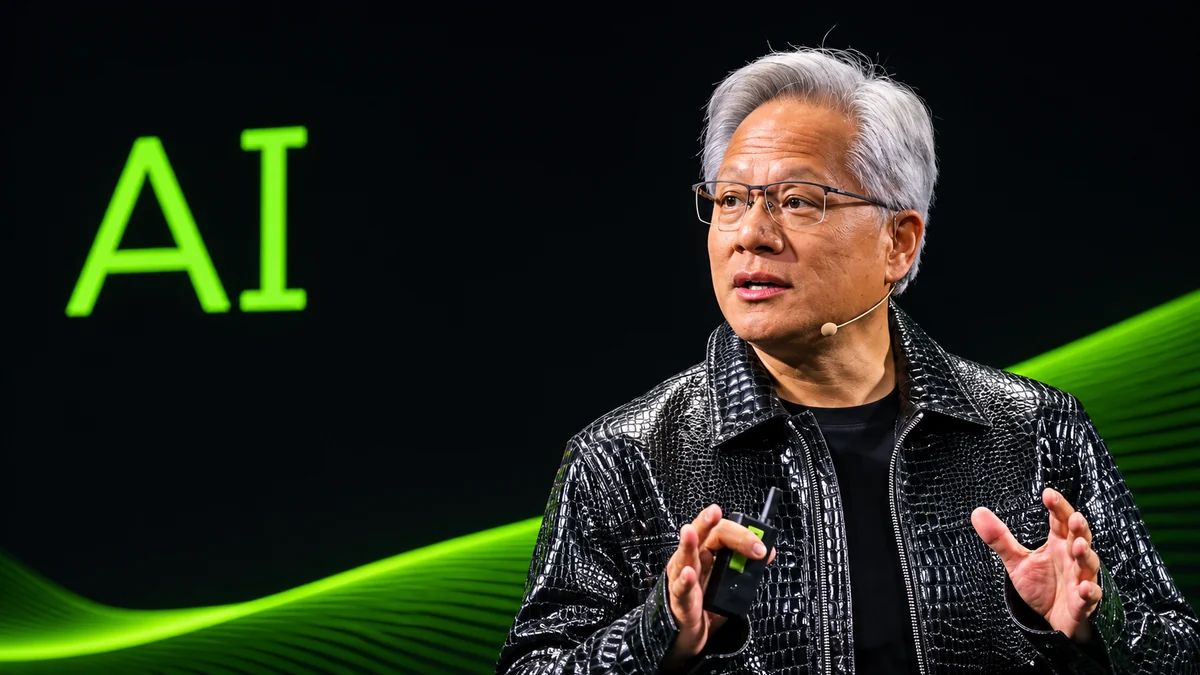
Nvidia China chip shipments worth at least $7.5 billion have come under scrutiny following allegations involving CEO Jensen Huang and a Chinese businesswoman. The Information reported Tuesday, November 10, that a network associated with Alice Huang helped move advanced Nvidia processors to Chinese companies. The report cited two people familiar with her activities.
The allegations raise questions about Nvidia’s export-control compliance and oversight of its international distribution network. They also come as Washington restricts China’s access to advanced American artificial intelligence chips. Reuters said it could not independently verify The Information’s findings.
How the Reported Nvidia China Chip Shipments Worked
According to Reuters, Alice Huang and members of her family established business connections across China and Singapore to acquire Nvidia processors. The reported network included Shanghai Century Litong, a Chinese company founded in June 2023.
The Information reported that Century Litong obtained preferred cloud partner status with Nvidia by October 2023. That arrangement allegedly gave the company priority access to Nvidia hardware. Alice Huang reportedly used relationships with Nvidia and distributors to obtain chips when orders encountered U.S. export restrictions.
The network allegedly helped route approximately 240,000 Nvidia H100, H200 and some A100 processors into China. The reported shipments were valued at no less than $7.5 billion. These figures remain allegations rather than independently established transaction totals.
Cloud Providers and Data Centers Under Scrutiny
The reported network extended beyond direct hardware purchases. Century Litong allegedly operated data centers and rented computing capacity using Nvidia processors, including equipment restricted from sale to China.
Some computing resources reportedly reached Alibaba, Tencent and smaller Chinese AI laboratories. Singapore-based Megaspeed also appeared in the reported distribution network. Its Malaysian subsidiary, Speedmatrix, allegedly acquired hardware that later reached Century Litong.
The distinction between physically transferring chips and providing remote computing access matters for export enforcement. Regulators must establish where restricted hardware was delivered, who controlled it and whether applicable licensing requirements were violated. Renting computing capacity does not automatically establish an export-control violation.
Why Advanced AI Chips Face U.S. Export Restrictions
Nvidia’s H100 and H200 processors support intensive AI workloads, including training and operating large language models. The older A100 also provides substantial parallel computing capacity. Their capabilities make these processors valuable for commercial AI development and advanced research.
Washington has imposed restrictions on exports of certain advanced semiconductors and related technology to China. The rules aim to limit access to computing resources that could support military applications and other national security concerns.
The U.S. Bureau of Industry and Security administers export controls covering advanced computing technology. Whether a particular transaction requires authorization depends on the chip, destination, end user and applicable rules at the time.
The reported shipments therefore raise a broader compliance question: whether intermediaries obtained restricted technology through arrangements that concealed its eventual destination. The allegations alone do not establish that Nvidia knowingly authorized unlawful exports.
Nvidia Board Investigation and Federal Scrutiny
Nvidia’s board launched an internal investigation following reports that Jensen Huang may have been targeted by a foreign intelligence operation. The FBI is also examining the matter.
Alice Huang has been described in reporting as a suspected Chinese intelligence operative. That allegation has not been publicly established as fact. The investigation must distinguish any potential intelligence activity from the separate questions surrounding chip purchases and distribution.
Jensen Huang acknowledged an extramarital relationship in communications with employees but did not disclose its details. Nvidia has said it has no reason to believe national security information or company secrets were compromised, according to Associated Press reporting.
Reuters reported that Nvidia had not immediately responded to its request for comment on the chip shipment allegations. Alibaba, Tencent, Megaspeed and Century Litong were also unavailable for immediate comment when contacted.
Market Reaction and Corporate Governance Questions
Nvidia shares declined more than 4% on Monday before extending their losses Tuesday. The selloff reflected investor concerns about potential regulatory consequences, leadership risk and the company’s exposure to geopolitical tensions.
The controversy also highlights Nvidia’s dependence on Jensen Huang, whose leadership has shaped its position in AI computing. Any prolonged investigation could create uncertainty around corporate governance and relationships with major customers.
For Nvidia, the central issue extends beyond its chief executive’s personal conduct. Investigators must determine whether the reported transactions occurred, how the companies obtained the processors and whether export controls were breached.
The outcome remains uncertain. The board investigation and federal examination could clarify the alleged distribution network and any compliance failures. Until corroborating evidence emerges, the $7.5 billion figure and claims concerning individual involvement should be treated as attributed allegations, not proven findings.