Birdbuddy Nook and Home bring faster cameras, AI bird identification, and lower prices to smart bird feeders. Both models capture visiting birds and deliver photos, videos, and notifications through the Birdbuddy app. The $99 Nook targets beginners, while the $219 Home offers solar charging and greater seed capacity.
Launched on October 22, 2026, the new feeders replace Birdbuddy’s older Pro lineup. Their redesigned cameras support wider landscape views and faster livestream access. However, image quality, charging convenience, and the cost of premium app features are worth considering.
Birdbuddy Nook and Home: Design and Camera Upgrades
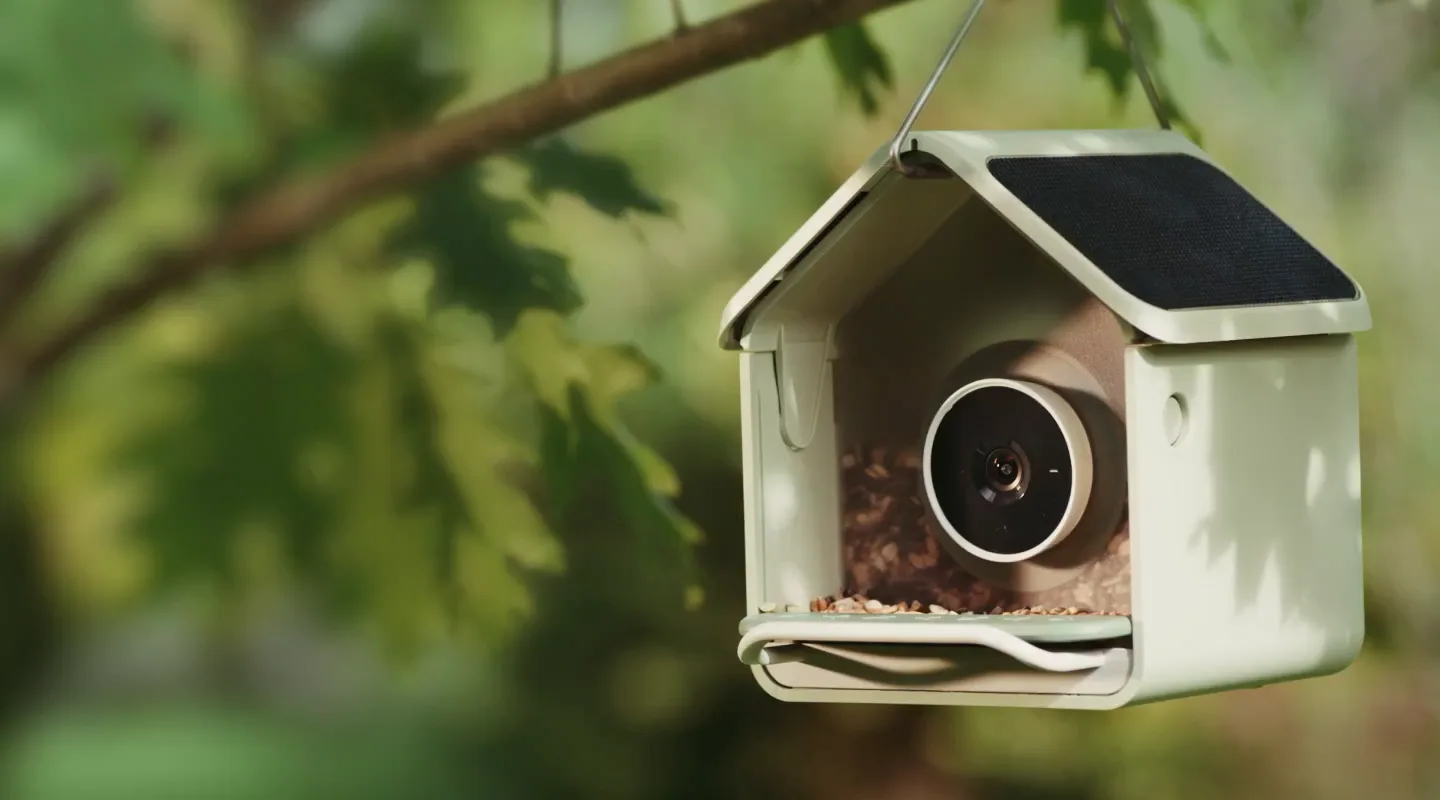
Both feeders feature a redesigned circular camera with a 135-degree field of view. Users can position the camera horizontally or vertically, depending on their preferred framing. The wide landscape view captures more surrounding activity, while portrait mode emphasizes birds approaching the feeder.
Birdbuddy’s launch announcement says the cameras support 2K HDR recording, instant wake-up, and continuous capture. These features aim to reduce missed visits and improve livestream responsiveness.
There is one specification worth clarifying. Birdbuddy’s Nook product page currently describes Full HD video, despite the company’s broader 2K HDR marketing. Buyers should confirm the available recording resolution before purchasing.
The faster camera system offers a practical advantage. Birds often stay at feeders for only a few seconds. A shorter delay between opening the app and viewing the livestream can make those brief visits easier to watch.
Image quality remains a potential compromise. Independent testing of earlier Birdbuddy products has shown that automatic capture does not always record every visit. In its smart bird feeder comparison, WIRED reported missed visits with the Birdbuddy Home despite praising its design and app.
Birdbuddy Nook Offers Affordable Birdwatching
The Birdbuddy Nook starts at $99, making it the company’s most affordable smart feeder. Its compact design suits balconies, patios, and smaller backyards.
The Nook holds 3.8 cups of birdseed and supports 2.4GHz Wi-Fi. Its removable roof makes refilling straightforward. However, the smaller reservoir may require frequent attention in gardens with heavy bird activity.
The basic model uses a rechargeable battery. Birdbuddy also sells a $159 Nook Solar configuration with a solar roof. This reduces the need for manual charging when the feeder receives adequate sunlight.
The compact perch suits smaller birds better. Larger species may have less room to settle comfortably. An optional perch extender provides additional space but increases the overall cost.
For first-time buyers, the standard Nook offers the strongest value. It provides the main Birdbuddy experience without requiring a substantial investment in accessories.
Birdbuddy Home Focuses on Convenience
The Birdbuddy Home costs $219 and targets users who want less frequent maintenance. Its six-cup seed reservoir holds considerably more food than the Nook.
The roof integrates two solar panels. They help maintain the rechargeable 3,900mAh battery during regular use. However, cloudy weather, frequent livestreaming, and heavy bird activity can still require manual charging.
The Home also supports both 2.4GHz and 5GHz Wi-Fi networks. This provides more connection options than the Nook’s 2.4GHz-only support. Actual connectivity still depends on signal strength and the feeder’s distance from the router.
Its larger seed tray and built-in perch extender accommodate a wider range of visiting birds. Birdbuddy also includes an improved microphone for recording bird sounds.
Both feeders carry IP67-rated camera protection. Their redesigned housings make seed refilling easier, but cleaning and charging remain part of regular ownership. Outdoor conditions can also affect how often maintenance is necessary.
AI Bird Identification and Subscription Costs
Artificial intelligence remains central to the Birdbuddy experience. The companion app collects photos and videos of visiting birds and helps users identify different species.
Users can view captured visits, access livestreams, and manually request AI identification without purchasing a premium plan. Advanced features require a subscription.
Birdbuddy’s membership details show that Individual Premium costs $69.99 annually. Family Premium costs $98.99 annually. Paid features include automatic enhanced identification, naming returning birds, additional AI tools, and higher-resolution viewing options.
These ongoing costs deserve attention, especially when evaluating the affordable Nook. Buyers interested mainly in photos and occasional identification may find the free experience sufficient.
Birdbuddy also reflects broader developments in connected camera technology. TechAmerica.ai has explored how AI-powered home cameras are moving beyond basic recording to recognizing activity and providing more useful notifications.
Pricing and Which Model Makes More Sense
Birdbuddy offers three main purchasing options. The standard Nook costs $99, the Nook Solar costs $159, and the Home costs $219. Orders placed through Birdbuddy’s website are scheduled to begin shipping in November 2026.
The Nook Solar narrows the price gap considerably. Buyers considering additional accessories should compare their total cost against the Home’s larger reservoir and integrated solar system.
For small outdoor spaces, the Nook remains the more economical choice. The Home suits established birdwatchers who regularly attract visitors and want fewer refills.
Final Verdict
Birdbuddy Nook and Home make smart birdwatching more accessible through lower prices and improved camera responsiveness. Both offer useful AI features, flexible camera positioning, and straightforward app connectivity.
The $99 Nook stands out for its affordability and compact design. It delivers the essential experience without the expense of a larger feeder. The $219 Home adds meaningful convenience through solar charging, dual-band Wi-Fi, and greater seed capacity.
Neither model eliminates the limitations of camera-based birdwatching. Missed visits, variable image quality, subscription costs, and outdoor maintenance remain relevant concerns.
For newcomers, the Nook is the more sensible purchase. The Home becomes worthwhile when its larger capacity and reduced charging demands match the buyer’s needs. Existing Birdbuddy Pro owners should weigh those conveniences against their current camera quality before upgrading.