

































Smartphone Buying Guide 2026: What to Check Before You Buy
The 2026 smartphone buying guide explains RAM, storage, cameras, battery, display, processors, AI features, and updates to help you choose the right phone.
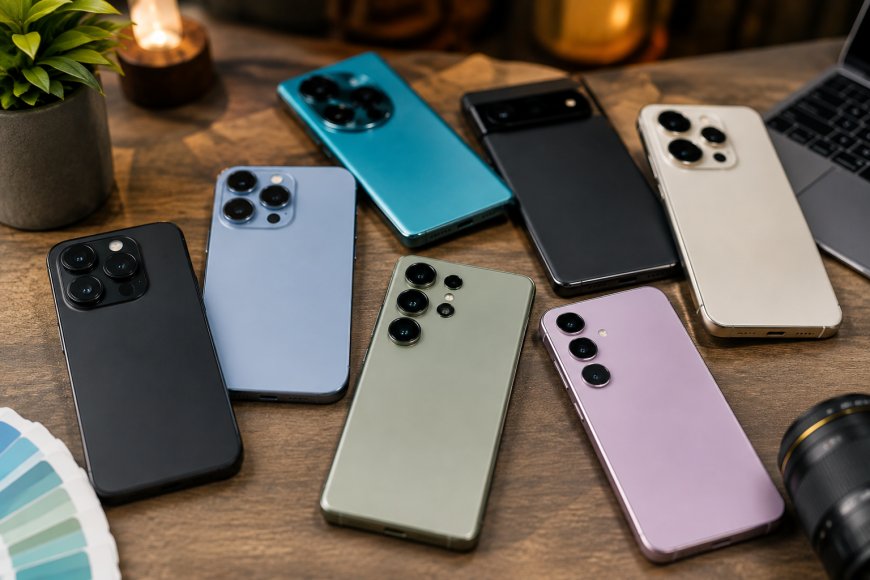
Buying a smartphone in 2026 is more complicated than comparing megapixels, RAM or processor names. Phones across nearly every price range now advertise AI features, high-refresh-rate displays, large batteries and increasingly capable cameras.
The better approach is to decide what matters in how you actually use a phone, then spend on those features instead of chasing the longest specification sheet.
Here is what buyers should check before choosing their next smartphone.
1. Set Your Budget Before Comparing Phones
Start with the maximum amount you are comfortable spending.
Budget phones have improved significantly, while midrange devices increasingly offer features that were previously associated with flagships. Premium phones still provide advantages in areas such as camera versatility, processing power, materials and long-term support, but not every buyer needs them.
Think about the total cost as well. A charger, protective case, screen protection, additional cloud storage, or an extended warranty can increase the actual purchase price.
2. Don’t Buy a Phone Based on RAM Alone
More RAM can help with multitasking, gaming and keeping applications active in the background, but RAM capacity alone does not determine performance.
Processor efficiency, storage speed and software optimisation matter too.
For mainstream buyers, 8GB of RAM is a sensible target on many Android phones in 2026. Power users and gamers may benefit from 12GB or more depending on the device and workload.
iPhones should not be compared directly to Android phones based solely on RAM numbers, as the operating systems manage memory differently.
3. Choose Enough Storage for Several Years
Storage is becoming increasingly important as camera files, videos, games and applications grow larger.
A 128GB phone can still work for lighter users, particularly when photos and videos are regularly backed up to the cloud. For someone planning to keep a device for several years, however, 256GB offers considerably more breathing room.
Heavy gamers, creators, and users who record large amounts of high-resolution video may need 512GB or more.
Also check whether the phone supports expandable microSD storage. Many premium devices do not.
4. Processor Names Don’t Tell the Whole Story
A flagship processor is useful for demanding gaming, video editing and other intensive workloads, but everyday activities rarely require the fastest chip available.
Midrange processors can comfortably handle messaging, social media, navigation, streaming, banking and routine photography.
Look beyond benchmark scores. Sustained performance, thermal management and power efficiency can have a greater impact on everyday experience than a short benchmark result.
5. Look Beyond Camera Megapixels
A 200-megapixel camera is not automatically better than a 50-megapixel camera.
Sensor size, lens quality, image processing, stabilisation, and low-light performance all affect the final photograph.
If photography matters, examine results from the main camera, ultrawide and telephoto lenses separately. Portrait quality, skin tones, moving subjects and nighttime photography are also worth checking.
Video buyers should consider stabilisation, microphone quality, resolution, and frame-rate options.
Recent testing illustrates how differently flagship cameras can perform despite impressive specifications on paper. Current camera-focused rankings include devices from Apple, Samsung and Google, with different strengths in photography, zoom, computational processing and video.
6. Battery Life Matters More Than Battery Capacity
A 6,000mAh battery does not guarantee longer runtime than a well-optimised phone with a smaller battery.
Display efficiency, processor design, modem performance and software optimisation all influence battery life.
Look for independent battery tests rather than relying entirely on advertised capacity.
Charging speed also deserves attention, particularly if you frequently need quick top-ups. Check whether the advertised charger is actually included in the box.
7. OLED and 120Hz Are Worth Considering
Display quality affects almost everything you do on a smartphone.
OLED panels generally provide excellent contrast and deep blacks, while a 120Hz refresh rate can make scrolling and animations appear smoother.
But brightness is equally important. A display that looks impressive indoors can become difficult to read in strong sunlight.
Resolution, HDR performance, minimum brightness and PWM behaviour may also matter depending on your preferences.
8. Software Updates Can Determine How Long a Phone Lasts
Software support should be treated as a major buying specification, especially if you plan to keep the phone for four or five years.
Google, for example, officially provides seven years of OS and security updates for Pixel 8 and later phones, measured from their initial U.S. Google Store availability.
Other manufacturers have also extended support on selected devices.
Before buying, check the update policy for the exact model rather than assuming every phone from the same brand receives identical support.
A slightly more expensive device with substantially longer security support can sometimes represent better long-term value.
9. Don’t Buy AI Features Just Because They Say “AI”
Artificial intelligence has become one of the smartphone industry’s biggest marketing themes.
Modern phones can offer AI-assisted photo editing, transcription, translation, search, writing tools and personal assistants. Some are genuinely useful.
But buyers should ask three questions: Is the feature available in my country and language? Does it work on-device or require the cloud? Will it remain free?
A flashy AI demonstration should not outweigh fundamentals such as battery life, camera quality, reliability and software support.
10. Check Connectivity Before Importing a Phone
An attractive overseas price can quickly become a poor deal if the device lacks important network bands or local features.
Check 4G and 5G compatibility with your carrier, physical SIM and eSIM support, Wi-Fi standards, Bluetooth, NFC and USB capabilities.
Imported phones can also have different warranty terms, software features and regional restrictions.
11. Decide Whether You Really Need a Foldable
Foldable smartphones have matured considerably and can offer excellent multitasking and large-screen productivity.
They also remain substantially more expensive than conventional smartphones in many cases. Samsung’s Galaxy Z Fold 8 Ultra, for example, launched as a premium foldable with an 8-inch inner display and a price above many conventional flagships.
Before buying one, consider repair costs, durability, thickness, weight and whether you will genuinely use the larger folding display.
12. Buy for Your Use Case
There is no single best smartphone for everyone.
For photography, prioritise camera consistency, sensor performance, telephoto capability, and image processing.
For gaming: focus on sustained processor performance, cooling, display response and battery life.
For business, prioritise security, software support, battery reliability, and connectivity.
For content creation, consider video quality, stabilisation, microphones, and storage.
For everyday use, a balanced midrange phone often delivers better value than an expensive flagship.
For long-term ownership, prioritise software support, battery health, build quality, and sufficient storage.
The Bottom Line
The best smartphone purchase in 2026 is not necessarily the device with the largest camera count, the most RAM, or the highest benchmark score.
Start with your budget and intended use. Then compare display quality, real-world performance, cameras, battery life, storage, connectivity, and software support commitments.
Most importantly, avoid paying extra for features you are unlikely to use.
A smartphone that matches your needs and remains secure and reliable for several years is usually a better purchase than a more expensive model bought simply because it has the most impressive specification sheet.
What's Your Reaction?
 Like
0
Like
0
 Dislike
0
Dislike
0
 Love
0
Love
0
 Funny
0
Funny
0
 Angry
0
Angry
0
 Sad
0
Sad
0
 Wow
0
Wow
0