

AI
Claude Fable 5.1 Is Out, And You Must Read About It
Claude Fable 5.1 explained, covering AI benchmarks, biological research, safety findings, hidden-task tests, watermarks, costs, and new capabilities.
102 articles · page 4 of 9 · showing 37 to 48
Claude Fable 5.1 explained, covering AI benchmarks, biological research, safety findings, hidden-task tests, watermarks, costs, and new capabilities.
The US government has filed a brief supporting OpenAI’s position that using copyrighted works to train AI models can qualify as fair use.

AI training-data startup AfterQuery reportedly reaches a $3.2 billion valuation, becoming Y Combinator’s fastest startup to reach unicorn status.

Anthropic launches Fable 5.1 with lower token costs, fewer false-positive safeguards, privacy updates, and improved AI benchmark performance.

GLM 5.3 Flash explained, the free open AI model that gained massive usage through OpenRouter with efficient design, low costs, and powerful features.

GPT 6 Astra could challenge Opus 5.1 with stronger reasoning, coding and agentic capabilities, potentially reshaping the race among the leading AI models.

A large language model explained simply, including how tokens, training, transformers, attention, parameters, and human feedback make AI assistants work.
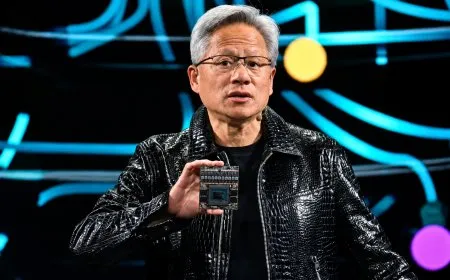
Nvidia is reportedly in talks to acquire Hugging Face for $12.9 billion, strengthening its position in open-source AI and developer tools.

Former Meta AI researchers launched Perceptron and its Isaac 0.5 model to help industrial robots understand environments using advanced visual AI.

Gemma 4 explained, from its multimodal AI design and open weights to vision capabilities, small model efficiency, and why it challenges larger systems.
DeepSeek V4 Pro explained, from its efficient architecture and pricing to benchmarks, open models, and why it is changing how AI systems compete fast.
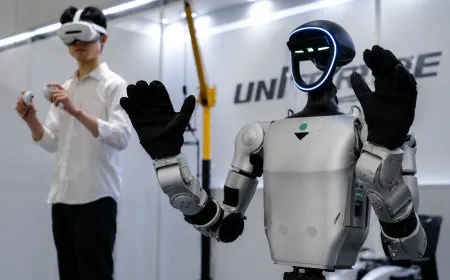
Physical AI startups are building better robot brains as companies tackle challenges in training data, simulation, and real-world deployment.