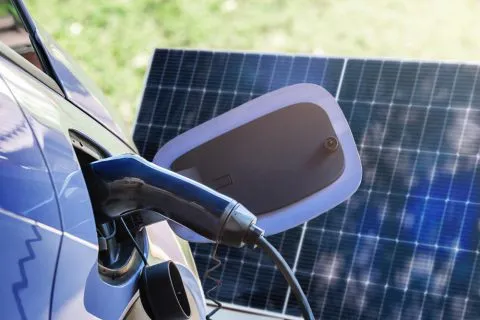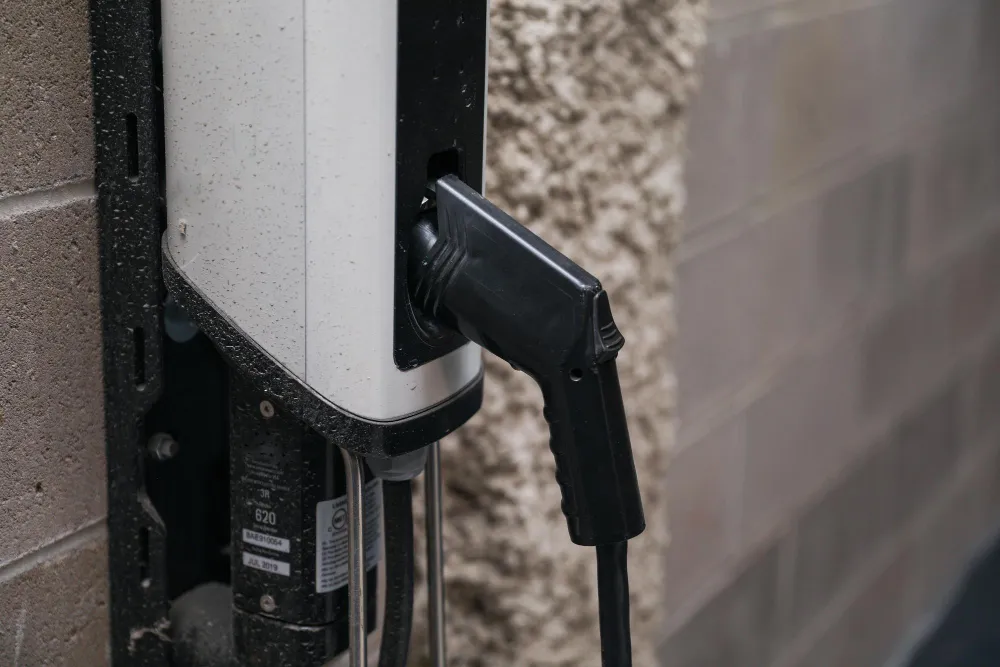
J3400 vs J1772 is now a practical question for households with more than one electric vehicle. A family might own a car with a J1772 charging inlet and another with the compact J3400 connection. Both can use Level 2 alternating-current charging, but a plug designed for one inlet will not physically fit the other without suitable equipment.
One response is a charging station with an integrated adapter or a connector arrangement designed to serve both types. That solves the basic plug mismatch, not every charging problem. The cable still has to reach the car, the electrical circuit must be able to supply the load, and the vehicle must accept the power being offered. Safety and communication matter just as much as the shape of the connector.
J3400 vs J1772: What is the actual difference?
J1772 is a North American interface long used for Level 1 and Level 2 AC vehicle charging. Its familiar connector has power and signaling contacts arranged in a larger, round housing. J3400 describes a smaller North American coupler design commonly known as NACS. It can support AC charging and, in a suitable system, DC fast charging using the same principal power contacts.
Those different shapes don’t mean one standard uses a fundamentally different kind of household electricity. With compatible equipment, either can deliver AC power for conversion inside the vehicle. The physical connection, inlet design and permissible operating conditions must match, but the charging rate still depends on more than the connector.
The federal explanation of the J3400 connector describes the relationship between J3400 and J1772 and explains that adapters can bridge their AC charging interfaces. The distinction between AC charging and DC fast charging is essential when interpreting that compatibility.
Why universal home charging needs an adapter
A household may want to charge vehicles through different stages of the connector transition. Replacing the entire wall station whenever the family changes cars would be inconvenient and costly. A properly designed adapter lets you connect an AC charging cable to a vehicle with a different inlet.
Some charging stations store the adapter in a dock and let the driver withdraw the appropriate plug configuration. Others use a separate approved adapter carried with the vehicle. Either approach must maintain the required electrical contacts, mechanical retention and safety signaling. An adapter is not simply a plastic sleeve that makes two shapes look alike.
Universal describes supported connector arrangements, not permission to charge every vehicle at every available power level. An older inlet, an incompatible adapter or a vehicle-specific restriction can still prevent a session. Users should check the exact charging equipment, adapter and vehicle documentation before relying on an advertised compatibility claim.
How an integrated connector adapter works
In an integrated design, the station normally keeps an adapter attached to or stored with the charging handle. The user chooses the connector that matches the vehicle and removes it from the dock. A retaining mechanism may keep the adapter securely coupled during charging and prevent casual removal while the system is energized.
The critical engineering task is maintaining stable contact pressure and alignment across every electrical and signaling connection. Loose or worn interfaces increase resistance and can create localized heating. Mechanical locks and detection features help the equipment recognize a correctly assembled connection before it permits charging to start.
Integrated storage also helps prevent an adapter from being lost in a shared garage. Yet a built-in adapter can still be damaged, contaminated or improperly seated. Its latch and contacts require inspection according to the equipment instructions, especially at locations where several drivers handle it every day.
What happens before electricity reaches the battery?
When the driver inserts a compatible connector, the vehicle and the charging station first establish the connection state. Control-pilot signaling communicates whether a vehicle is attached and indicates the AC the charging equipment can offer. The vehicle’s charging system then decides whether and how much current to draw within that limit.
Only after the relevant conditions are met does the charging station enable its power-switching equipment. The vehicle’s onboard charger converts the supplied alternating current into direct current for its battery. The station’s advertised output is therefore an upper limit, not a command requiring the car to take that full amount.
An adapter for the two AC connector types must preserve the necessary electrical and signaling paths. It does not increase the home’s voltage, upgrade the vehicle’s onboard charger or eliminate safeguards. A connector that physically fits is only the first requirement for a successful charging session.
Why AC adapters cannot be treated as DC fast-charging adapters
The same J3400 inlet can be used in different charging situations, but the equipment behind the connector determines whether it supplies AC or DC. A residential Level 2 station uses AC. A high-power roadside fast charger supplies controlled DC and follows different electrical, communication and safety requirements.
An adapter intended to let a J3400 AC charging handle fit a J1772 inlet is not a substitute for a DC fast-charging adapter. It should never be used in an application outside its stated ratings or approved purpose. Confusion becomes especially risky when the same vehicle can accept multiple charging methods through a shared inlet.
The federal charging-adapter guidance emphasizes vehicle-specific compatibility and properly qualified adapters. The right question is not only which plug fits, but whether that particular combination is approved for the charging mode and vehicle involved.
Does a different connector change Level 2 charging speed?
Under typical North American residential conditions, Level 2 charging is supplied at 240 volts. The station communicates a permissible current, and the vehicle draws up to its own supported limit. At 32 amps, the nominal electrical input is about 7.7 kilowatts. At 48 amps, it is about 11.5 kilowatts before conversion losses.
Neither figure guarantees the rate of energy entering the battery. The vehicle may have a lower onboard charger limit, and battery management, temperature, and charging settings can affect actual performance. Connector selection does not override any of those constraints.
A higher-current configuration also requires a suitable electrical installation. Continuous charging loads are subject to applicable circuit-sizing and protection rules. Homeowners should use a qualified electrician for load calculations, circuit selection and commissioning rather than treating the maximum setting as a do-it-yourself upgrade.
How one station can serve several household vehicles
A single-port wall station can have more than one supported connector configuration without charging two cars simultaneously. If the household owns two vehicles, drivers can connect them in turn. Cable reach and the parking layout determine whether that arrangement is convenient.
Where two vehicles need to charge at the same time, a property may require separate charging ports or multiple stations. Some compatible installations support power sharing, with controls dividing the available capacity across active sessions. The allowed aggregate load must stay within the electrical design, rather than assuming each station can deliver its maximum at once.
That distinction matters in apartment buildings, workplaces, and private garages. An installation that permits two physical connectors is not necessarily a two-port charging system. Buyers should check the number of independently usable ports, how they operate simultaneously, and any supported load-management features.
Smart charging features do not solve connector incompatibility
Connected charging stations can offer scheduling, energy-use records, access restrictions and remote settings. Wireless connectivity may make those features more convenient, and software can help coordinate equipment across a property. It does not alter the physical charging inlet or turn an unsupported adapter into an approved one.
For load management, the important issue is how the charger responds when another appliance increases household demand or when a network connection fails. Safety-related current limits should remain enforceable under the system’s documented operating conditions. Scheduling and mobile-app features have different reliability requirements from the electrical protections that govern power delivery.
The official home charging guide describes features such as current adjustment, power sharing, energy tracking and scheduled charging. Evaluate these features based on a home’s actual electrical capacity and daily driving needs, not simply the number of options available in an application.
What can go wrong at the connector and cable?
A damaged handle, bent contact or poorly seated adapter can interrupt charging. Water, grit and repeated mechanical stress may affect the connector over time, even when equipment is rated for outdoor use. The cable also has to be routed so people do not trip over it and vehicles cannot crush it while parking.
Excessive heat near an electrical connection is a warning sign, not a nuisance to ignore. Some devices monitor selected temperatures or fault conditions and respond by reducing or stopping power. Those protections supplement correct installation and maintenance; they do not justify using an unapproved adapter or a visibly damaged cable.
A station with a long lead may reach several parking positions, but extra length creates storage and handling needs. Cables should be hung or managed according to the equipment instructions, without tight bends, sharp edges or repeated abrasion against the ground.
Compatibility must include the vehicle model and charging mode
Charging standards describe interfaces, but real vehicles are produced with different inlet types and software capabilities. Model year, market and equipment configuration can affect what the driver needs. An adapter suitable for one vehicle may not be authorized for another, even when both have similar-looking charge ports.
The safest check starts with the vehicle’s actual inlet and documented AC charging limit. Next, check thestation’ss connector, supported current, and approved adapter list. For shared parking, operators should also consider how drivers recognize which configuration to use and whether they can remove the adapter without damaging its locking mechanism.
Recent government guidance on connector interoperability recognizes both J1772 and J3400 in North America and emphasizes safe use of the existing charging infrastructure during the transition. It is not a blanket statement that every accessory works with every vehicle.
How to assess installation and total ownership costs
A household comparing connector options should start with the equipment it already owns. If its existing, properly installed station can meet daily charging needs through an approved adapter, replacement may not offer a meaningful benefit. The case changes when multiple vehicles have different inlets or when shared access becomes inconvenient.
Installation cost includes the station, mounting location, cable route, electrical capacity review, protective devices and any required permits. A connector adapter does not remove the need for a compliant circuit. A more complex connected installation can add commissioning and maintenance work, even when its power output is unchanged.
For property managers, the long-term considerations include damaged or missing adapters, user instructions, shared-current settings and how replacement vehicles will be accommodated. Good compatibility planning reduces avoidable changes, but it should never rely on assuming a future vehicle will support a feature that hasn’t been confirmed.
Will one connector eventually replace adapters?
North American charging hardware is moving toward a more standardized J3400 interface, while many vehicles already on the road use J1772 for AC charging. That overlap creates a practical reason for dual-compatible stations and adapters. It does not establish an exact date when older inlets will disappear from the vehicle fleet.
Newer standards and compatible equipment can reduce the need for adapters over time. Improvements in connector design, communication interoperability and charge management may also help shared sites support more vehicles. Those developments will still require testing, qualified equipment and clear instructions for drivers.
J3400 vs J1772 is ultimately a compatibility decision, not a contest between two charging speeds. The best home setup connects the vehicles that actually use it, stays within safe electrical limits, and handles the routine details of parking, cable reach, and reliable charging without unnecessary complexity. Readers can find broader electric mobility coverage in the transportation technology section.