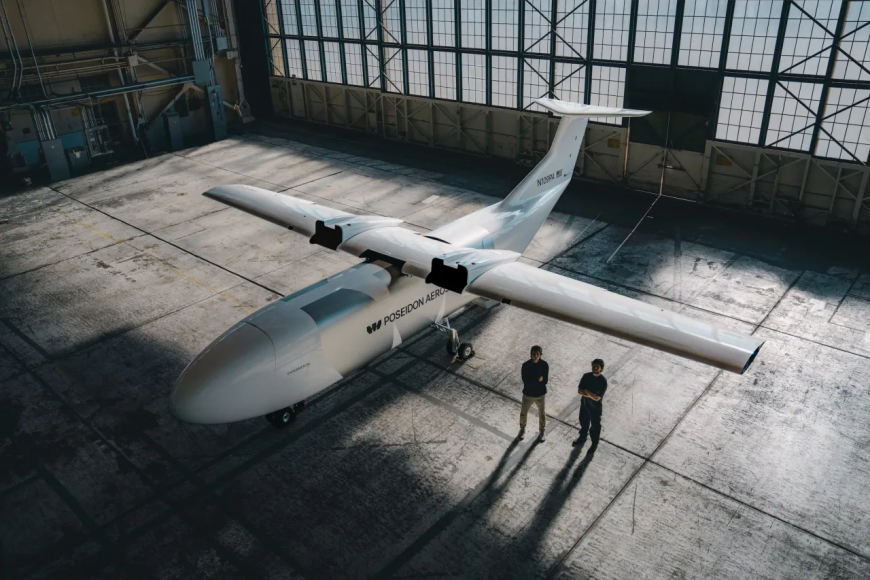
Poseidon Aerospace has raised $60 million in Series A funding as the company prepares for the first test flight of its uncrewed cargo aircraft, Egret, expected by the end of this year.
The round follows an earlier $11 million seed investment and will help the startup expand development of autonomous cargo aircraft to reduce the cost of regional air logistics. The company’s mission is to move freight more efficiently rather than develop expensive new aviation technologies.
Building Autonomous Cargo Aircraft
CEO David Zagaynov and co-founder Parker Tenney founded Poseidon Aerospace after identifying an opportunity to improve cargo transportation through automation and simpler aircraft designs.
The company is avoiding some of the approaches used by many advanced air mobility startups. Instead of vertical takeoff systems or electric and hydrogen powertrains, Poseidon is developing fixed-wing aircraft powered by conventional combustion engines.
The startup’s Egret aircraft and its seaplane variant, Heron, are designed around autonomy and remote operation. Poseidon says removing the need for onboard pilots could cut operating costs and let aircraft spend more time transporting cargo.
Defense and Commercial Cargo Markets
Poseidon is initially targeting defence applications and regional commercial cargo operations. The company is designing aircraft to serve remote communities and areas with limited traditional air cargo infrastructure.
For commercial operations, Poseidon plans to operate its own regional air cargo network instead of selling aircraft. The company aims to compete for logistics demand from major cargo operators and businesses.
Preparing for First Flight
Poseidon previously developed and tested a smaller-scale version of its aircraft called Seagull before moving toward a full-size vehicle. The company has expanded operations into a former Navy hangar in Alameda, California, as it prepares for production and flight testing.
The company previously announced its $11 million funding round to support the development of unmanned cargo aircraft technology.
Poseidon has also shared details about its aircraft development through a video presentation showing its approach to autonomous cargo aviation.
A Changing Aviation Landscape
Poseidon is entering an aviation market where regulators have become more open to testing new aircraft technologies. The Federal Aviation Administration has introduced programs supporting emerging aviation companies, creating more opportunities for startups developing new aircraft systems.
The company believes autonomous cargo aircraft could create a more flexible logistics network by allowing routes to change more easily based on demand without the limitations of traditional pilot-based operations.