Agility Robotics is expanding its commercial ambitions with the opening of a new 60,000-square-foot training facility in Fremont, California, positioning itself just a short distance from Tesla’s manufacturing operations, where production of the Optimus humanoid robot is expected to begin this year. The move places one of the earliest commercial humanoid robotics companies in the heart of Silicon Valley’s growing robotics ecosystem.
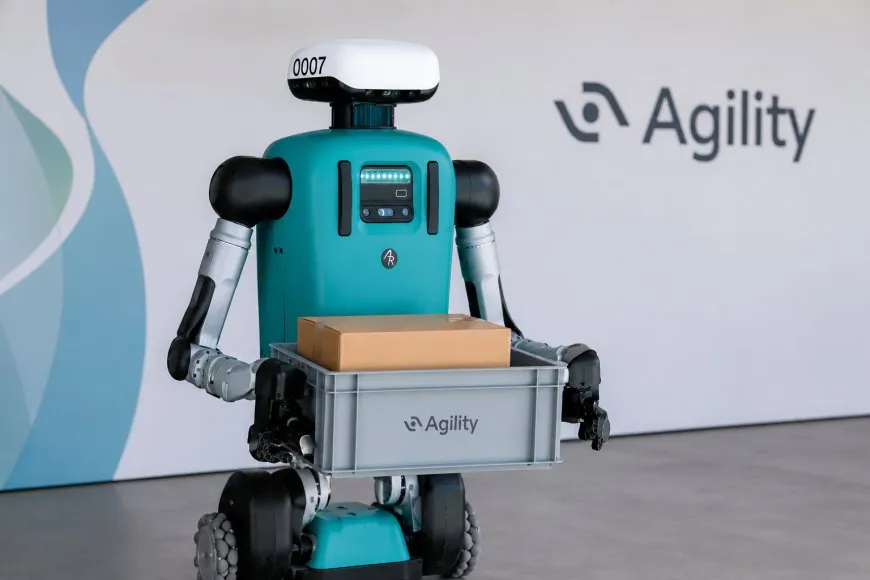
While Tesla continues to promote Optimus as a future mass-market product, Agility Robotics already has its Digit robot operating in real-world industrial environments. The company says Digit is being used by customers, including Amazon, GXO, Schaeffler, and Toyota Motor Manufacturing Canada, to transport totes and bins inside manufacturing plants and warehouses. According to Agility, it has secured approximately $300 million in contract orders for its robots.
Chief Executive Peggy Johnson said the growing number of companies entering the humanoid robotics sector is a positive development, noting that Agility has already gained valuable experience deploying robots in commercial facilities. The company has spent years working through customer safety requirements, regulatory compliance and integration with warehouse management and IT systems, giving it practical experience beyond prototype demonstrations.
Although Agility has not disclosed how many Digit robots it has produced, industry observers estimate that dozens have already been deployed through pilot programmes and commercial projects. The company has previously said that its robots have moved more than 100,000 totes at a GXO logistics facility, demonstrating that the technology is already generating operational value.
Founded in 2015 by robotics researchers specialising in bipedal locomotion, Agility is also preparing to become the first publicly traded company focused exclusively on humanoid robots through a planned reverse merger later this year. The company is aiming to maintain its lead over newer rivals,als including Figure, 1X, Bot Company,pany and Sunday Robotics,t,ics as advances in artificial intelligence accelerate competition across the industry.
Agility’s leadership believes generative AI will play an important role in expanding robot capabilities, but not in safety-critical systems. Co-founder and chairman Damion Shelton said core safety functions must remain separate from generative AI, comparing the approach to anti-lock braking systems in autonomous vehicles. Instead, the company sees AI helping developers create a much wider range of robotic applications without requiring engineers to programme every individual task manually.
The new Fremont facility is intended to accelerate customer deployments by enabling Digit robots to learn new skills in environments that closely resemble real warehouses and manufacturing sites. Johnson said more than 30 prospective customers are currently discussing deployments with the company, making additional testing and training capacity increasingly important.
Unlike several competitors pursuing household humanoid robots, Agility remains focused on industrial applications. Executives argue that today’s humanoid robots are better suited to controlled workplace environments than to private homes. The upcoming fifth-generation Digit robot, expected to be introduced later this year, will include improved human-detection capabilities, allowing it to work more safely alongside people rather than remain in dedicated robot-only zones.
Agility believes manufacturing and logistics alone offer enough opportunity to support long-term growth. Company executives envision expanding beyond moving totes and bins into tasks such as picking, kitting, handling cardboard packaging and loading or unloading trailers, creating a large potential market before considering consumer applications.