The Nasdaq 100 decline has put more than $2 trillion in market value at risk in October as investors question the cost of artificial intelligence expansion. The technology-heavy index was down more than 5.8% for the month as of Friday’s trading, according to Reuters. Earnings from major technology companies have intensified concerns about whether AI investments can produce returns quickly enough.
The selloff comes as Meta, Alphabet and Amazon increase spending on data centers, computing equipment and other AI infrastructure. Those investments support expanding cloud businesses, but they also consume enormous amounts of cash. Investors are paying closer attention to how companies intend to finance their expansion and when the spending will translate into sustainable profits.
Nasdaq 100 Decline Reflects Growing AI Investment Concerns
The October downturn marks a change in how Wall Street is assessing the AI boom. Investors had previously rewarded companies for announcing ambitious infrastructure plans. Now, larger spending commitments are attracting greater scrutiny, especially when paired with weaker cash flow or disappointing results in established businesses.
Alphabet suffered its largest one-day percentage share-price decline on record Thursday after weaker-than-expected search advertising results and accelerating cash outflows. The reaction showed how quickly sentiment can change when heavy AI investment coincides with pressure on a company’s core operations.
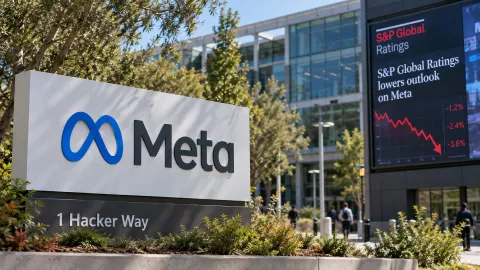
Meta also unsettled investors with plans to raise a record $97.5 billion. The proposed financing has raised questions about future borrowing requirements and possible shareholder dilution. Both concerns grow when companies must keep investing before their new infrastructure generates substantial earnings.
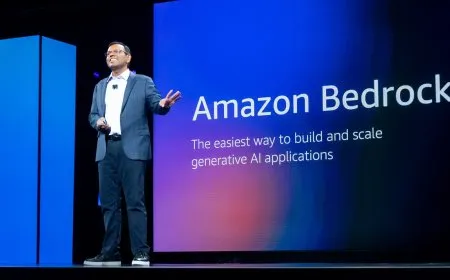
Amazon faces similar scrutiny. Its cloud business continues to expand, but the company is committing substantial resources to new computing capacity. As TechAmerica.ai reported, Amazon expects approximately $220 billion in capital expenditure during 2026, with further increases anticipated next year.
Rising Borrowing Costs Complicate Big Tech Expansion
Artificial intelligence infrastructure requires significant upfront investment. Companies must buy advanced processors, build data centers, secure electricity supplies, and build the networking systems needed to run large computing clusters. Much of that expenditure occurs before the facilities begin generating revenue.
Technology companies have historically financed expansion through operating cash flow. However, the scale of current AI projects is making debt markets more important. Microsoft is reportedly considering a roughly $25 billion bond offering, while other major technology companies have already raised substantial amounts through borrowing.
Higher financing costs can make these investments harder to justify. Companies that borrow heavily must cover interest payments while continuing to maintain and upgrade infrastructure. If AI revenue develops more slowly than expected, those obligations could place additional pressure on free cash flow.
Credit investors are also reassessing the risks. Greater dependence on borrowing could expose even highly profitable technology companies to changes in interest rates and market conditions. The concern is not necessarily that these businesses cannot finance their projects, but that financing them may become increasingly expensive.
AI Infrastructure Spending Could Exceed $1 Trillion
The AI investment cycle is becoming difficult to ignore. Morgan Stanley expects annual spending on AI infrastructure to exceed $1 trillion in 2027, according to Reuters reporting. J.P. Morgan estimates that global AI capital expenditure will reach approximately $900 billion in 2026 and $5.5 trillion by 2030.
J.P. Morgan analysts also estimate that spending by Amazon, Alphabet, Meta, Oracle and Microsoft this year could equal their combined capital expenditure since ChatGPT launched in November 2022. That comparison illustrates how dramatically the industry’s investment requirements have increased.
The spending extends beyond semiconductor purchases. Data center construction, power generation, cooling equipment and telecommunications networks are becoming central parts of the AI economy. These projects require long-term commitments, even as the commercial demand for individual AI products continues to evolve.
The central financial question is whether businesses and consumers will purchase enough AI services to support those investments. Earlier TechAmerica.ai coverage of AI infrastructure economics examined the substantial revenue required to justify large-scale computing expansion. That challenge is becoming more important as companies accelerate their investment schedules.
Strong Cloud Revenue Offers Some Reassurance
Despite the market downturn, major technology companies are not seeing a broad revenue collapse. Amazon Web Services continues to benefit from strong demand for cloud computing and AI workloads. Meta has reported better-than-expected advertising growth, while Microsoft expects continued expansion in its cloud business.
Microsoft and SpaceX also delivered results that offered investors some evidence of returns from AI-related spending. Their performance contrasts with the negative reaction to other technology earnings and suggests that the market is distinguishing between companies rather than rejecting AI investment altogether.
Strong revenue growth, however, does not automatically guarantee attractive returns. Investors must consider how much capital a company spends to achieve that growth and how quickly it can recover the investment. A business can increase sales while generating less free cash flow if infrastructure costs rise even faster.
This distinction matters for AI data centers, where expensive hardware may require replacement or upgrades as technology advances. Sustained profitability will depend on utilization rates, customer demand, operating expenses and the useful life of installed equipment.
Apple and Nvidia Earnings Could Shape Market Sentiment
The next major earnings releases will provide more evidence of the technology sector’s health. Apple is scheduled to report next week, while Nvidia’s results are expected in mid-November. Investors will look to both companies for signs of shifting demand and the financial effects of AI investment.
Nvidia’s earnings will be especially relevant because its processors remain central to large-scale AI computing. Strong chip demand could show that infrastructure buildout is continuing, though it would not resolve questions about the eventual profitability of those investments.
Apple’s results will offer a different perspective on technology demand, including consumer spending and the company’s broader hardware business. Together, the upcoming reports could help determine whether October’s selloff reflects a temporary reassessment of valuations or a more sustained change in investor expectations.
The Nasdaq’s October losses do not establish that the AI investment cycle has failed. They show that investors are demanding clearer financial evidence as spending commitments expand. For Big Tech, the challenge is increasingly about demonstrating that AI infrastructure can deliver returns commensurate with its enormous cost.