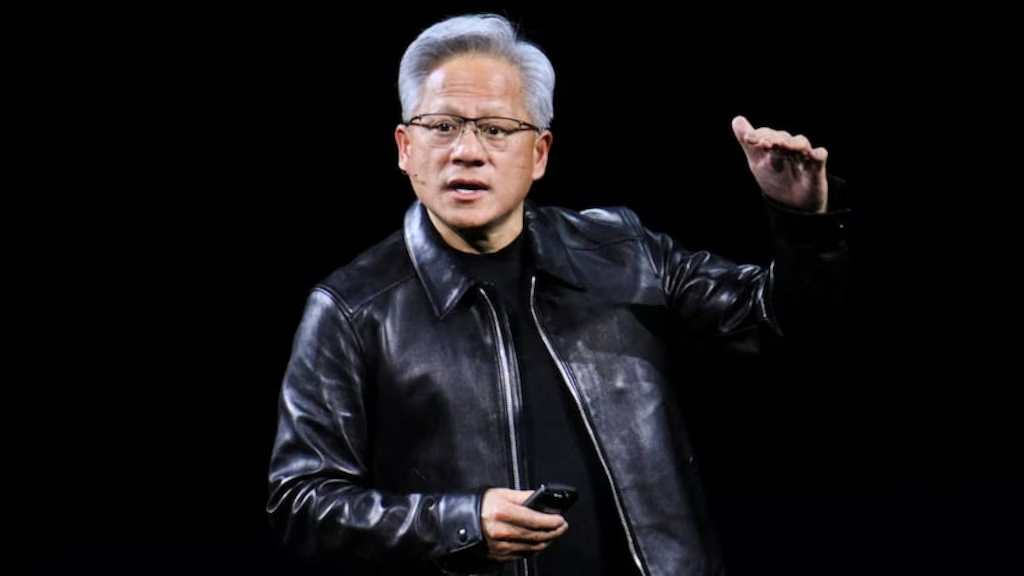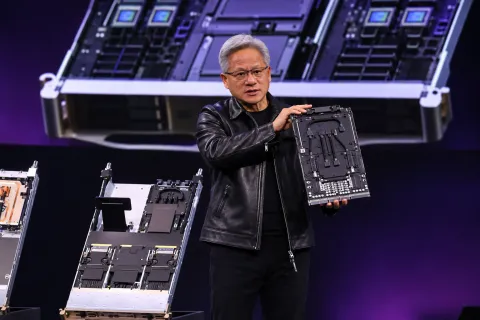
Wall Street rebounds sharply on Monday, November 23, 2026, as investors returned to artificial intelligence stocks following a punishing selloff. Nvidia led the recovery after the chipmaker reinstated Jensen Huang as chief executive, helping lift major U.S. indexes to their strongest daily performances in months.
The technology-heavy Nasdaq Composite surged approximately 6.5%, while the S&P 500 gained about 4.7% and the Dow Jones Industrial Average climbed roughly 3%. The advances followed a turbulent week when investors sharply reduced exposure to AI-related companies amid concerns about valuations, profitability, and regulatory restrictions.
AI Stocks Lead Wall Street Rebound
Technology shares drove Monday’s rally, reversing some of the heavy losses recorded during the previous week. Nvidia emerged as the central catalyst after announcing Huang’s return as chief executive, a move that helped restore investor confidence in the semiconductor industry.
The turnaround was particularly significant because Nvidia occupies a central position in the AI computing market. Its graphics processors power large-scale machine learning systems, data centers and many of the advanced AI models developed by leading technology companies.
Nvidia’s Leadership Reversal Sparks Buying
Nvidia’s decision to restore Huang as chief executive became a major turning point for investor sentiment. His earlier departure had intensified uncertainty surrounding the company’s leadership and its strategic direction during a period of heightened scrutiny of the AI industry.
The reinstatement helped ease immediate concerns about management continuity. Investors appeared encouraged by the prospect of renewed leadership stability at a company whose processors are widely used across the global AI infrastructure market.
The development also followed significant volatility in Nvidia shares. TechAmerica previously reported on Nvidia’s decision to reinstate Jensen Huang, including the board’s reversal and its implications for the company.
Although the announcement triggered substantial buying, the leadership change does not resolve the broader financial questions confronting AI companies. Investors must still assess whether spending on data centers, processors and advanced models will generate sustainable returns.
Why Technology Stocks Fell Last Week
The rebound followed one of the most difficult trading periods for technology stocks in recent years. Last week, concerns about the costs of expanding AI infrastructure contributed to a widespread retreat from semiconductor manufacturers and other technology companies.
The Nasdaq fell about 10% for the week, according to Reuters, while the S&P 500 and Dow entered correction territory. A market correction generally refers to a decline of at least 10% from a recent high.
Investors have increasingly questioned the relationship between AI capital expenditure and actual commercial returns. Major technology companies continue investing heavily in computing infrastructure, but the timing and scale of future profits remain uncertain.
Additional pressure came from concerns about U.S. semiconductor export controls and their potential effects on international sales. Restrictions on advanced AI chips can affect market access, customer demand and revenue expectations for semiconductor suppliers.
Wall Street Rebounds but Valuation Concerns Remain
Monday’s rally demonstrated how quickly market sentiment can reverse when heavily sold technology shares attract renewed demand. However, a sharp recovery does not necessarily establish that the previous decline has ended.
AI-related companies remain sensitive to changes in earnings expectations, capital spending forecasts and interest rates. Higher borrowing costs can further pressure businesses whose valuations depend heavily on projected future earnings.
The rapid expansion of AI infrastructure also creates uncertainty about long-term profitability. Demand for advanced processors remains important, but investors increasingly want evidence that AI deployment can produce consistent revenue and cash flow.
The market’s reaction suggests that Nvidia’s management stability remains closely connected to broader confidence in AI investments. Nevertheless, leadership continuity alone cannot determine the industry’s financial outlook.
What Investors Will Watch Next
Investors will now monitor whether the recovery continues beyond Monday’s trading session. Semiconductor earnings, data center spending, Federal Reserve policy expectations and developments in U.S. technology export restrictions could influence the direction of major indexes.
Market participants will also assess whether the rally broadens beyond the largest AI-related companies. A sustained recovery generally becomes more convincing when gains extend across multiple industries rather than depending primarily on a small group of technology stocks.
Monday’s surge offered investors relief after a difficult week and demonstrated the continuing influence of AI companies on U.S. equity markets. The more important question is whether improving sentiment will be supported by earnings growth and measurable returns on AI investment.