Lambda Surgical plans to begin a first-in-human urology study in November after receiving institutional review board approval, according to company officials. The Cambridge, Massachusetts-based startup will evaluate its LambdaGuide platform for 3D mapping and measurement of visible urinary anatomy.
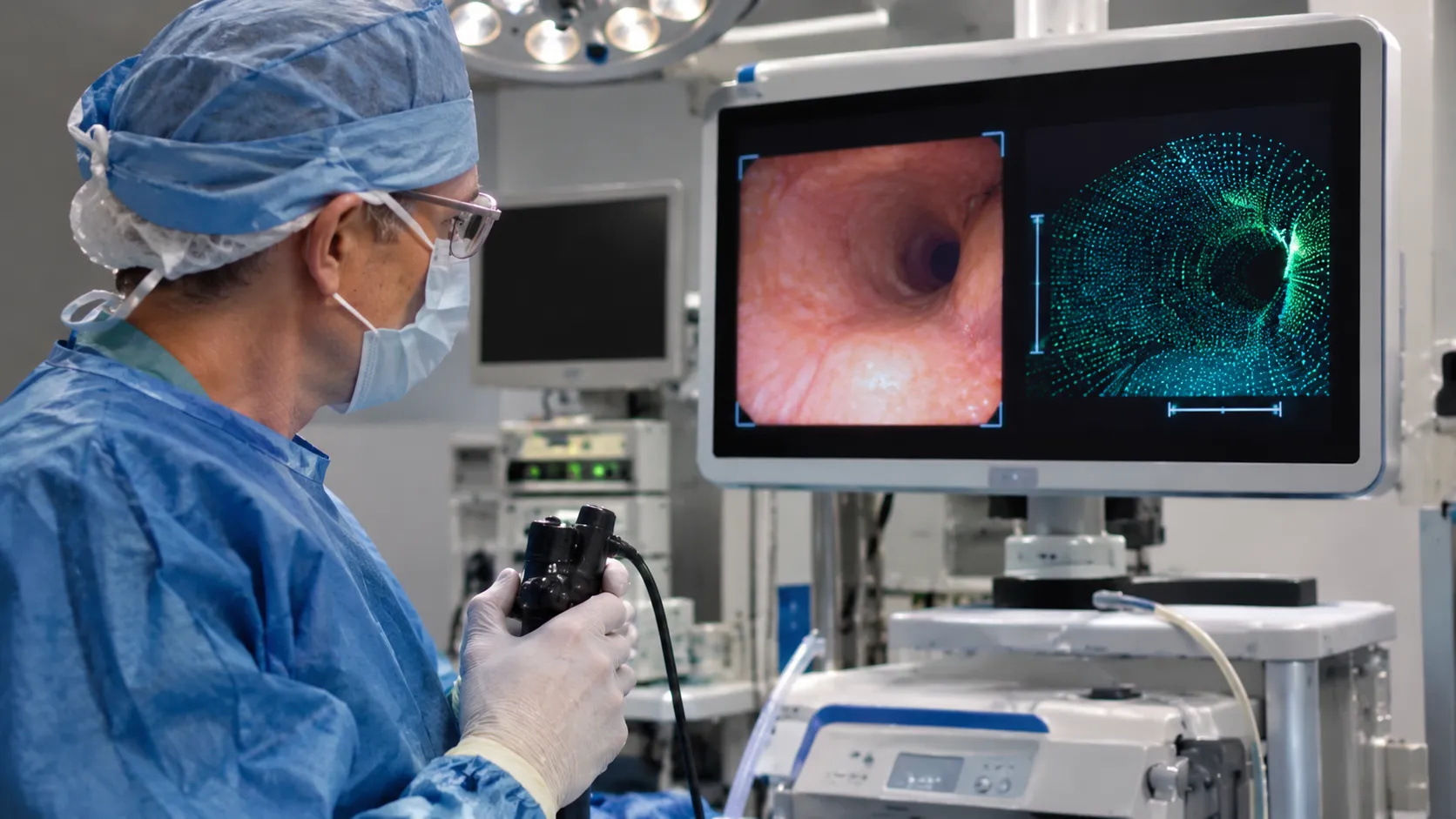
The study is planned at the Prostate Institution of New England in Boston. Chief Medical Officer Dr Louis Liou said the team will assess millimetre-scale measurements using LiDAR during endoscopy. No patient results accompanied the announcement.
The initial research will examine the technology’s measurement capabilities in patients. The reported approval concerns research under an approved protocol; it does not authorise commercial sales.
Lambda Surgical brings spatial measurement to endoscopy
LambdaGuide is designed to work with standard surgical endoscopes, adding spatial measurements to the images clinicians already use. The company describes its approach as compatible with existing workflows, without artificial markers or additional incisions.
Its technology uses a miniature time-of-flight sensing system to collect spatial information. In a company update, founder and CEO Roman Stolyarov said the platform measures the locations of millions of points each second. Those measurements are intended to support real-time anatomical mapping during procedures.
The company also announced cadaveric validation for presentation at the Society of Robotic Surgery meeting in July. That work provides development context, but testing in cadavers cannot establish how a device performs in living patients.
Accuracy claims require the same distinction. Lambda describes submillimeter spatial sensing as a capability of its technology. However, the announcement does not provide human-study results showing how consistently the platform achieves that performance during procedures.
Other developers are pursuing different ways to expand endoscopic capabilities. EndoQuest Robotics is preparing a flexible robotic platform for a potential U.S. launch, pending FDA authorisation. Its system supports surgical instrument control, while LambdaGuide’s announced study focuses on anatomical mapping and measurement.
Where better anatomical mapping could help
Surgical navigation depends on understanding both the visible anatomy and the position of instruments relative to it. Researchers are exploring several approaches to provide that spatial information through endoscopes.
At Johns Hopkins, engineers have investigated augmented endoscopy using computer vision for neurosurgical navigation. Their work addresses a practical problem: anatomy can shift during surgery, creating discrepancies with scans obtained before the procedure.
The researchers explored techniques from autonomous vehicle navigation to connect live endoscopic views with anatomical information. Their work is separate from LambdaGuide and does not validate Lambda’s device or its performance claims.
For Lambda Surgical, the disclosed first human study has a narrower scope: measuring observable urinary anatomy. Potential applications in orthopaedics, ear, nose and throat procedures, and robotic surgery remain separate development opportunities.
The broader regulatory landscape is also evolving. The FDA has prioritised surgical robot guidance addressing evidence and labelling for certain robotic systems. That initiative provides industry context, but it does not establish LambdaGuide’s regulatory classification or submission requirements.
What the study approval establishes
An institutional review board evaluates research involving human participants and provides continuing oversight. It can approve a proposed investigation, require changes or reject the protocol.
FDA requirements for device investigations depend on their risk classification. Significant-risk studies generally require an FDA-approved investigational device exemption and IRB approval. Nonsignificant-risk studies operate under abbreviated requirements.
The announcement did not identify the study’s risk classification or disclose a separate FDA investigational authorisation. The milestone should therefore be described as reported IRB approval for research, rather than FDA clearance of the product.
Several details needed to assess the investigation remain undisclosed:
- The enrollment target and patient eligibility criteria.
- The primary endpoint and reference method for checking measurements.
- The follow-up period and expected date for releasing results.
A study of anatomical measurements alone would not demonstrate fewer complications or faster recovery. Researchers would need to evaluate those outcomes directly. The announcement also does not establish that the platform can perform surgery autonomously.
Lambda Surgical announced a $6.5 million seed round in August, co-led by Long Journey and South Park Commons. In its funding update, the company identified an FDA submission as a development milestone. Commercial timing remains a company projection, with clinical testing and regulatory review still ahead.
Company officials outlined the first-in-human plans to MassDevice, which reported the IRB approval and planned Boston study. Liou said the team intends to share its findings with the FDA and the medical community after completing the investigation.