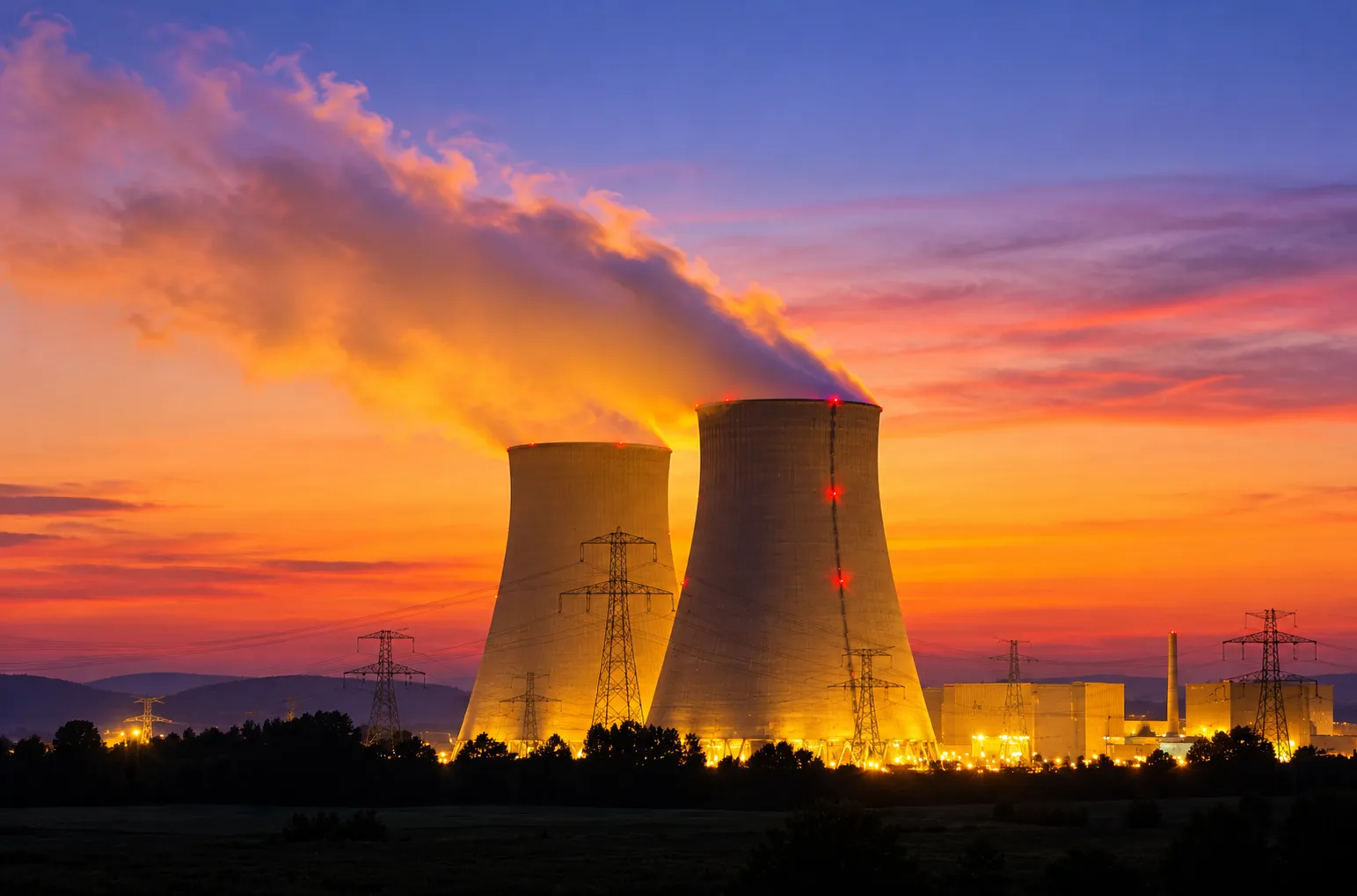
The Amazon Indiana nuclear project could bring 12 small modular reactors to a former coal power plant site, generating 960 megawatts of electricity. Amazon is financing development alongside American Electric Power (AEP) and nuclear technology company X-energy.
Announced October 19, the proposed facility would occupy land near the retired Breed Generating Station in Sullivan County, south of Terre Haute. AEP would operate the plant, while X-energy would supply its Xe-100 reactor technology. Amazon intends to purchase electricity through a long-term agreement.
The project remains in the feasibility stage, with construction dependent on further investment decisions and regulatory approvals. Unlike dedicated data center power plants, the facility would supply electricity to the regional grid while supporting Amazon’s computing operations.
Amazon Indiana Nuclear Project Targets 960 Megawatts
Each Xe-100 reactor is designed to produce 80 megawatts of electricity. Twelve units would provide nearly one gigawatt of generating capacity, using high-temperature gas-cooled technology and advanced TRISO nuclear fuel.
The Indiana agreement is Amazon’s second commercial project with X-energy. Their first partnership involves a proposed 320-megawatt facility in Washington state. The companies aim to deploy more than five gigawatts of new nuclear capacity across the United States by 2039.
Amazon previously backed X-energy’s fundraising efforts in 2024. The latest agreement reflects growing demand for reliable electricity as cloud computing and AI data centers expand.
X-energy Faces Regulatory and Construction Challenges
The Indiana development depends partly on X-energy proving its reactor technology at an earlier project in Seadrift, Texas. That facility would use four Xe-100 reactors to supply electricity and industrial heat to a Dow chemical plant.
X-energy has not started construction at Seadrift. Its construction permit application remains under review by the U.S. Nuclear Regulatory Commission.
The Dow complex is also facing environmental litigation. In February, Texas authorities sued the company, alleging repeated violations of water-pollution and industrial-waste regulations. The allegations concern existing chemical operations, not X-energy’s proposed reactors.
Small modular reactors are attracting investment from technology companies seeking dependable electricity. Google, for example, is supporting Kairos Power’s nuclear reactor development, while other technology companies are pursuing similar energy partnerships.
Developers hope standardized reactor designs and factory manufacturing will reduce construction costs and delays. However, the approach remains largely unproven at commercial scale, and manufacturing savings could take years to materialize.
X-energy went public in April 2026, with shares initially rising 27% above their $23 offering price. The stock later fell sharply as investors weighed the costs and uncertainties of bringing advanced reactors into commercial operation.
For Amazon, the Indiana agreement offers a potential long-term electricity source without reserving the plant exclusively for its data centers; whether the project proceeds will depend on financing, regulatory approval and X-energy’s ability to deliver its reactor technology.