The proposed Commonwealth Fusion Systems CHIPS Award could provide up to $85 million in federal funding for advanced semiconductors used in fusion power plants. The company announced Oct. 22 that it had signed a letter of intent with the U.S. Department of Commerce.
The funding would support semiconductor research and development under the CHIPS and Science Act. Under the proposed agreement, the federal government would receive a minority, noncontrolling and nonvoting equity stake in Commonwealth Fusion Systems (CFS).
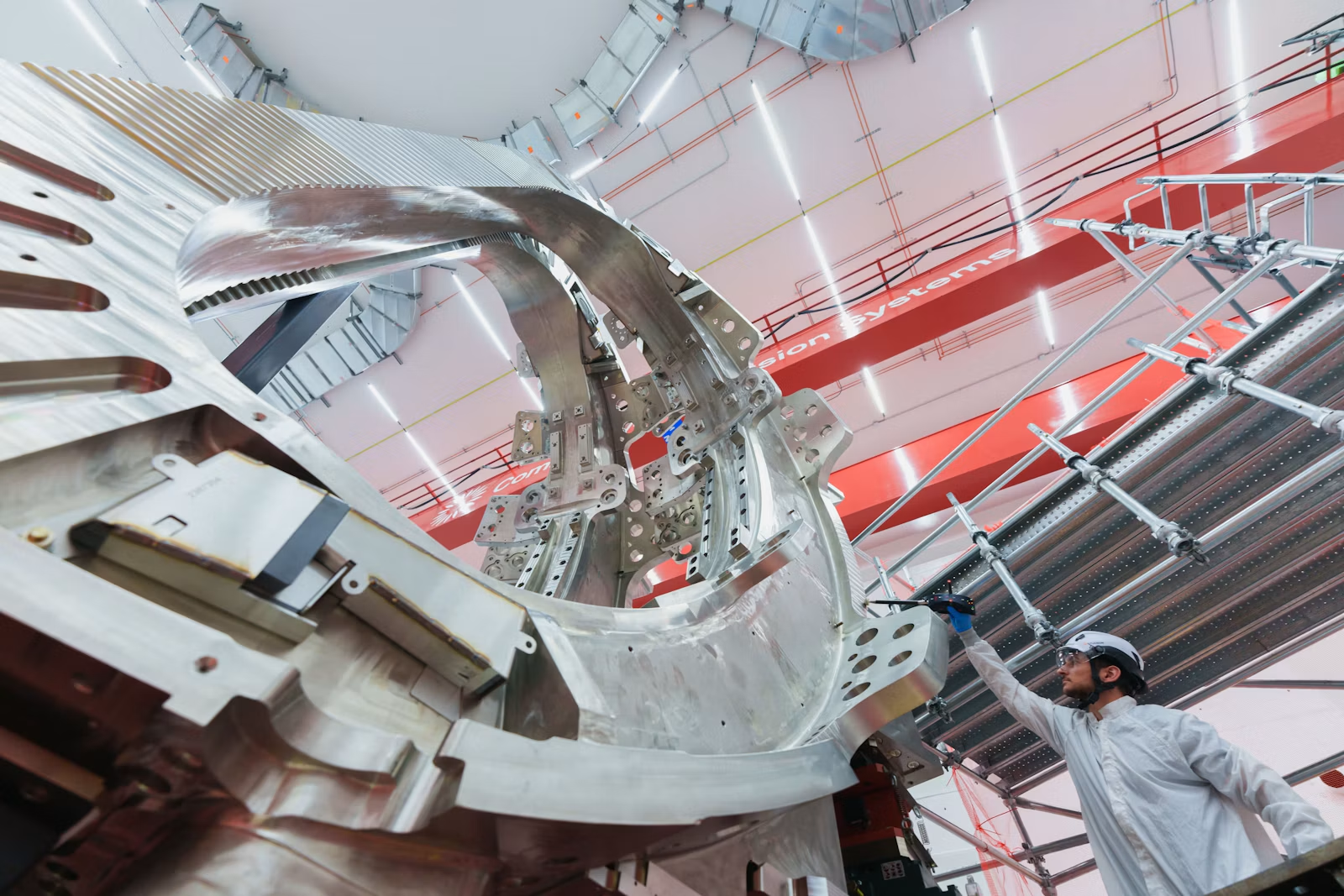
The Massachusetts-based fusion developer is building its SPARC demonstration reactor, with operations targeted for 2027. Its planned ARC power plants would eventually generate electricity for commercial use. Reaching that stage will require reliable power electronics and a stronger domestic supply chain.
Commonwealth Fusion Systems CHIPS Award Targets Five Technologies
CFS outlined five research priorities in its funding announcement. One focuses on silicon carbide power electronics, which can handle high voltages and demanding electrical loads. Fusion reactors use powerful electrical pulses to operate the superconducting magnets that confine plasma.
Another initiative would develop next-generation radio-frequency generators to heat fusion fuel. CFS also plans faster control electronics that can process reactor data and adjust operations more efficiently.
Radiation-resistant electronics represent a fourth priority. These components must withstand neutron exposure inside fusion facilities. Greater durability could reduce maintenance requirements and operating costs, particularly for future ARC plants.
The fifth initiative focuses on artificial intelligence. CFS plans to adapt graphics processing units and tensor processing units for reactor applications. AI-powered simulations and digital twins could improve performance analysis and help operators plan fusion experiments.
Brandon Sorbom, CFS co-founder and chief science officer, said the research could improve power plant economics while strengthening American semiconductor manufacturing. Some technologies could also benefit electric vehicles, industrial equipment and electrical infrastructure.
Federal Semiconductor Funding Supports Fusion Development
The CFS agreement forms part of a broader federal effort to expand domestic semiconductor capabilities. Another fusion developer, Helion Energy, announced a proposed $175 million CHIPS Act award for advanced power semiconductors.
Both companies face substantial engineering challenges before commercial fusion electricity becomes practical. Demonstration reactors must prove their technical performance, while future facilities will need durable components that can operate reliably at scale.
For CFS, the proposed investment would support technologies needed beyond its first experimental reactor. The company expects semiconductor improvements to help reduce costs and establish a more dependable U.S. manufacturing base for commercial fusion equipment.