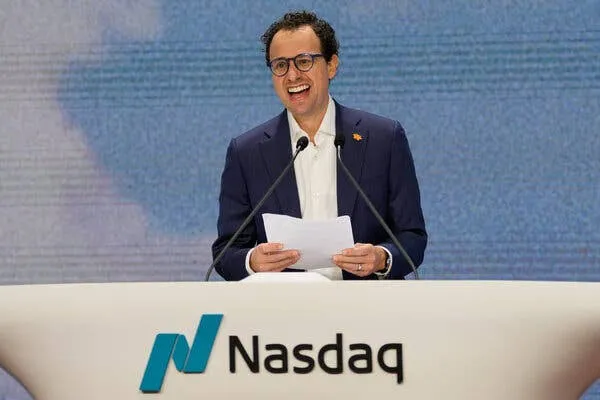
Anthropic IPO preparations placed unusual demands on Wall Street banks, with strict staffing limits, compressed deadlines and restrictions on access to sensitive financial information. The artificial intelligence company completed its record-setting public offering on November 19, 2026, but the process left some investment bankers frustrated, according to a Reuters investigation published November 22.
Internally called Project Lantern, the offering surpassed SpaceX’s earlier IPO and generated more than $500 million in underwriting fees. Despite the financial rewards, people familiar with the transaction described last-minute changes, delayed financial projections and pressure to approve documents quickly. The unusual arrangements illustrate how some of the world’s most valuable technology companies are taking greater control of their Wall Street advisers.
Anthropic IPO Process Imposed Unusual Limits on Bankers
Anthropic worked with 22 underwriting banks but sought to keep parts of the operation unusually small. According to Reuters, the company instructed some banks to assign no more than four bankers to the transaction, preferring senior employees.
Large public offerings generally require teams covering financial modeling, regulatory documentation, investor marketing and transaction coordination. Restricting participation can reduce the number of people handling confidential information, but it can also concentrate substantial workloads among fewer employees.
The company also sought restrictions that would prevent certain members of the core deal teams from working with competing artificial intelligence companies for six months after the listing. Reuters identified OpenAI, Cursor, DeepSeek and Hugging Face among the companies covered by the proposed limitations.
Such requirements raised concerns because investment banks typically advise multiple technology companies across competing business sectors. Restricting bankers from working with potential rivals adds a commercial consideration for firms competing to secure lucrative underwriting assignments.
Project Lantern Faced Tight Deadlines and Information Controls
The company’s approach extended beyond staffing decisions. Reuters reported that bankers faced a compressed preparation schedule, last-minute adjustments, and delays in receiving the financial projections needed for the offering.
Anthropic had planned to submit an amended securities registration statement and begin marketing the shares on November 10. Preparing an initial public offering requires coordination among corporate executives, lawyers, accountants and underwriters, particularly when financial disclosures are updated close to a planned listing.
Bankers also faced controls over access to transaction documents. These measures reflected concerns that confidential information could become public before the company completed its disclosure process.
Reuters had previously reported details from a draft IPO filing before it was publicly released. The disclosure heightened sensitivity around information security during the transaction, according to the subsequent Reuters investigation.
Confidentiality is a legitimate concern during securities offerings. However, restrictions on document access and late delivery of key financial information can complicate the work of advisers reviewing disclosures and preparing investor communications.
Anthropic’s Record Offering Delivered Major Underwriting Fees
The difficulties did not prevent Anthropic from completing one of the largest stock market debuts in history. Its shares were priced at $83 each, valuing the Claude developer at approximately $1.5 trillion at the offering price. TechAmerica’s report on Anthropic’s IPO pricing also covered the final pricing and valuation. The transaction drew substantial investor attention as public markets assessed the commercial prospects of increasingly expensive artificial intelligence development.
Investment banks received about $550 million in underwriting fees, according to Axios reporting and the offering disclosures. The payment demonstrates why major financial institutions remain eager to participate in high-profile technology listings, even when issuers impose demanding conditions.
Underwriters help companies prepare for public trading, coordinate securities distribution and assess investor demand. Their compensation reflects the offering’s size and the responsibilities of bringing shares to market.
Anthropic’s IPO also created opportunities for existing shareholders to realize part of their investments. TechAmerica previously reported that share sales by Anthropic’s founders approached $2 billion, another significant aspect of the company’s transition into public ownership.
Why Anthropic’s IPO Drew Comparisons With SpaceX
Anthropic was not the first major technology company in 2026 to challenge conventional expectations for investment banks. SpaceX adopted a similarly tightly controlled approach during its June public offering, according to Reuters.
Bankers involved in the SpaceX transaction reportedly faced extensive issuer oversight and restrictions on distributing financial information. Both offerings demonstrated the negotiating power available to companies that can attract exceptional investor demand.
Traditionally, investment banks play a prominent role in determining the schedule, marketing arrangements and execution of an IPO. Companies still make the ultimate decisions, but underwriters provide recommendations shaped by market conditions, regulatory obligations and investor expectations.
When a prospective issuer commands unusually strong demand, that balance can change. Banks may accept tighter operational conditions because potential fees, institutional relationships, and the assignment’s prestige outweigh the difficulties.
The comparison does not establish that Anthropic and SpaceX used identical procedures. Instead, it highlights a broader shift in how exceptionally valuable companies negotiate with financial intermediaries.
What the Offering Means for Investors and Wall Street
The reported tensions concern the preparation and execution of the offering, not misconduct or inaccurate financial disclosures. Operational complaints from bankers do not, by themselves, demonstrate that securities rules were violated.
For investors, the central questions remain the company’s financial performance, future capital requirements and governance structure. Anthropic’s offering documents provide information about its business, financial statements, share classes and risks. Investors can examine the company’s preliminary IPO prospectus to understand those disclosures.
Underwriters must also operate within established securities regulations regardless of how much control an issuer exercises over the transaction. The U.S. Securities and Exchange Commission oversees the disclosure framework governing public offerings, while companies and their advisers remain responsible for meeting their applicable obligations.
The scale of Anthropic’s debut reflects investor interest in the commercial development of generative AI, including enterprise applications, computing infrastructure and advanced language models. Its public listing also creates new expectations for ongoing financial disclosure and accountability.
TechAmerica’s broader Anthropic 2026 coverage examines the company’s model development, financing activity and expansion leading up to the historic offering.
A Changing Balance of Power in Technology IPOs
Anthropic’s listing demonstrates that a transaction can be financially successful while generating disagreements over how it was managed. Banks collected substantial underwriting fees, but some advisers questioned the limitations and deadlines imposed during preparation.
The longer-term significance depends on whether other major technology companies adopt similar methods. Large issuers may view smaller advisory teams and tighter information controls as ways to preserve confidentiality and maintain decision-making authority.
Investment banks, meanwhile, must decide how far they can accommodate those demands without compromising the quality of their work. Anthropic’s experience suggests that the relationship between influential technology issuers and Wall Street is evolving, even as traditional underwriting expertise remains essential to bringing companies into public markets.