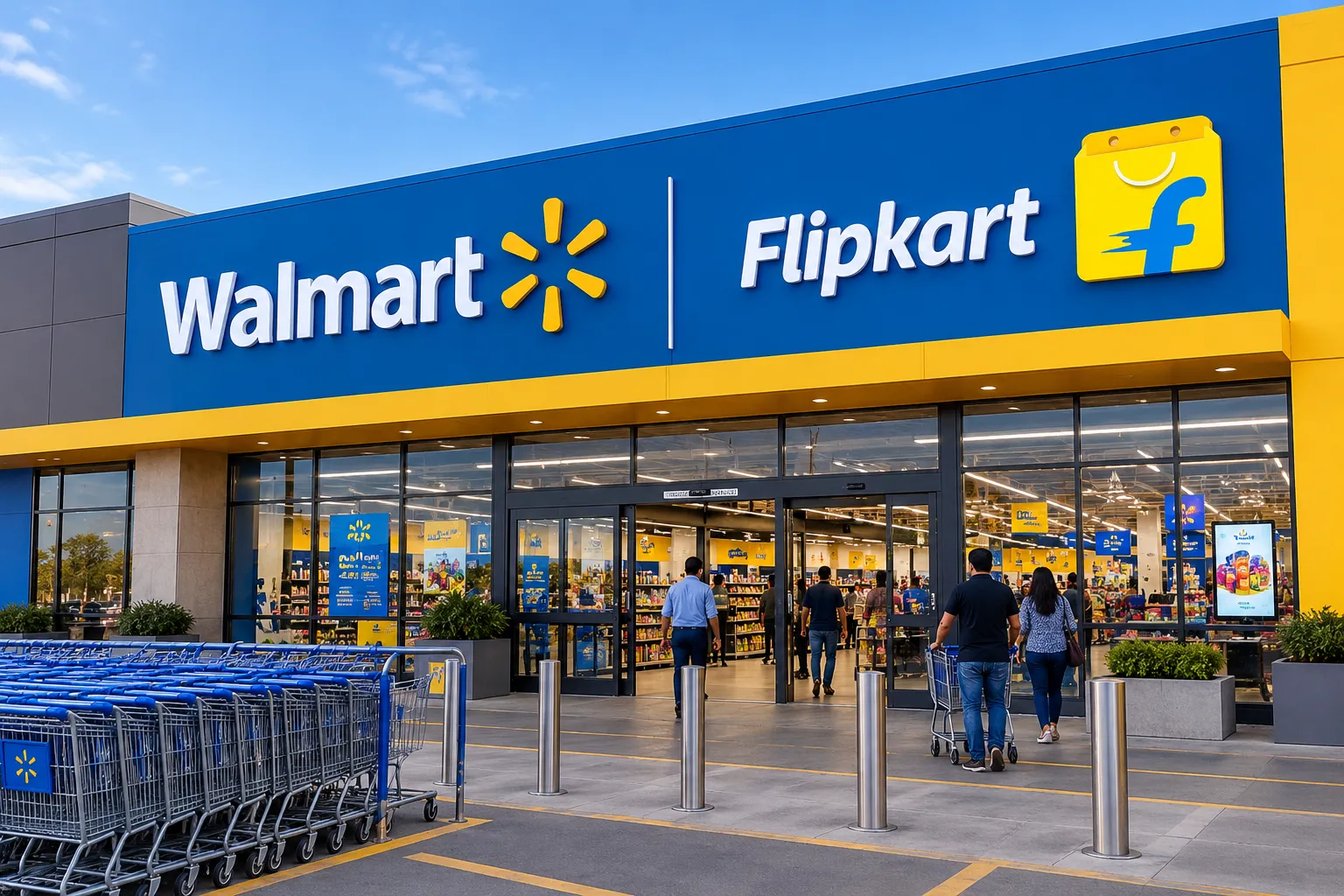
Flipkart food delivery is nearing a public launch as the Walmart-owned retailer expands internal testing in Bengaluru. The service, called Eat-in by Minutes, could challenge Zomato and Swiggy, India’s two dominant food-delivery platforms.
Flipkart has expanded its employee-only trial from a few hundred participants to more than 8,000, according to people familiar with the rollout. The company has also deployed dedicated delivery riders through its logistics subsidiary, Ekart.
The service operates through a separate tab in Flipkart’s main shopping app, alongside its quick-commerce business, Minutes, and travel services. Its restaurant network combines direct partnerships with listings available through the government-backed Open Network for Digital Commerce (ONDC).
Delivery riders wearing Eat-in by Minutes uniforms have already been spotted fulfilling orders in Bengaluru. The company is reportedly preparing to open the service to consumers by the end of October.
Flipkart Food Delivery Targets Lower Restaurant Commissions
Flipkart is entering a market largely controlled by Zomato (owned by Eternal) and Swiggy. Brokerage firm Bernstein estimates India’s online food-delivery market is growing between 18% and 20% annually. However, online orders still represent just over 15% of the broader food-services industry.
The two established platforms serve an estimated 85 million to 95 million paying customers annually, according to Bernstein.
Flipkart’s proposed pricing could help attract restaurants dissatisfied with existing commissions. Sagar Daryani, president of the National Restaurant Association of India, said the company has discussed a base commission of approximately 10%.
Restaurants typically pay Zomato and Swiggy commissions of 20% to 25%, Daryani said. Advertising, discounts and promotional expenses can push total costs to 40% to 50% of an order’s value.
Daryani expects Flipkart’s combined costs to remain closer to 15% to 16%. These figures represent proposed terms and industry expectations, not confirmed commercial pricing.
Zomato and Swiggy Face Growing Competition
Other companies are also challenging the established food-delivery model. Ride-hailing platform Rapido has been expanding Ownly, a service offering restaurants zero-commission arrangements.
Swiggy has introduced a separate budget-focused service called Toing. In a company announcement, Swiggy said Toing had expanded to 11 Indian cities, including Delhi, Gurugram, Pune and Noida. The service emphasizes affordable meals without platform or packaging fees.
India’s rapid-delivery market is also attracting investment in specialized operators. Bengaluru-based Swish raised $38 million earlier this year to expand its 10-minute prepared-food delivery business.
Previous attempts to challenge India’s leading platforms have struggled. Amazon launched food delivery in Bengaluru in 2020 but discontinued the service in 2022. Google’s Areo platform failed to gain traction, while Uber sold its Indian Uber Eats operations to Zomato in 2020.
Flipkart enters with an established e-commerce platform, delivery infrastructure and growing quick-commerce operations. Daryani believes those assets could help it operate more efficiently than earlier competitors.
However, lower restaurant commissions may not translate into substantial customer savings. Bernstein estimates that more efficient newcomers could reduce order costs by approximately ₹20 to ₹30. Zomato and Swiggy could counter with additional discounts.
Flipkart Plans Expansion Beyond Bengaluru
According to Daryani, Flipkart has told restaurant partners it aims to launch publicly by late October. It also plans to expand into five or six cities before the end of 2026.
The expansion comes as Flipkart’s anticipated initial public offering remains uncertain. In an interview with The Economic Times, CEO Kalyan Krishnamurthy said the company has not established a timetable for going public.
Food delivery could encourage customers to use Flipkart more frequently as quick-commerce rivals expand beyond groceries into electronics and other products.
For Flipkart, the challenge will be converting its existing customer base into regular food-delivery users. Its success will depend on restaurant participation, competitive pricing and reliable delivery performance.