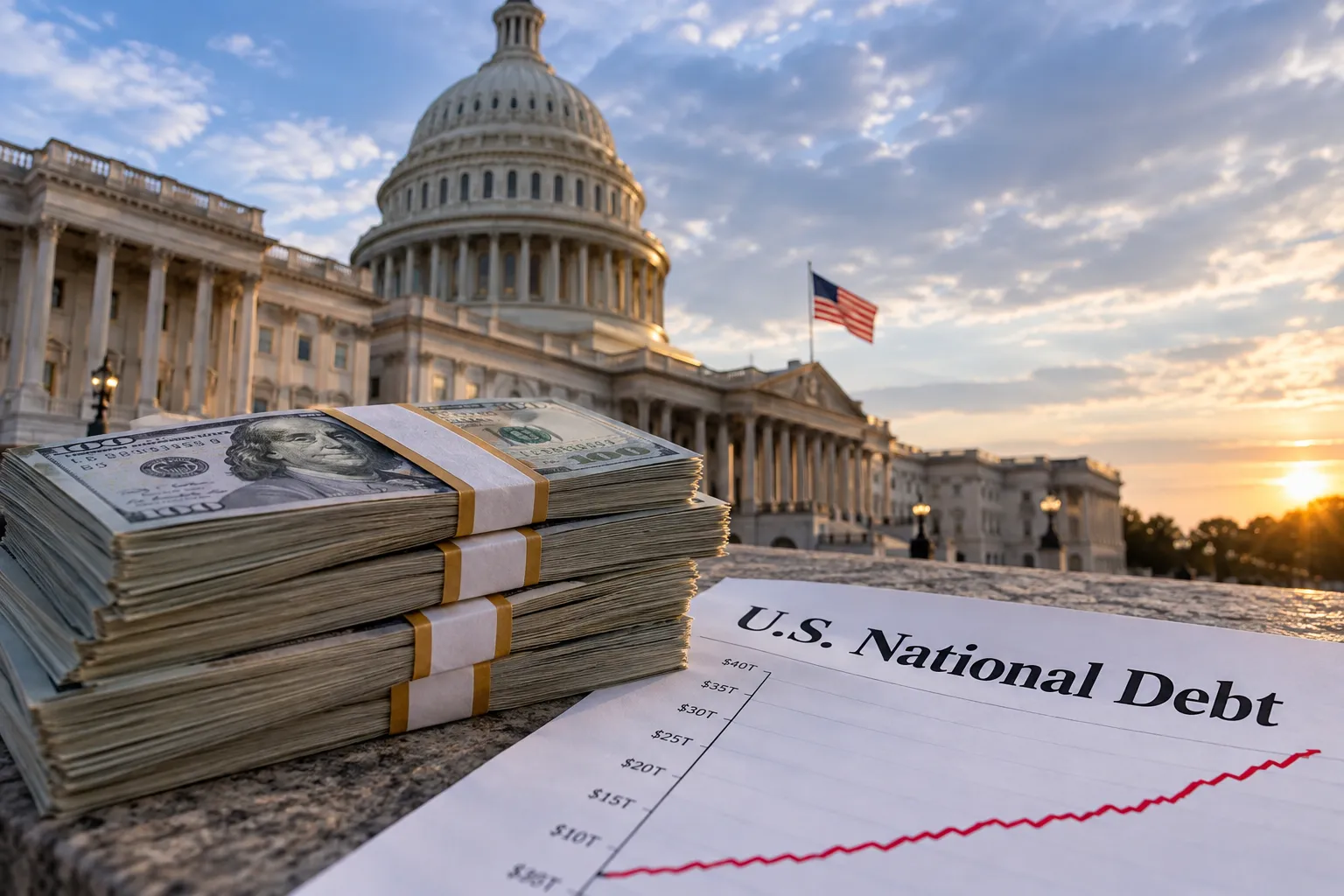
U.S. federal debt held by the public reached 100.03% of the nation’s gross domestic product in fiscal 2026, crossing a threshold not seen since 1946. The milestone puts America’s borrowing burden roughly equal to its annual economic output, raising fresh concerns about persistent deficits and the growing cost of servicing government debt.
Publicly held debt totaled about $32.2 trillion, up from 99.4% of GDP a year earlier. Although the increase was slightly smaller than previously forecast, the United States ended the fiscal year with a deficit approaching $2 trillion. The figures underscore a financial challenge that has persisted through administrations of both political parties.
U.S. Federal Debt Reaches a Postwar Milestone
Publicly held federal debt last exceeded the size of the American economy after World War II. In 1946, the debt-to-GDP ratio reached approximately 106%, reflecting the extraordinary borrowing required to finance the war. The ratio subsequently declined as the economy expanded and the government reduced its wartime spending.
Today’s borrowing reflects a different combination of pressures. Federal spending on retirement benefits, healthcare and interest payments has increased alongside recurring budget deficits. Tax policy changes, economic downturns and emergency spending have also contributed to the accumulated debt.
According to the Committee for a Responsible Federal Budget, publicly held debt reached approximately 100% of GDP in fiscal 2026. The ratio stood at 33.7% in 2000, illustrating how substantially the federal government’s financial position has changed over the past quarter-century.
Why the $40 Trillion National Debt Figure Is Different
The 100% milestone refers to debt held by the public, not the broader national debt commonly reported in headlines. Publicly held debt includes Treasury securities owned by investors, financial institutions, foreign governments and the Federal Reserve. It excludes obligations held by federal government accounts.
Gross federal debt, which includes those internal government obligations, exceeded $40 trillion in 2026. The Committee for a Responsible Federal Budget explains that economists generally emphasize publicly held debt when assessing the government’s borrowing burden and its relationship to the wider economy.
The distinction matters because the two measures answer different questions. Gross debt captures nearly all outstanding federal obligations, while publicly held debt more directly reflects borrowing from outside government accounts. Neither figure alone determines whether the United States can meet its financial commitments.
Federal Budget Deficit Remains Near $2 Trillion.
The federal government recorded a budget deficit of nearly $2 trillion in fiscal 2026, about 6.2% of GDP. Such a large shortfall is unusual outside periods of war, recession or national emergency. It also demonstrates that the government continues borrowing heavily during a period of economic expansion.
A deficit occurs when federal spending exceeds revenue during a fiscal year. The government covers the difference primarily by issuing Treasury securities, adding to its outstanding debt. Repeated annual deficits can increase the debt burden even as the economy grows.
The imbalance is especially difficult to address because a substantial share of federal spending supports established programs. Social Security, Medicare, and other mandatory expenditures continue to grow as the population ages. Reducing deficits significantly would require difficult decisions involving revenue, spending or both.
Rising Interest Costs Add Pressure to Federal Finances
Interest payments have become an increasingly important part of the federal budget. When existing Treasury securities mature, the government may need to refinance them at higher rates. That can increase borrowing costs even without a comparable rise in spending on public services.
The Committee for a Responsible Federal Budget estimates that federal interest costs represented approximately 3.3% of GDP in fiscal 2026. That exceeded the roughly 3% of GDP devoted to national defense, highlighting how debt servicing competes with other spending priorities.
Higher borrowing costs can also reduce Washington’s flexibility during future emergencies. Money spent on interest cannot simultaneously finance infrastructure, research, healthcare or other government activities. Persistent deficits further complicate the challenge by creating additional borrowing needs.
For households and businesses, the implications are less immediate but still important. Heavy federal borrowing can contribute to pressure on long-term interest rates, depending on economic conditions and investor demand. Higher rates can eventually affect mortgages, business investment and other borrowing costs.
Congressional Budget Office Projects Further Debt Growth
The long-term outlook suggests the current milestone may not represent the peak. In its February 2026 budget outlook, the Congressional Budget Office projected that publicly held federal debt would reach approximately 120% of GDP by 2036 under its baseline assumptions.
The same report forecast annual deficits rising to approximately $3.1 trillion by 2036. Growing interest expenses, Social Security spending and federal healthcare programs are major contributors to that outlook. The projections depend on assumptions about economic growth, interest rates and existing federal law.
Actual fiscal 2026 debt came in slightly below the CBO’s earlier estimate of approximately 100.6% of GDP. That difference provides some near-term context but does not fundamentally change the longer-term trajectory. Future borrowing levels will depend on economic conditions and decisions made by Congress and the administration.
What the Debt Milestone Means for the U.S. Economy
Reaching 100% of GDP does not mean the United States is approaching an immediate default or has exhausted its ability to borrow. The country continues to issue debt in its own currency, and Treasury securities remain central to global financial markets. The debt ratio is a measure of fiscal exposure, not an automatic crisis threshold.
However, a larger debt burden can make federal finances more sensitive to changes in interest rates and economic growth. Slower growth would make the existing debt harder to manage relative to national income. Higher financing costs could also require additional borrowing, spending reductions or tax increases.
The central question for policymakers is whether federal revenue and spending can move toward a more sustainable balance. With publicly held debt now matching the size of the economy, delaying those decisions is becoming increasingly costly.