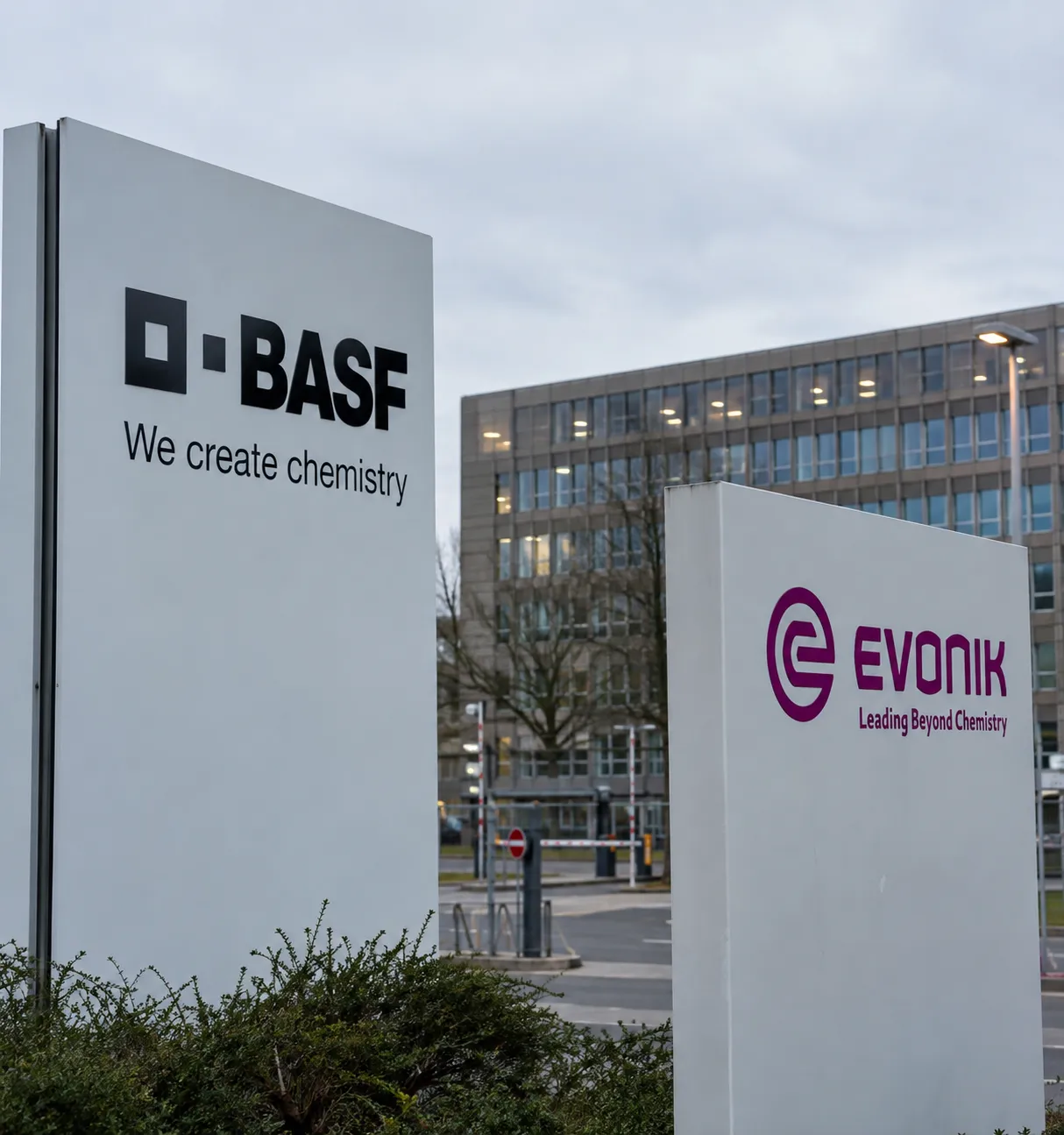
German chemicals company Evonik Industries has rejected an improved $12.5 billion takeover proposal from BASF, refusing to enter formal negotiations despite a higher offer and commitments to protect jobs. The BASF bid for Evonik would have brought together two of Germany’s largest chemical producers as the industry faces growing competition from Asia and the Middle East.
Evonik said Friday, Oct. 30, that its executive board had reviewed BASF’s latest approach but remained committed to developing the company independently. The decision follows weeks of discussions over a potential acquisition that BASF has presented as an opportunity to strengthen Europe’s chemical industry.
The rejection does not completely close the door to contact further. Evonik said it was prepared to hold confidential, informational discussions with BASF to explain its position and hear more about the proposed transaction.
BASF Evonik Takeover Bid Raised to $12.5 Billion
BASF increased its proposal to €24 per Evonik share last week, valuing the company at approximately €11.18 billion, or $12.5 billion. The revised terms followed an initial offer of about €22.15 per share, worth roughly €10.3 billion, that Evonik rejected in September.
The latest proposal represents an increase of approximately 8.4% per share from the earlier bid. Nevertheless, the higher valuation has not persuaded Evonik’s management to begin negotiations over a possible acquisition.
According to Reuters’ reporting, Evonik remains unconvinced by the industrial rationale for combining the businesses. The company has asked BASF’s management to explain the reasoning behind the proposed transaction.
BASF expressed surprise at the rejection, arguing that its offer was attractive and included substantial commitments concerning employees and production facilities. The company nevertheless acknowledged Evonik’s willingness to continue discussions on an informational basis.
Why BASF Wants to Acquire Evonik
BASF views a combination with Evonik as a potential response to the structural challenges facing Europe’s chemical producers. High operating costs, international competition and pressure on industrial profitability have encouraged companies to examine consolidation and operational efficiencies.
The two businesses have different but potentially complementary chemical portfolios. BASF produces engineering plastics, industrial chemicals, vitamins and other materials used across manufacturing supply chains. Evonik specializes in products including feed additives, high-performance plastics and ingredients for coatings and consumer products.
Bringing the operations together could allow BASF to integrate more production processes and supply certain raw materials internally. Such arrangements might reduce procurement costs and improve the efficiency of selected businesses, although the potential savings have not been established through a completed transaction.
BASF Chief Executive Markus Kamieth has described the proposed acquisition as a way to strengthen the German chemical industry’s competitive position. During the company’s October earnings discussions, he also emphasized that any acquisition must create value for BASF shareholders.
As chemical industry publication ICIS reported, Kamieth considers the companies’ portfolios complementary but has ruled out pursuing the acquisition at any price.
Employment Guarantees and German Industrial Concerns
Employment protections have become an important part of BASF’s proposed transaction. A potential merger would involve major production facilities and thousands of workers across Germany, making the future of industrial sites a significant political and labor issue.
BASF has said it would honor Evonik’s existing employment and site agreements if an acquisition proceeds. Its commitments include ruling out compulsory redundancies until 2032 and maintaining Essen and North Rhine-Westphalia as important locations for the combined business.
Those assurances are intended to address concerns that consolidation could lead to plant closures, workforce reductions or the relocation of industrial activities. However, the commitments have not changed Evonik’s decision to remain independent.
North Rhine-Westphalia’s government has also emphasized the importance of protecting Evonik’s operations and workforce. The company has deep industrial roots in the region, where chemical manufacturing remains a major source of employment.
Evonik’s Independence Strategy Remains Central
Evonik’s resistance reflects more than disagreement over the proposed purchase price. Its management continues to favor an independent strategy, leaving open the possibility of restructuring existing operations and pursuing its own acquisitions.
Reuters has reported that Evonik has explored a potential acquisition of U.S. specialty chemicals company Ashland. Such a transaction would offer a different route to expansion from becoming part of BASF, although no completed acquisition has been announced.
Another important participant is RAG-Stiftung, Evonik’s largest shareholder. The German foundation has a substantial interest in the company’s future and would be influential in determining whether a possible takeover could gain sufficient support.
BASF previously held exploratory discussions involving Evonik and the foundation. RAG-Stiftung declined to comment on the latest developments, leaving its position on the revised proposal unresolved.
What Happens Next for BASF and Evonik?
The immediate outlook remains uncertain. Evonik has declined formal takeover negotiations, while BASF has publicly indicated that it will maintain financial discipline rather than increase its offer without regard to shareholder value.
Further discussions could clarify BASF’s expected industrial benefits and the conditions under which Evonik might reconsider its position. Any future agreement would also need to address shareholder interests, workforce commitments and potential regulatory scrutiny.
For now, Evonik continues to operate independently, and the proposed acquisition has not advanced into formal negotiations. The outcome will depend on whether BASF can demonstrate sufficient value to convince Evonik’s management and major shareholders that a combination offers a stronger future than remaining separate.
The Wall Street Journal also reported the rejection, detailing BASF’s improved offer and Evonik’s refusal to begin formal talks.